30 Basement Bar Ideas in 2027 That Make Every Gathering Feel Special
Turn an overlooked basement into an intentional, welcoming entertainment haven. Explore 30 basement bar ideas for 2027—from compact dry bars and under-stairs nooks to fluted oak peninsulas, mood-lit speakeasies, and multi-purpose concession lounges.
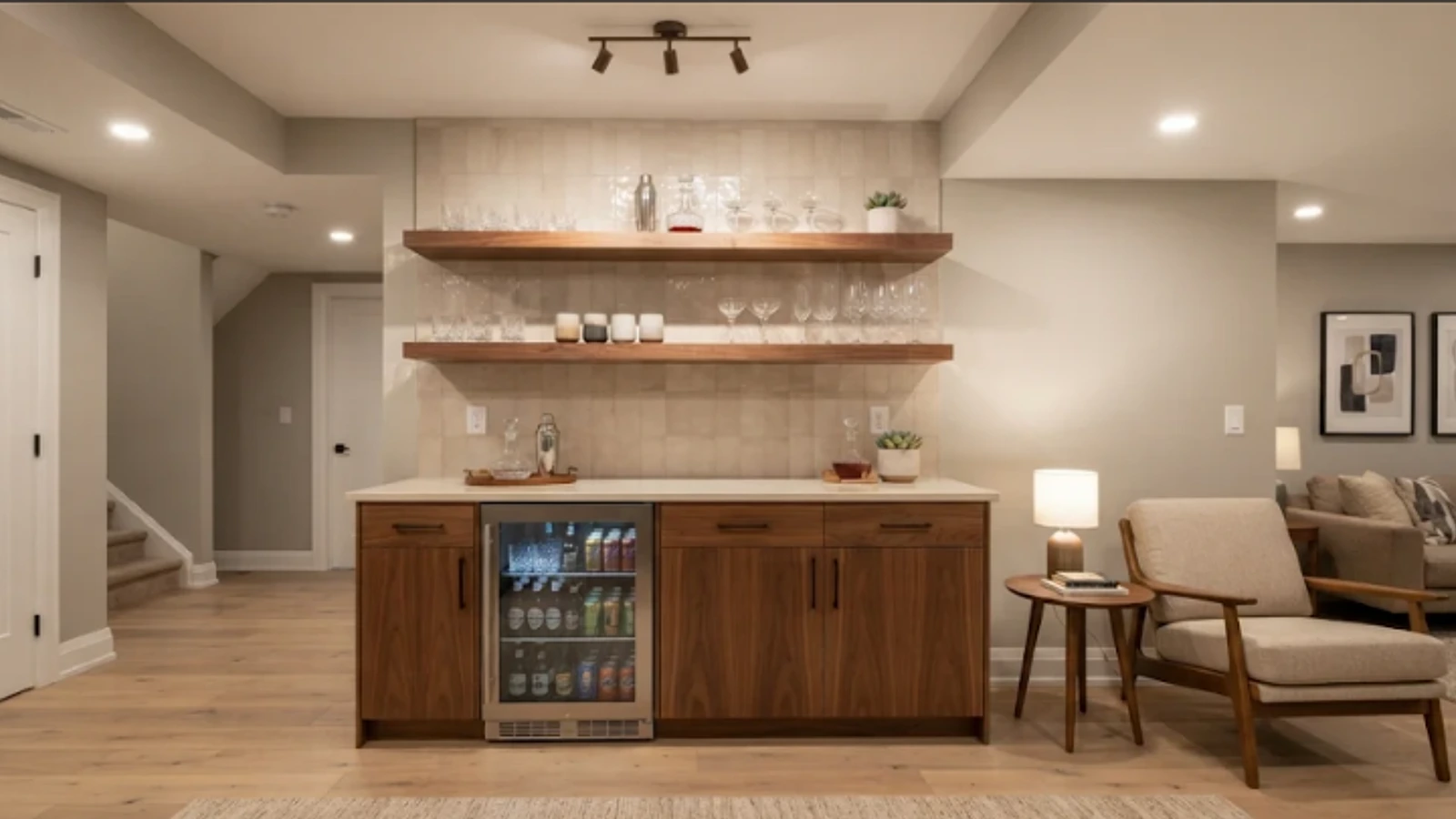
Built-In Single-Wall Bar: Rich walnut cabinetry, floating display shelves, and integrated warm lighting create an elevated basement entertainment focal point.
How to Choose the Right Basement Bar Design
Before you fall in love with a particular design, consider how you'll actually use the space.
A dry bar provides space for preparing and serving beverages without a sink. A wet bar includes a sink and requires appropriate plumbing and drainage. For many small basements, a dry bar is the simplest place to start. You can add a beverage refrigerator, storage drawers, and attractive shelving without committing to major plumbing work.
| Design Parameter | Editorial Specification |
|---|---|
| Small Basement | Corner bar, wall-mounted station, or under-stairs nook |
| Limited Renovation Budget | Dry bar, repurposed cabinet, or rolling cart |
| Regular Entertaining | L-shaped or U-shaped bar |
| Modern Luxury | Fluted wood, stone surfaces, and integrated lighting |
| Family-Friendly Space | Mocktail, soda, or coffee bar |
| Movie and Game Nights | Theater concession bar or game-room station |
| Flexible, Accessible Entertaining | Counter-height beverage station with comfortable circulation |
Create a Built-In Single-Wall Bar
A single-wall basement bar is one of the easiest ways to make a beverage station feel like part of the room rather than an afterthought.
Start with lower cabinets in walnut, warm oak, or a deep painted finish. Add a durable countertop, a few open shelves, and a compact beverage refrigerator if your electrical setup and available clearance allow it.
The key is keeping everything within one organized wall. Drinks, glassware, napkins, and serving accessories should each have their own location.
For a polished appearance, extend the backsplash toward the upper shelving and choose hardware that complements the room's other finishes.
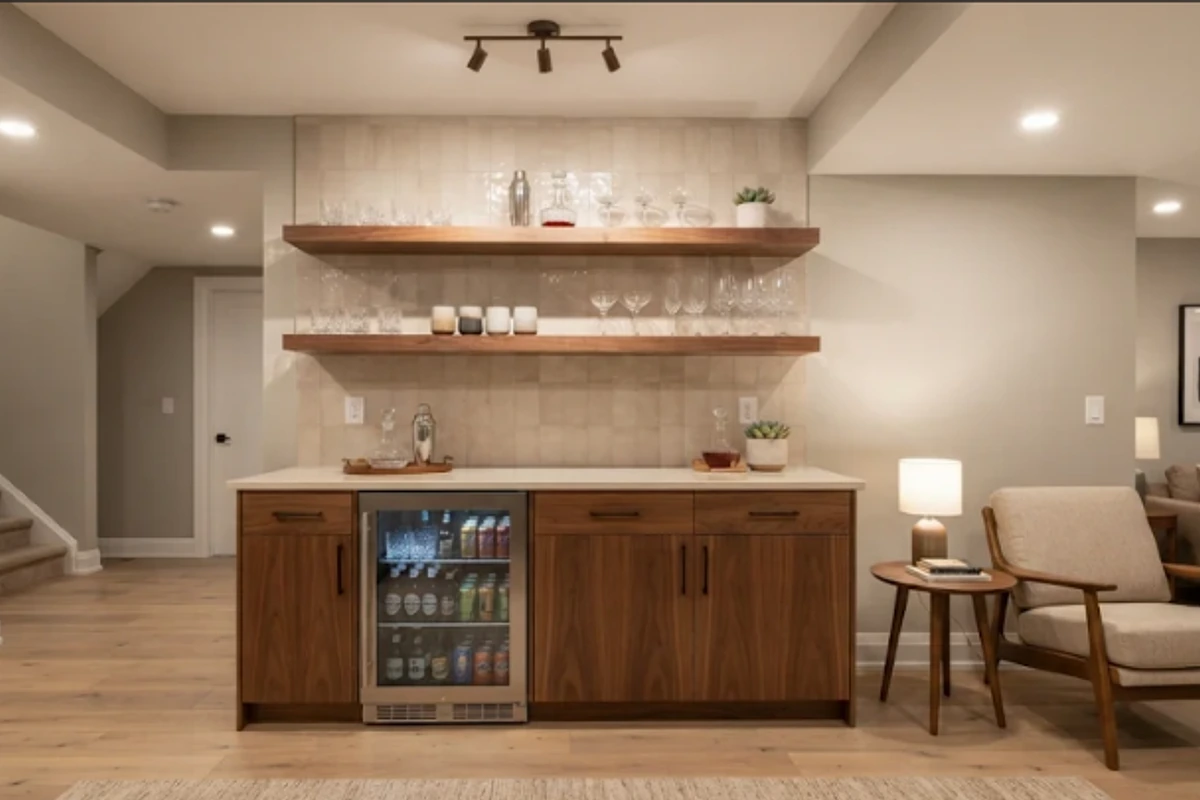
1. Create a Built-In Single-Wall Bar: Thoughtful design elements paired with functional residential entertaining ergonomics.
Use a combination of closed storage and open display. Too many visible bottles can make even a beautiful bar feel crowded.
Turn an Empty Corner Into a Compact Bar
An unused corner can become a surprisingly functional beverage station.
Choose an L-shaped cabinet that fits snugly against two walls, or combine a narrow lower cabinet with floating shelves that wrap around the corner. A darker paint color behind the shelves can make the installation feel intentional.
Keep the countertop free for pouring drinks and setting out snacks. Store glassware, coasters, and supplies underneath rather than filling every inch with decorative items.
If your basement has an awkward corner near a seating area, this is a way to put it to use without interrupting the main walkway.
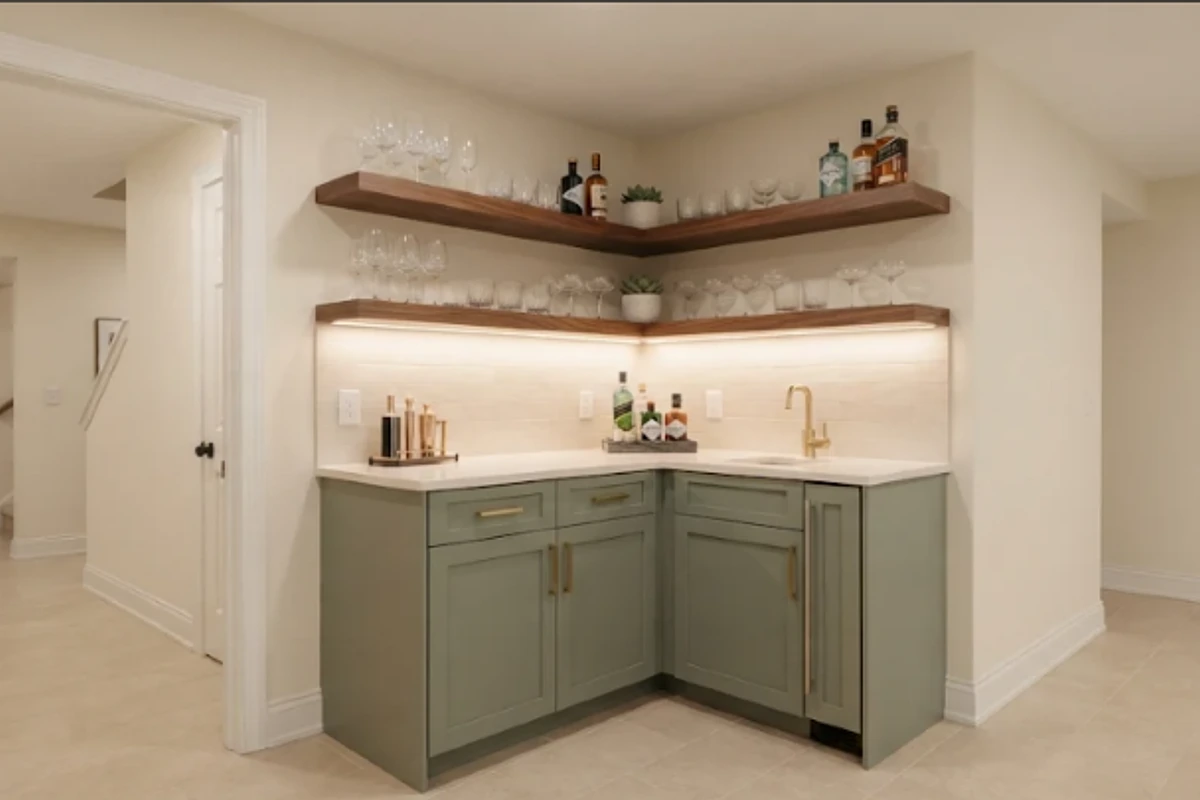
2. Turn an Empty Corner Into a Compact Bar: Thoughtful design elements paired with functional residential entertaining ergonomics.
Small basements where a freestanding bar would occupy too much floor space.
Design an Under-Stairs Basement Bar
The area beneath a staircase often becomes a storage zone for things nobody needs every day. With the right layout, it can instead become a charming bar nook.
Fit a short counter beneath the higher portion of the stairs. Use the lower section for closed storage, while the tallest section can hold shelves, glassware, or a compact refrigerator.
A warm pendant light or integrated shelf lighting can define the nook without overwhelming the rest of the basement.
Before installing cabinets, check the stair structure, accessible headroom, ventilation, and any nearby electrical or mechanical services. Do not alter structural supports to accommodate the bar.
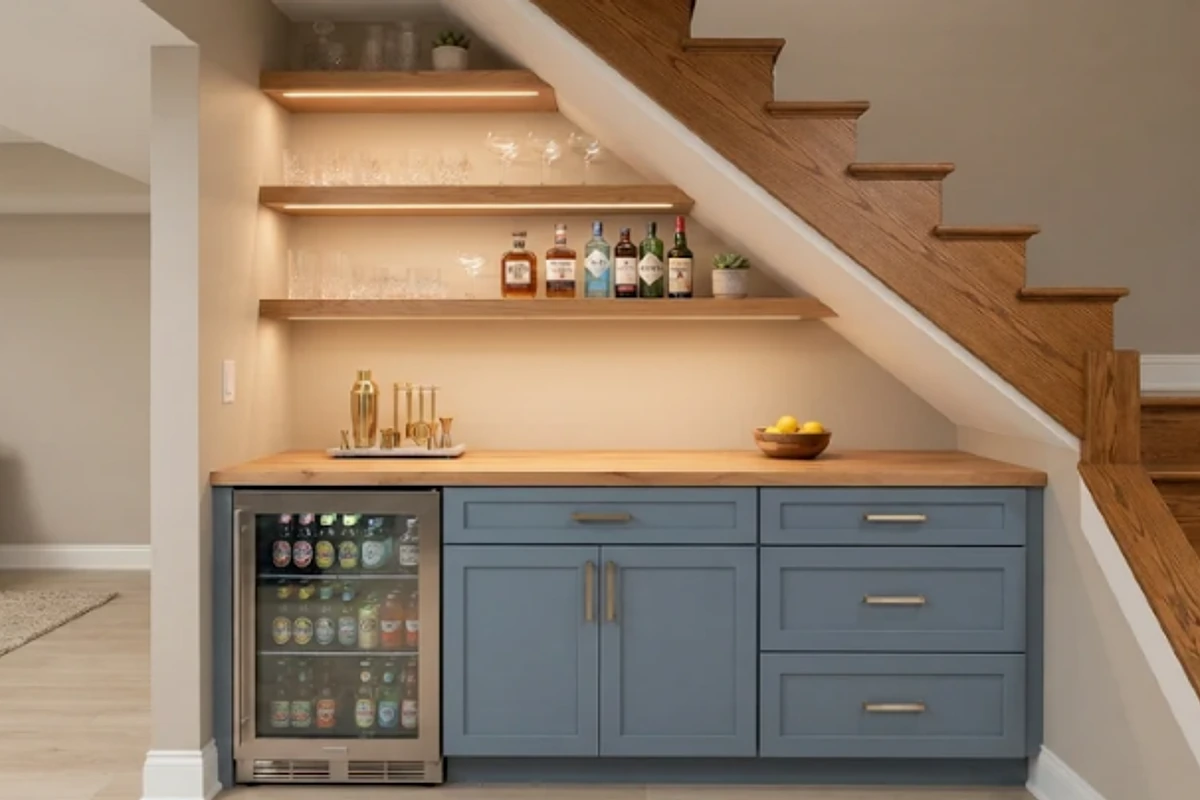
3. Design an Under-Stairs Basement Bar: Thoughtful design elements paired with functional residential entertaining ergonomics.
Try dusty blue cabinetry with a natural oak countertop for an attractive contrast.
Install a Fold-Down Wall Bar
When your basement doubles as a home office, exercise area, or playroom, a permanent bar counter may not be practical.
A wall-mounted fold-down counter offers a clever alternative. When closed, it resembles a shallow cabinet. When opened, the hinged surface provides a place to serve drinks, prepare garnishes, or arrange snacks.
Keep lightweight glassware and accessories inside the cabinet, with heavier beverages in secure storage below.
This solution is especially attractive for homeowners who entertain occasionally but need the floor space on ordinary days.
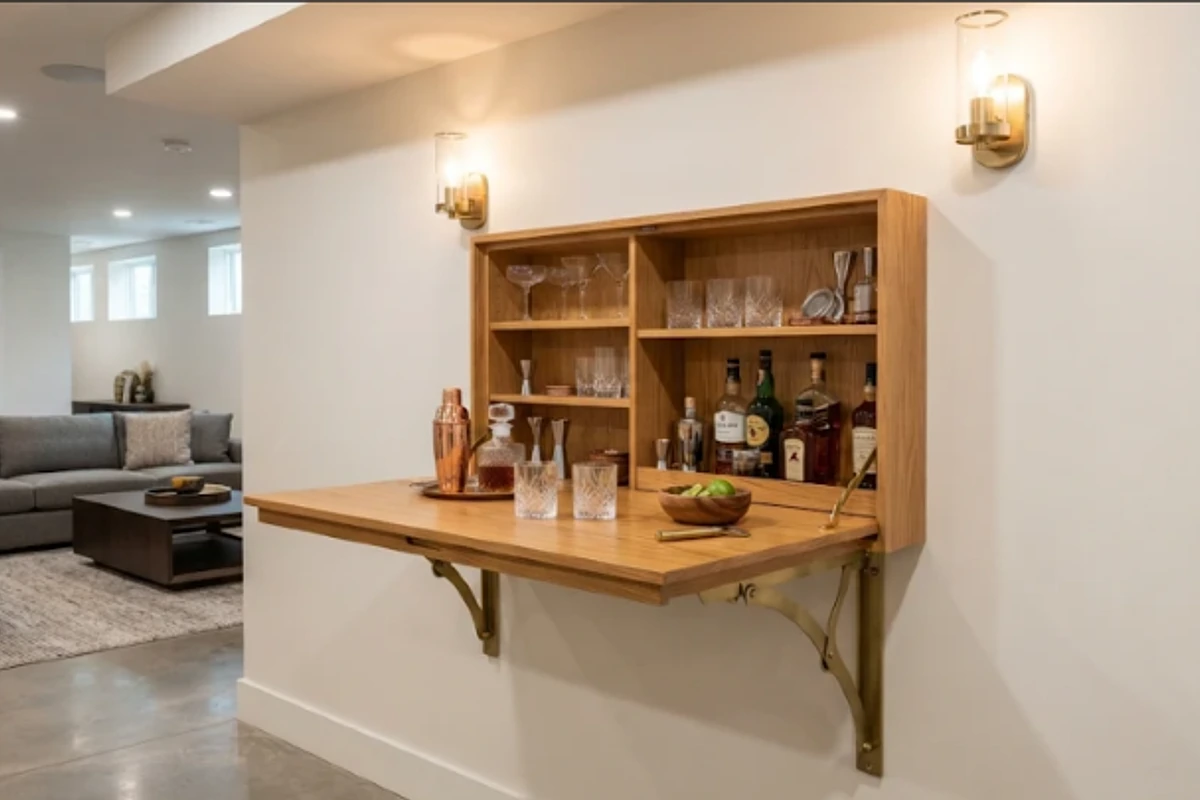
4. Install a Fold-Down Wall Bar: Thoughtful design elements paired with functional residential entertaining ergonomics.
Use appropriately rated hardware and wall fixings. A fold-down counter is a serving surface, not something to sit or lean heavily on.
Style a Mobile Bar Cart Station
Not every basement bar needs built-in cabinetry.
A well-chosen rolling bar cart can serve as a movable beverage station, particularly in apartments, rental homes, or basements that haven't been fully renovated.
Choose a sturdy cart with locking wheels, raised shelf edges, and enough space for glassware and drink-making accessories. Position it near a sideboard or shelving unit when you need additional storage.
For a coordinated look, match the cart finish to existing furniture. Brass pairs beautifully with deep green or navy interiors, while black metal works well with modern and industrial styles.
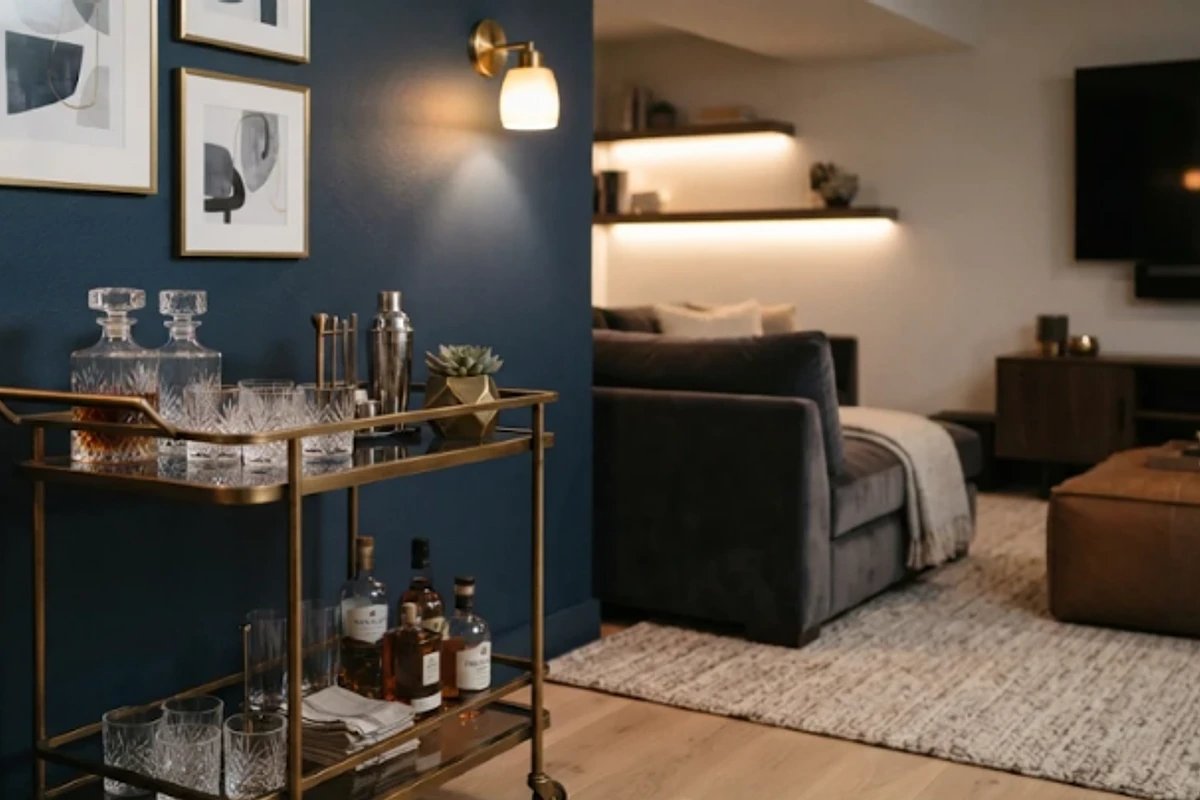
5. Style a Mobile Bar Cart Station: Thoughtful design elements paired with functional residential entertaining ergonomics.
Place framed artwork or a decorative wall sconce behind the cart to make it feel like a deliberate design feature.
Build a Narrow Galley-Style Beverage Station
A narrow basement can accommodate a bar without sacrificing its entire width.
Instead of creating a peninsula with stools, position cabinets along one wall. Use the counter for drink preparation and place a small café table or nearby seating elsewhere in the room.
Shallow upper shelves, simple cabinet fronts, and a continuous backsplash help the design feel organized.
This layout also works well in a basement hallway or transition area, provided the bar doesn't reduce required circulation or obstruct exits.
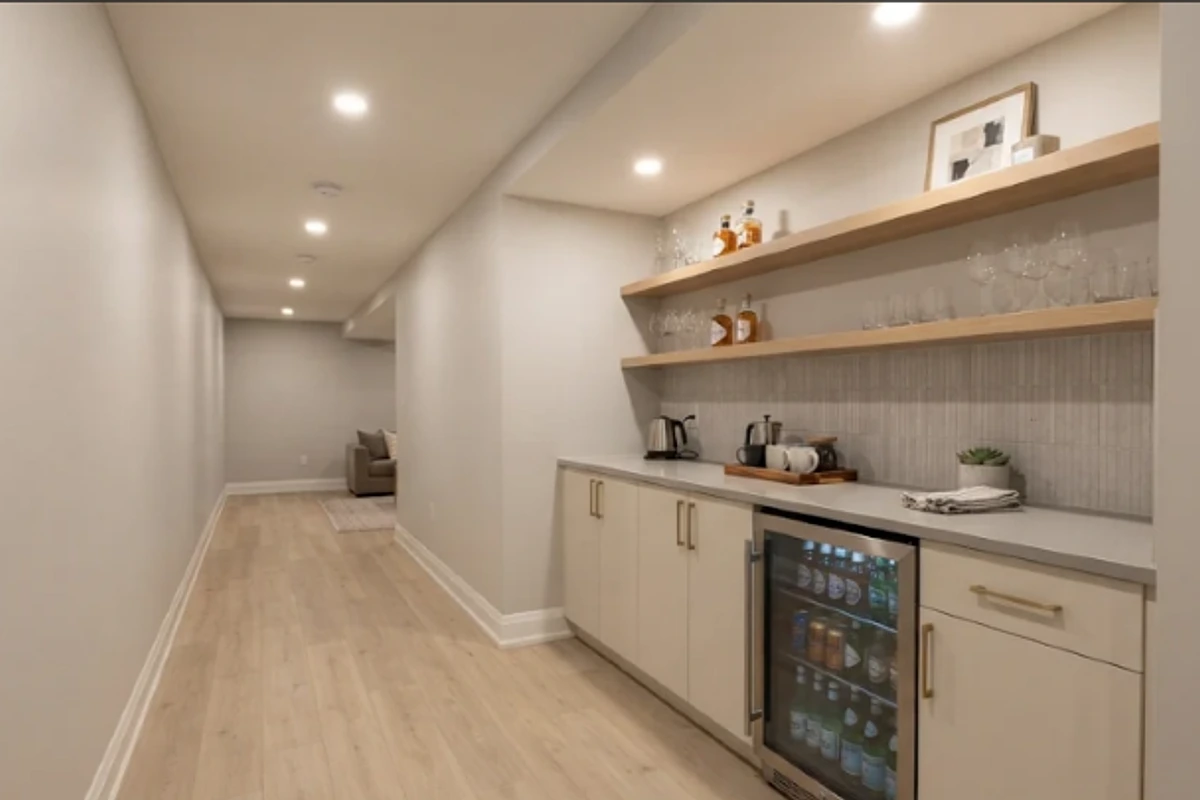
6. Build a Narrow Galley-Style Beverage Station: Thoughtful design elements paired with functional residential entertaining ergonomics.
Choose a beverage refrigerator with a door swing that works within the available clearance.
Choose an L-Shaped Bar for Easy Conversation
An L-shaped basement bar provides two connected serving surfaces without enclosing the entire space.
One side can hold the prep area, refrigerator, and storage. The other can become a comfortable seating counter where friends can chat without crowding the person preparing drinks.
A combination of dark cabinetry, a pale stone countertop, and comfortable upholstered stools gives the design a classic, welcoming appearance.
Plan enough open space behind the working counter to move between cabinets and appliances.
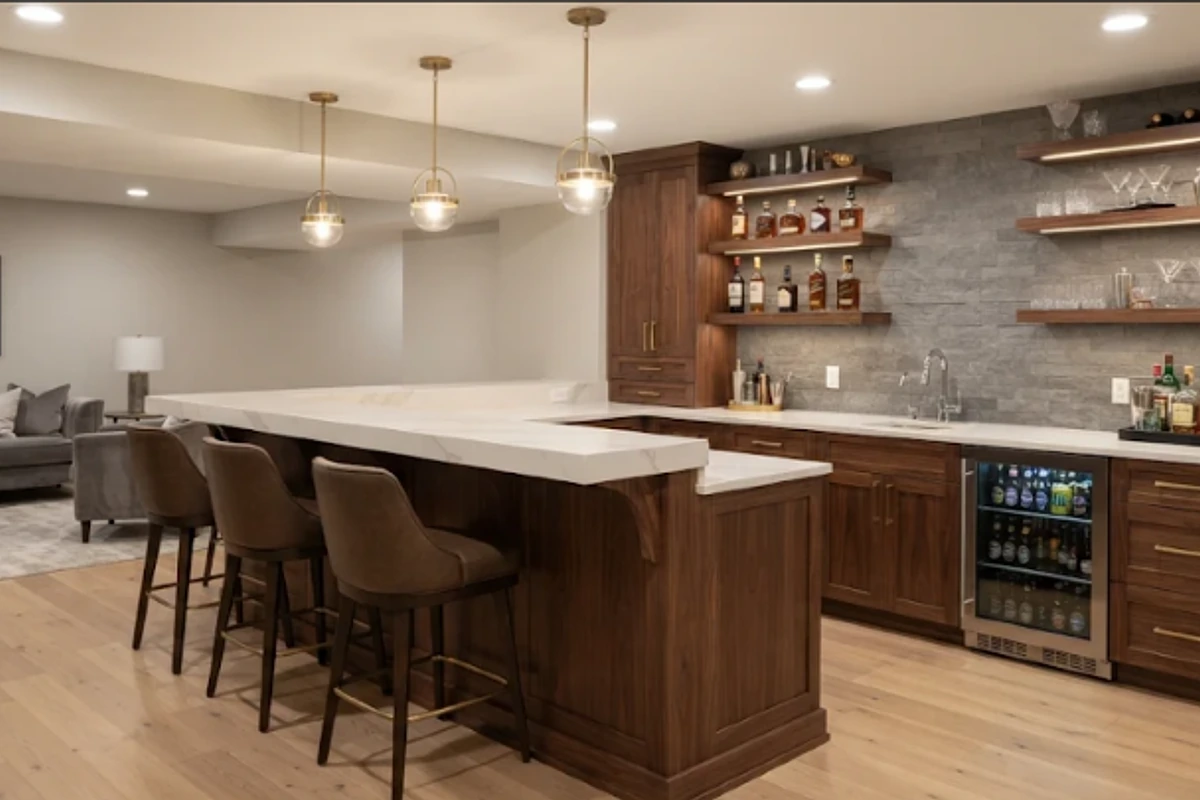
7. Choose an L-Shaped Bar for Easy Conversation: Thoughtful design elements paired with functional residential entertaining ergonomics.
Avoid placing the refrigerator directly where seated guests would block its door.
Create a U-Shaped Bar for a Dedicated Entertainment Room
If entertaining is a major part of your lifestyle, a U-shaped bar can create a genuine gathering spot.
The three-sided arrangement provides separate zones for preparing drinks, storing essentials, and serving guests. It works particularly well in larger finished basements where the bar is a central feature.
Use lower cabinets with durable surfaces and a cohesive lighting plan. Comfortable stools, a footrest, and practical storage can make the setup feel more like a lounge than a second kitchen.
Because U-shaped counters can create tight working areas, measure internal clearances carefully before ordering cabinetry.
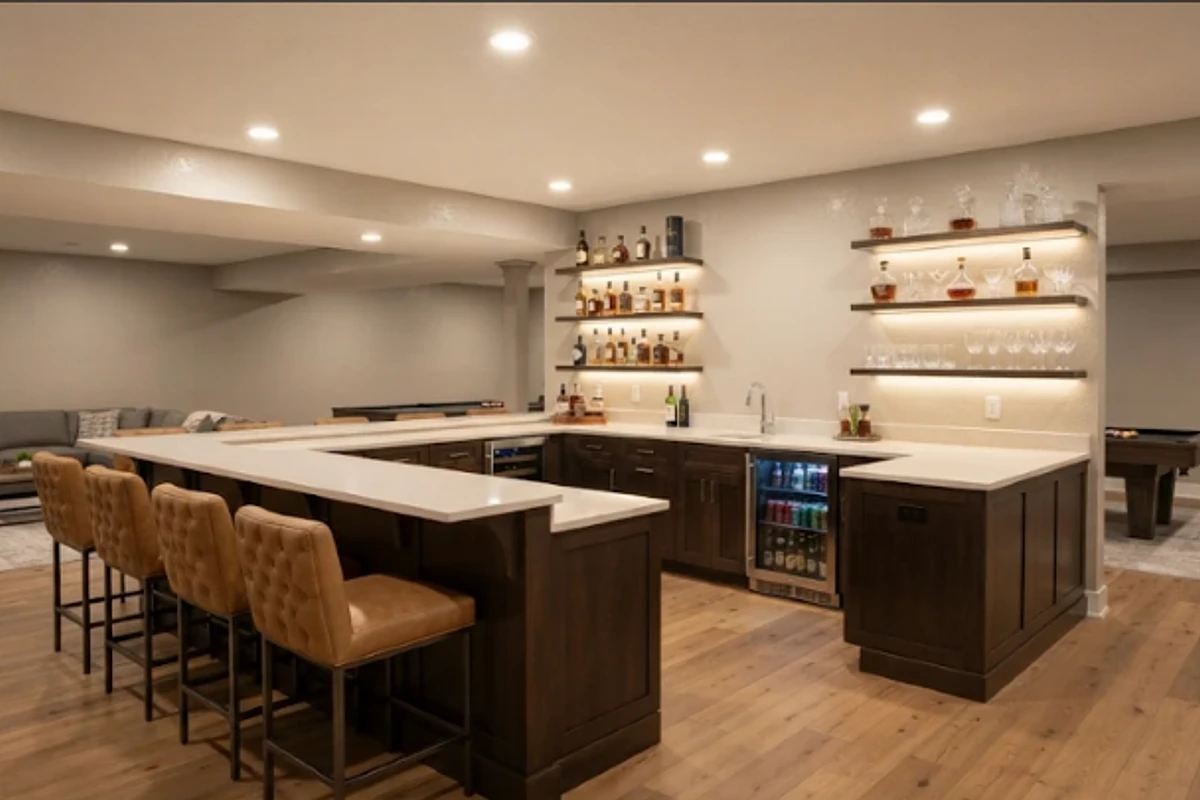
8. Create a U-Shaped Bar for a Dedicated Entertainment Room: Thoughtful design elements paired with functional residential entertaining ergonomics.
Larger basements with a dedicated entertaining area.
Design a Wall-to-Wall Wet Bar
A wall-to-wall wet bar gives your basement some of the convenience of a compact kitchenette.
Use the central portion for a small sink and worktop. Place beverage storage, a refrigerator, and cabinets on either side for a balanced layout.
A full-height backsplash or matching upper cabinetry can give the wall a cohesive architectural appearance. If the basement is used for movie nights and family gatherings, include space for washing glasses and preparing simple snacks.
This design is more involved than a dry bar. Confirm plumbing access, drainage, electrical requirements, and any necessary permits before construction.
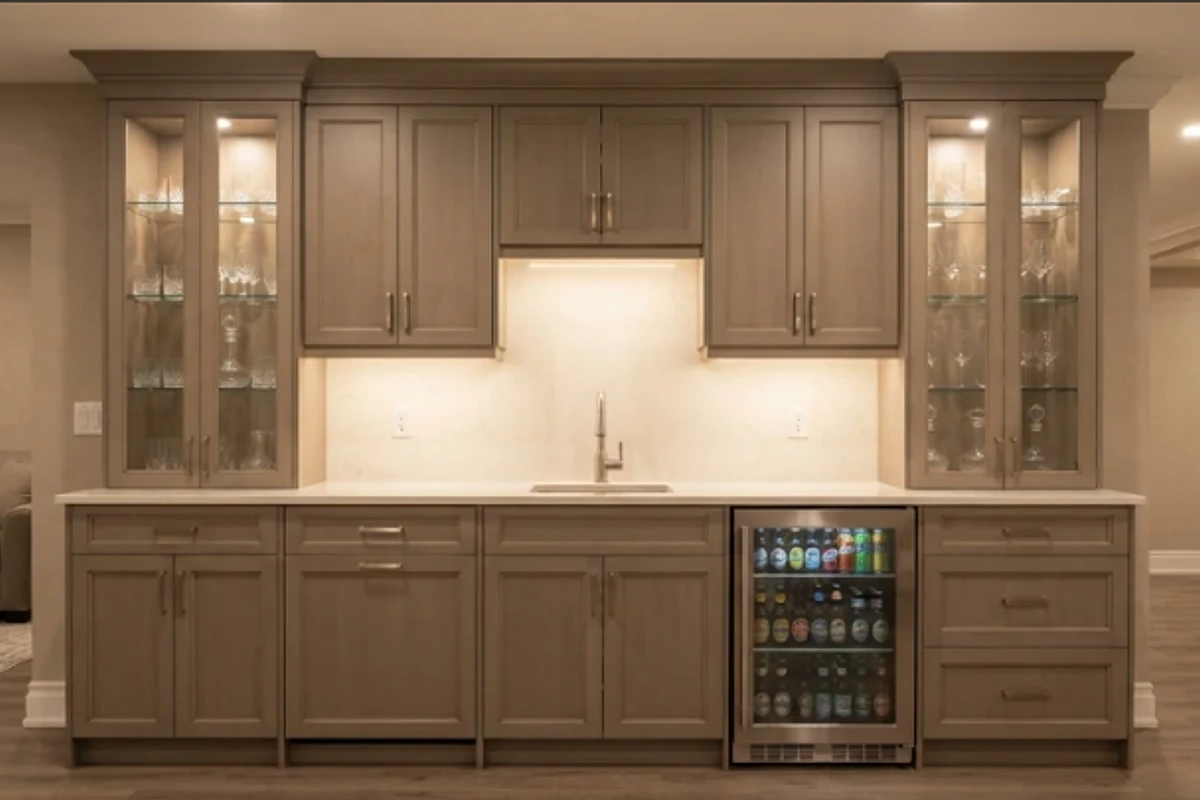
9. Design a Wall-to-Wall Wet Bar: Thoughtful design elements paired with functional residential entertaining ergonomics.
A sink close to existing plumbing may simplify the installation compared with a location on the opposite side of the basement.
Hide Your Bar Behind Cabinet Doors
A hidden basement bar is a great choice when you want the room to feel calm and uncluttered outside of gatherings.
Use tall cabinet doors, pocket doors, or a purpose-built storage unit to conceal glassware, bottles, and accessories. When the doors open, the interior reveals a contrasting backsplash, serving surface, and integrated lighting.
This design works particularly well in a basement that also serves as a guest lounge or home theater.
Make sure the doors can remain safely open while the bar is in use and that enclosed appliances have the ventilation specified by their manufacturers.
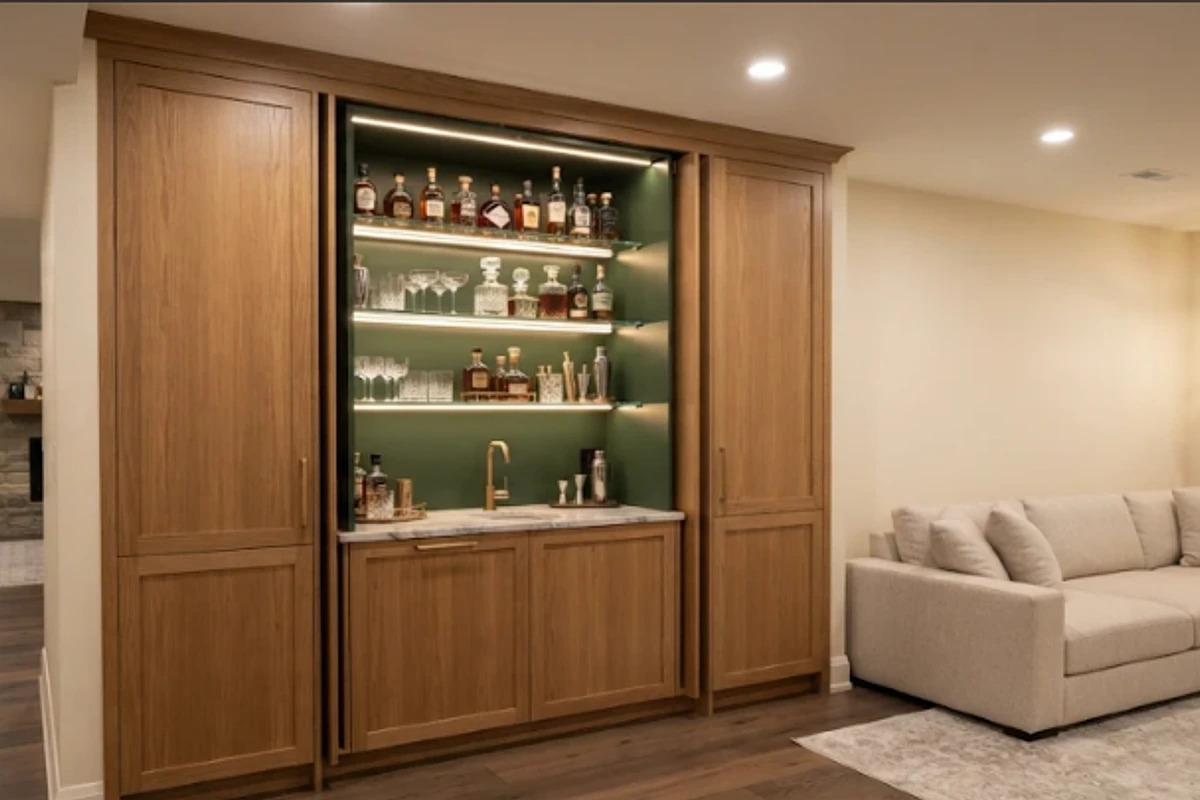
10. Hide Your Bar Behind Cabinet Doors: Thoughtful design elements paired with functional residential entertaining ergonomics.
Pair simple oak cabinet doors with a dark green interior for an unexpected moment of color.
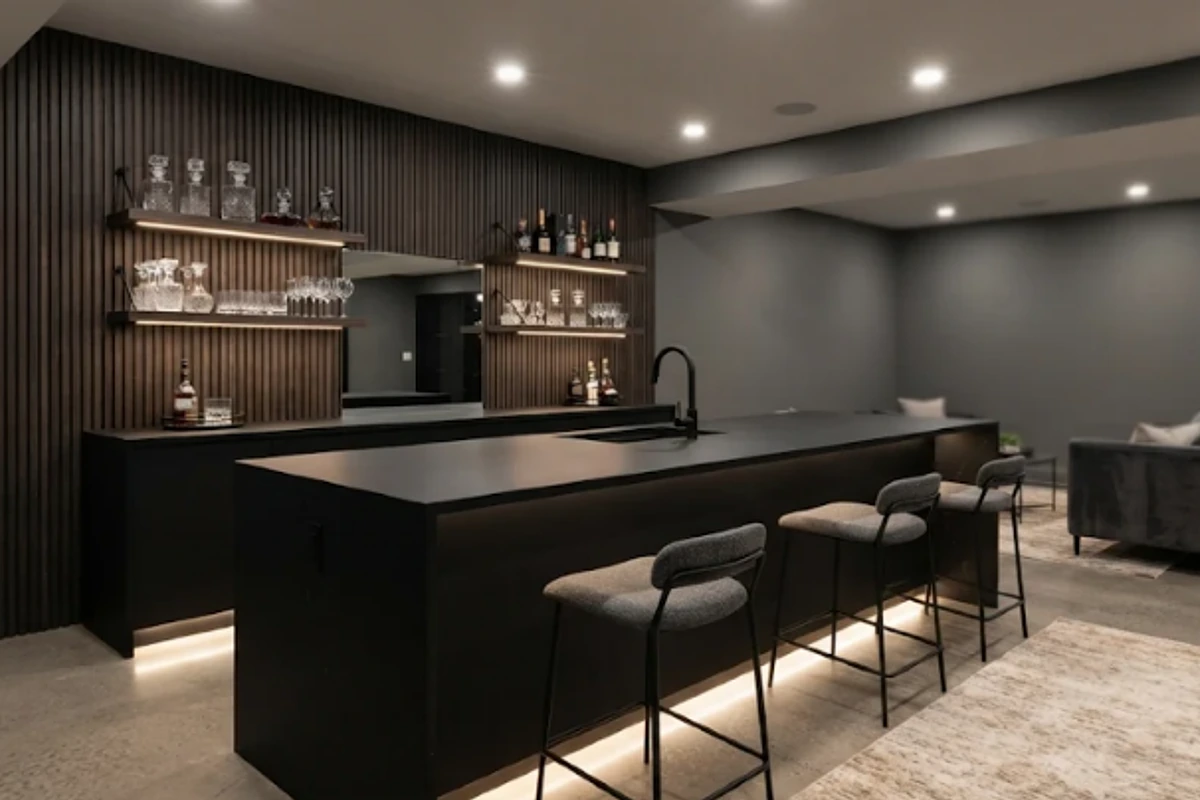
Create a Moody Basement Speakeasy
A speakeasy-inspired basement bar is ideal if you enjoy intimate, atmospheric interiors.
Use dark charcoal, espresso brown, or burgundy on the walls. Introduce warm brass accents, vintage-style artwork, and richly textured upholstery.
Instead of relying on a single bright ceiling fixture, layer wall sconces, shelf lighting, and low-glare lamps to create comfortable illumination.
A mirrored back bar can make the space feel more layered, while closed storage keeps supplies from overwhelming the room.
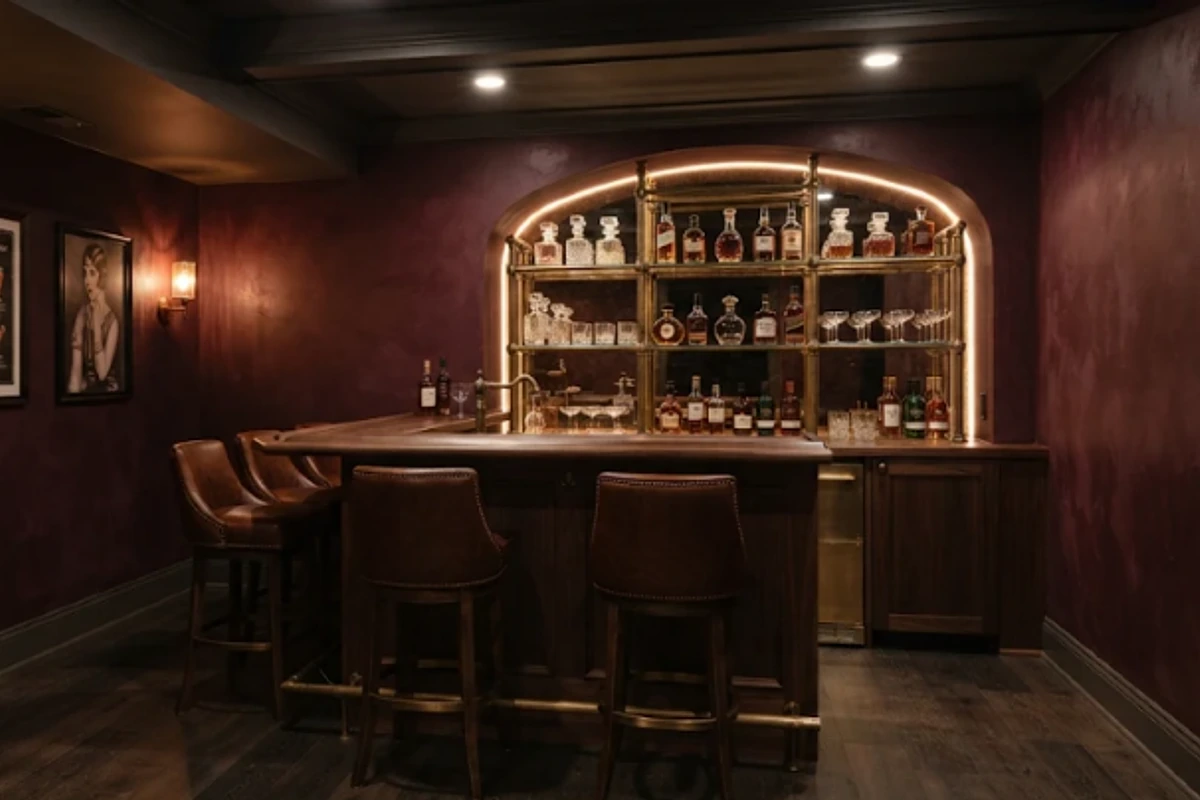
11. Create a Moody Basement Speakeasy: Thoughtful design elements paired with functional residential entertaining ergonomics.
Choose one statement feature, such as a dramatic arched shelf or sculptural pendant, rather than filling the space with themed decorations.
Add Texture With a Fluted-Wood Bar Front
Fluted wood can transform an otherwise simple basement bar into a striking design feature.
The narrow vertical grooves introduce rhythm and texture without requiring an elaborate layout. Use the finish on the front of a bar peninsula, then balance it with a smooth countertop and simple cabinets.
Light oak fluting creates a soft contemporary appearance, while darker stained wood feels more dramatic.
Avoid repeating the grooves on every surface. Let the bar front become the focal point while the surrounding walls remain quieter.
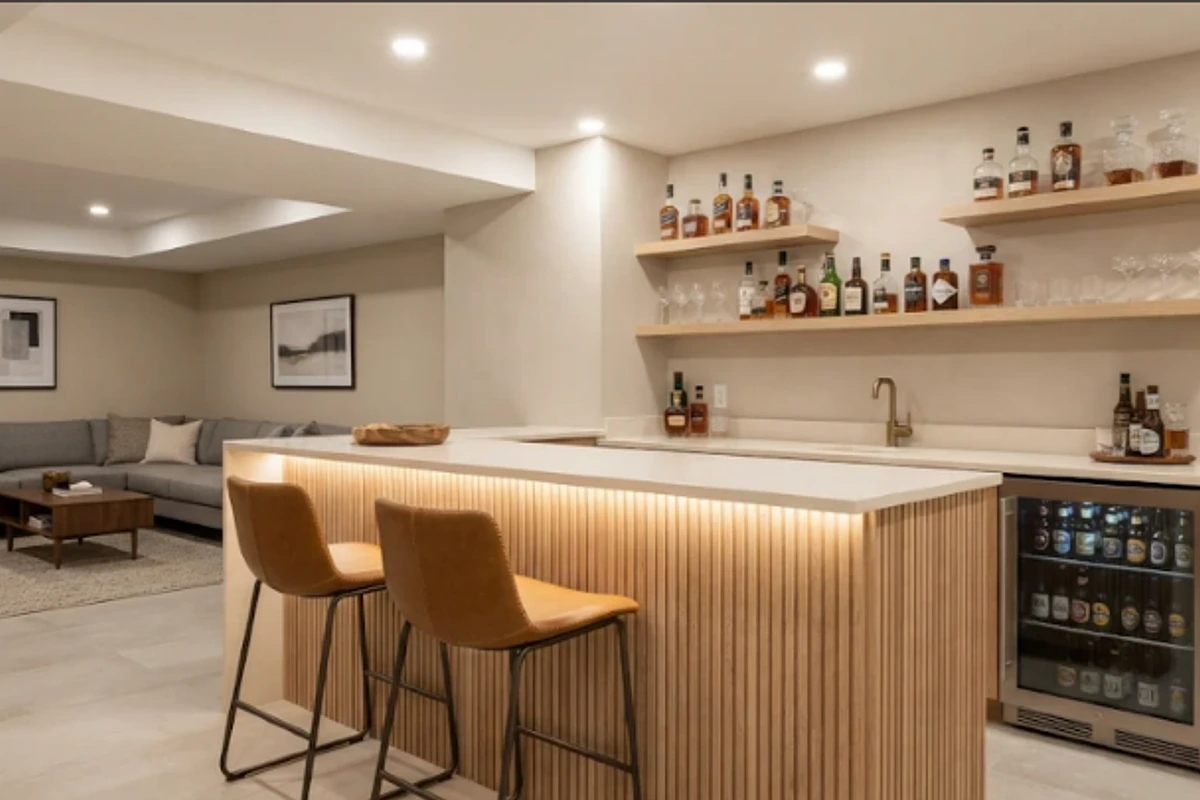
12. Add Texture With a Fluted-Wood Bar Front: Thoughtful design elements paired with functional residential entertaining ergonomics.
Choose a finish appropriate for occasional splashes and easy cleaning. Sealed, manufactured fluted panels may be more practical than untreated timber in a beverage area.
Keep Things Light With a Scandinavian-Inspired Bar
Basements often have limited natural light, which makes pale finishes especially appealing.
A Scandinavian-inspired bar uses soft oak, warm white walls, simple hardware, and restrained decorative accents to keep the room feeling open and calm.
Consider a compact cabinet with a light stone worktop and a small arrangement of ceramic cups, glassware, and greenery. Choose warm artificial lighting to avoid a cold or overly clinical look.
The result is a space that feels appropriate for morning coffee, afternoon refreshments, and evening entertaining.
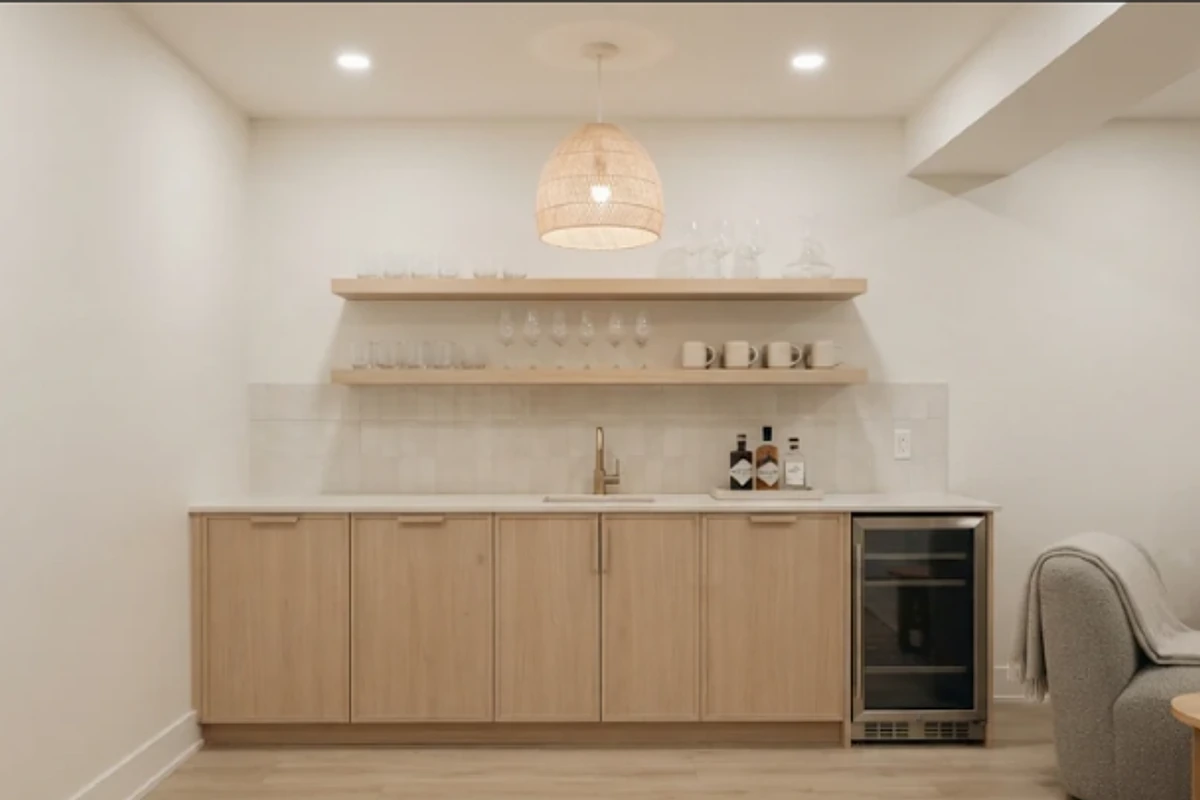
13. Keep Things Light With a Scandinavian-Inspired Bar: Thoughtful design elements paired with functional residential entertaining ergonomics.
Smaller basement lounges where dark cabinetry would feel too visually heavy.
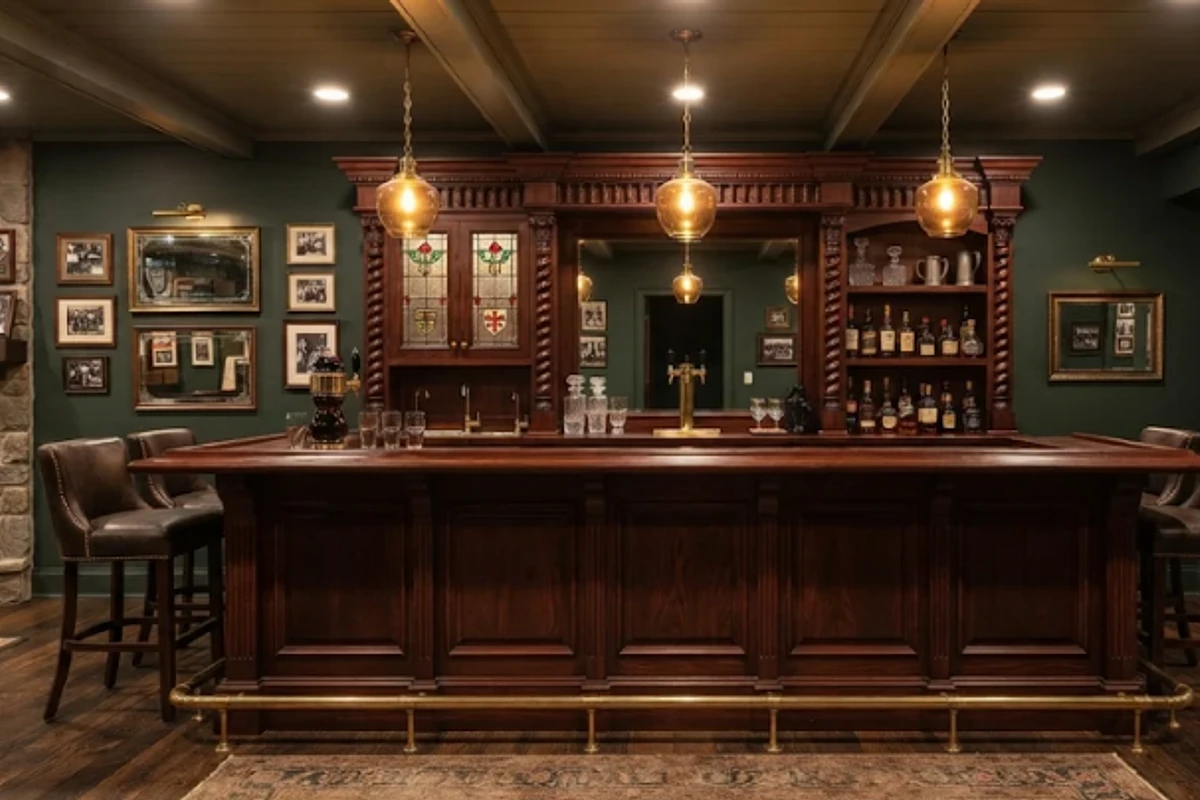
Bring Warmth With a Rustic Reclaimed-Wood Bar
A rustic basement bar works particularly well in homes with exposed beams, stone accents, or traditional furniture.
Use reclaimed-looking wood on the bar front or shelves, then pair it with a durable countertop that won't be difficult to maintain. Black metal hardware and warm pendant lighting can complete the look.
For a balanced design, combine rougher textures with cleaner elements. A smooth stone worktop or simple upholstered stools prevent the room from feeling too busy.
Genuine reclaimed wood should be checked, cleaned, treated, and sealed appropriately before use.
14. Bring Warmth With a Rustic Reclaimed-Wood Bar: Thoughtful design elements paired with functional residential entertaining ergonomics.
Add one oversized vintage-inspired wall clock or a simple landscape print rather than collecting numerous small decorative signs.
Try an Industrial Brick-and-Metal Bar
If your basement already has exposed brick, concrete, or visible structural beams, an industrial bar can work with those materials instead of hiding them.
Combine dark metal shelving with warm wood cabinetry and a simple concrete-look countertop. Matte black fixtures and exposed-style pendant lights strengthen the industrial character.
A small amount of leather upholstery can soften the harder surfaces and make the seating area more welcoming.
Where brick or concrete is exposed, address any moisture problems before installing cabinetry or decorative finishes.
15. Try an Industrial Brick-and-Metal Bar: Thoughtful design elements paired with functional residential entertaining ergonomics.
Keep exposed mechanical systems safe and accessible. Never cover equipment, vents, or required service clearances just for appearance.
Make a Statement With an Art Deco Curved Bar
An Art Deco-inspired basement bar adds elegance through curved shapes, symmetrical details, and glamorous materials.
Start with a softly rounded bar front or curved serving counter. Add geometric tile, brass hardware, and upholstered stools with a vintage silhouette.
Deep emerald, navy, or chocolate brown cabinetry can create a beautiful backdrop for metallic accents.
The secret is restraint. One curved feature and a well-chosen light fixture can communicate the style without turning the room into a themed set.
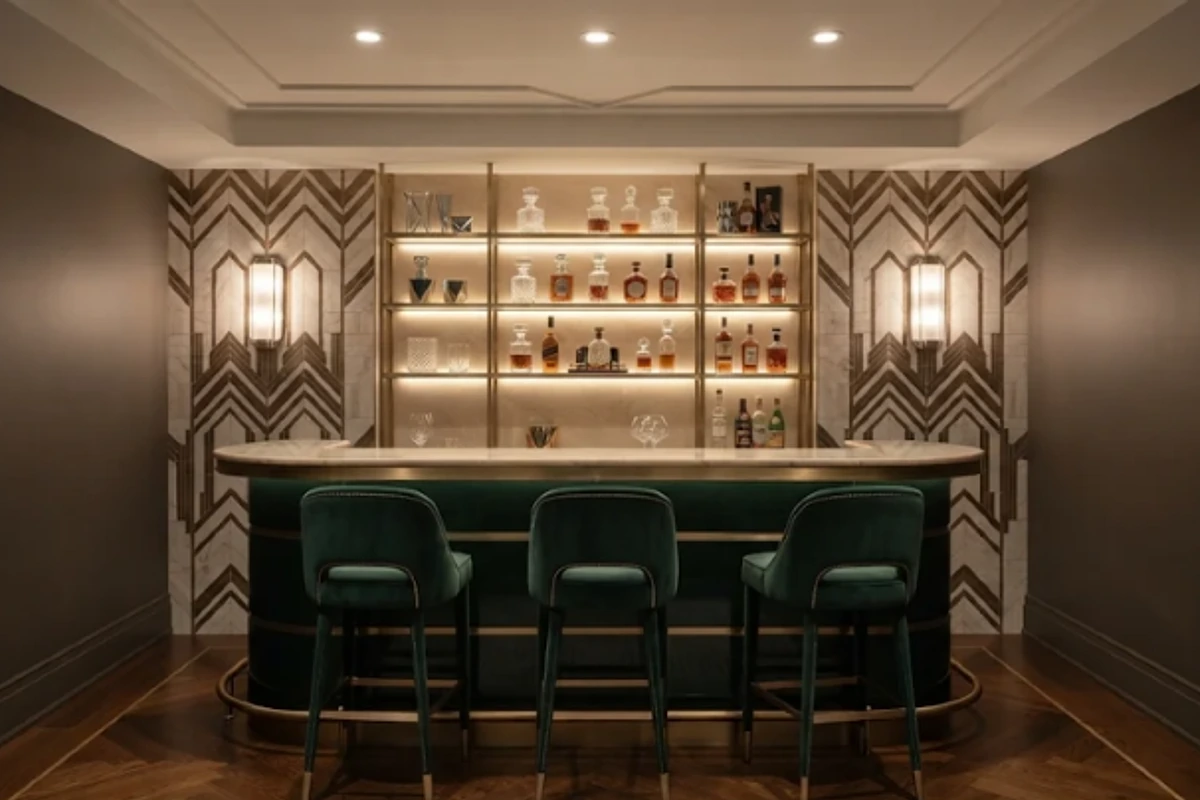
16. Make a Statement With an Art Deco Curved Bar: Thoughtful design elements paired with functional residential entertaining ergonomics.
Curved counters and custom cabinetry generally require more detailed fabrication than a simple straight bar.
Use Midcentury Modern Furniture and Finishes
Midcentury modern design brings warmth and personality to a basement without needing ornate details.
Look for walnut-toned cabinets, tapered furniture legs, globe lighting, and simple geometric shapes. A compact sideboard can become a dry bar with the right storage arrangement.
Orange, olive, and muted blue accents work beautifully against rich wood tones.
Consider adding a patterned backsplash behind the bar rather than introducing bold patterns throughout the entire basement.
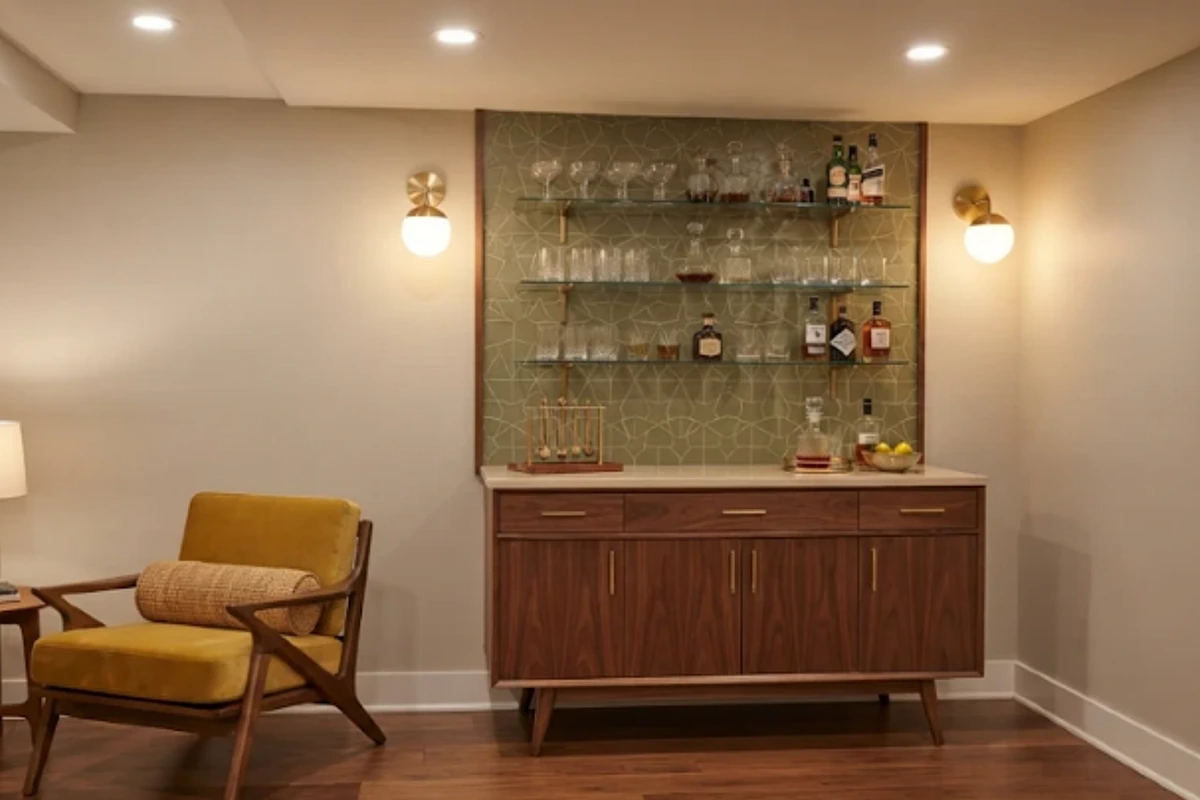
17. Use Midcentury Modern Furniture and Finishes: Thoughtful design elements paired with functional residential entertaining ergonomics.
Repurpose a sturdy vintage-style cabinet if it provides safe storage and a suitable serving surface.
Create a Warm Minimalist Stone Bar
Minimalism doesn't have to mean a cold white room.
Use a simple bar shape, warm neutral colors, and one visually interesting natural-looking material. A honed stone backsplash with subtle veining can add depth without overwhelming the space.
Pair stone surfaces with smooth beige cabinetry and low-contrast hardware.
Keep everyday objects inside cabinets, and leave the counter mostly open. This makes the bar easier to use and emphasizes the beauty of the materials.
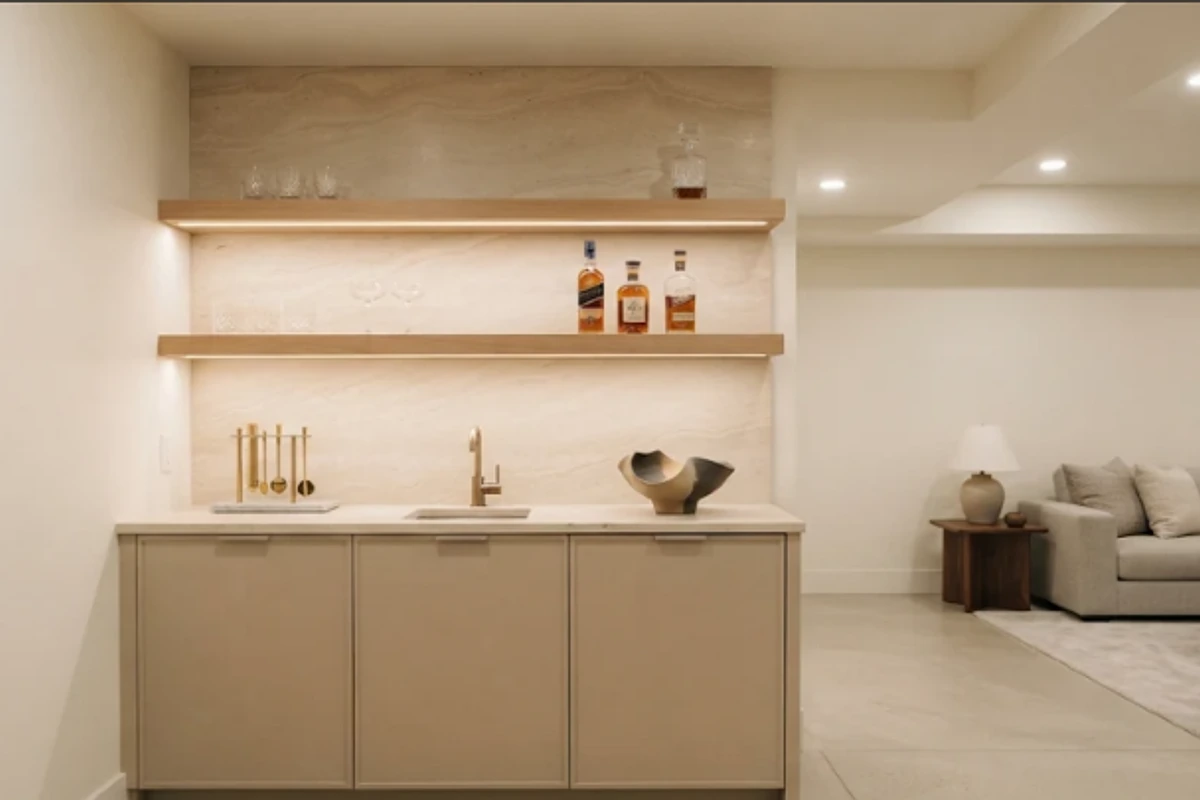
18. Create a Warm Minimalist Stone Bar: Thoughtful design elements paired with functional residential entertaining ergonomics.
If using natural stone, check its porosity and maintenance needs. Consider an easier-care surface when spills are likely.
Experiment With Rich Jewel-Tone Cabinetry
Deep colors can give a basement bar presence, particularly when the surrounding room uses quiet neutrals.
Forest green, midnight blue, and burgundy are attractive choices for cabinetry. Pair them with warm wood, stone, or brushed metal hardware.
If the basement receives little daylight, test paint samples under the lighting you plan to use. Deep colors can change dramatically between warm lamps and cool ceiling fixtures.
For a cohesive look, repeat your chosen color in a nearby cushion, framed artwork, or upholstered chair.
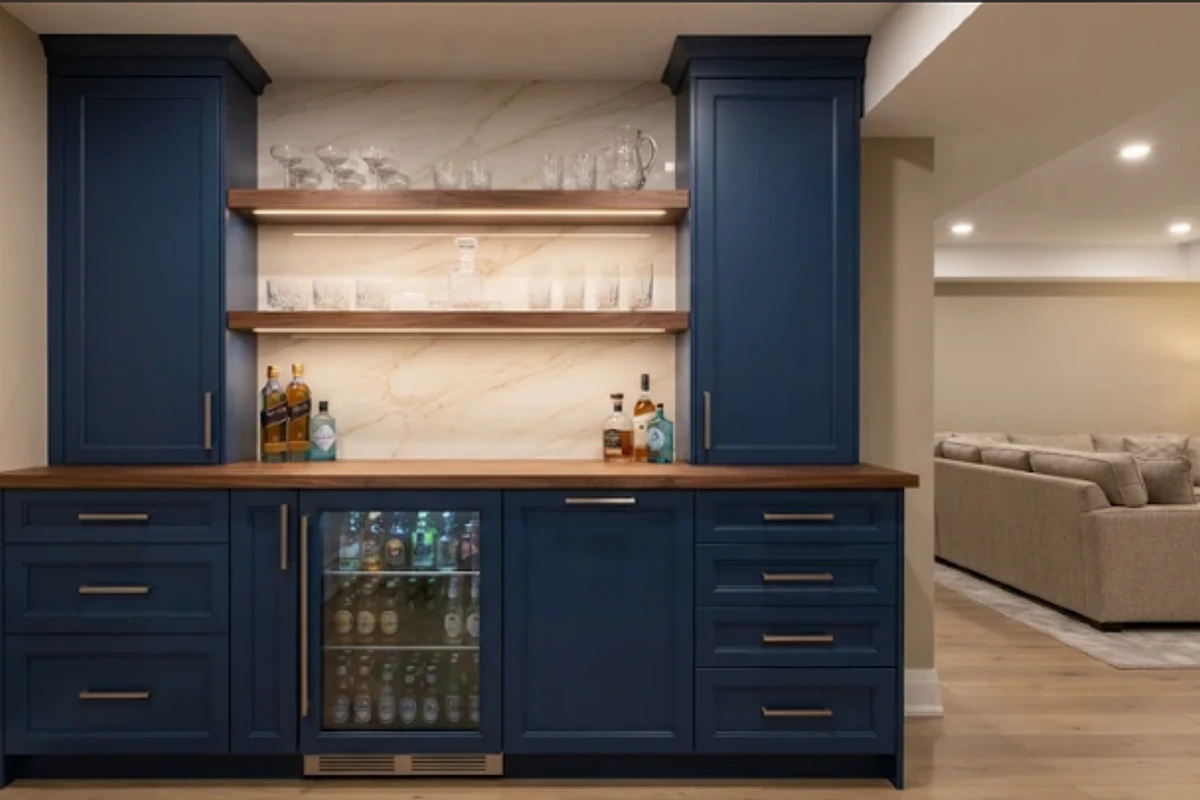
19. Experiment With Rich Jewel-Tone Cabinetry: Thoughtful design elements paired with functional residential entertaining ergonomics.
Let color make the statement while the cabinet shapes and countertops stay relatively simple.
Mix Two Cabinet Colors for a Custom Look
Two-tone cabinetry can help a basement bar feel more architectural without requiring complicated construction.
Consider dark navy base cabinets with light oak upper shelves, or creamy lower cabinets beneath a walnut display unit.
The contrast creates visual separation between work surfaces and decorative storage.
For a smaller basement, keep the darker finish below counter height and introduce lighter materials above. This can reduce the visual weight of the design.
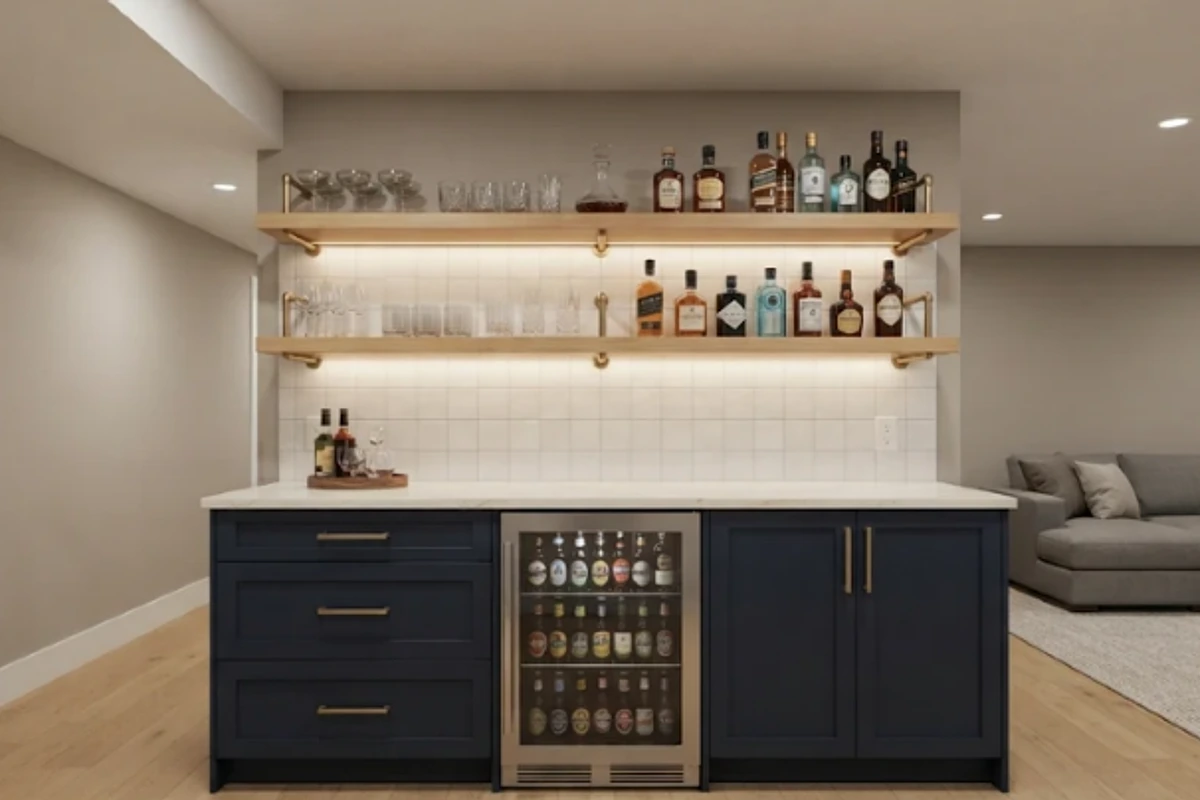
20. Mix Two Cabinet Colors for a Custom Look: Thoughtful design elements paired with functional residential entertaining ergonomics.
Use one consistent metal finish for handles, faucets, and lighting so the two colors look connected.
Install Backlit Display Shelves
Illuminated shelving adds an attractive focal point to almost any basement bar.
Instead of lighting every surface, install concealed LED strips beneath selected shelves. This can highlight glassware, decorative objects, and the backsplash while providing gentle task lighting.
Warm-white illumination creates a relaxed atmosphere and complements wood finishes. For a cleaner appearance, hide the light source and wiring from normal viewing angles.
A combination of illuminated display shelves and closed lower cabinets creates a balance between decoration and practical storage.
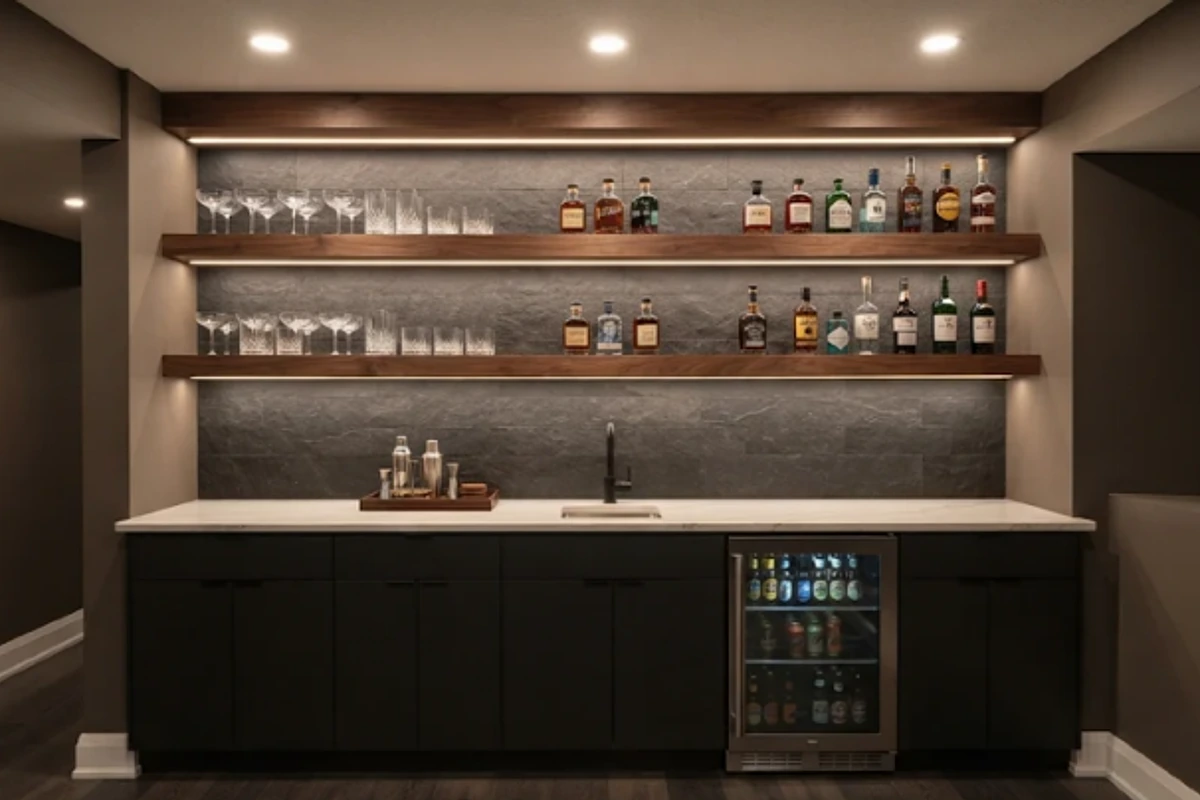
21. Install Backlit Display Shelves: Thoughtful design elements paired with functional residential entertaining ergonomics.
Use lighting and electrical components rated for the installation, and arrange professional electrical work where required.
Design a Cozy Wine Tasting Bar
A basement wine bar can feel like a small private tasting room.
Use warm cabinetry, a compact serving counter, and organized bottle storage. A suitable wine refrigerator may be useful if you want controlled storage conditions, but its ventilation needs must be considered.
Instead of displaying every bottle, arrange a few favorites alongside practical glassware. A small round tasting table gives guests a comfortable place to sit without needing a full bar counter.
Choose materials that are easy to wipe clean, especially where glasses will be placed.
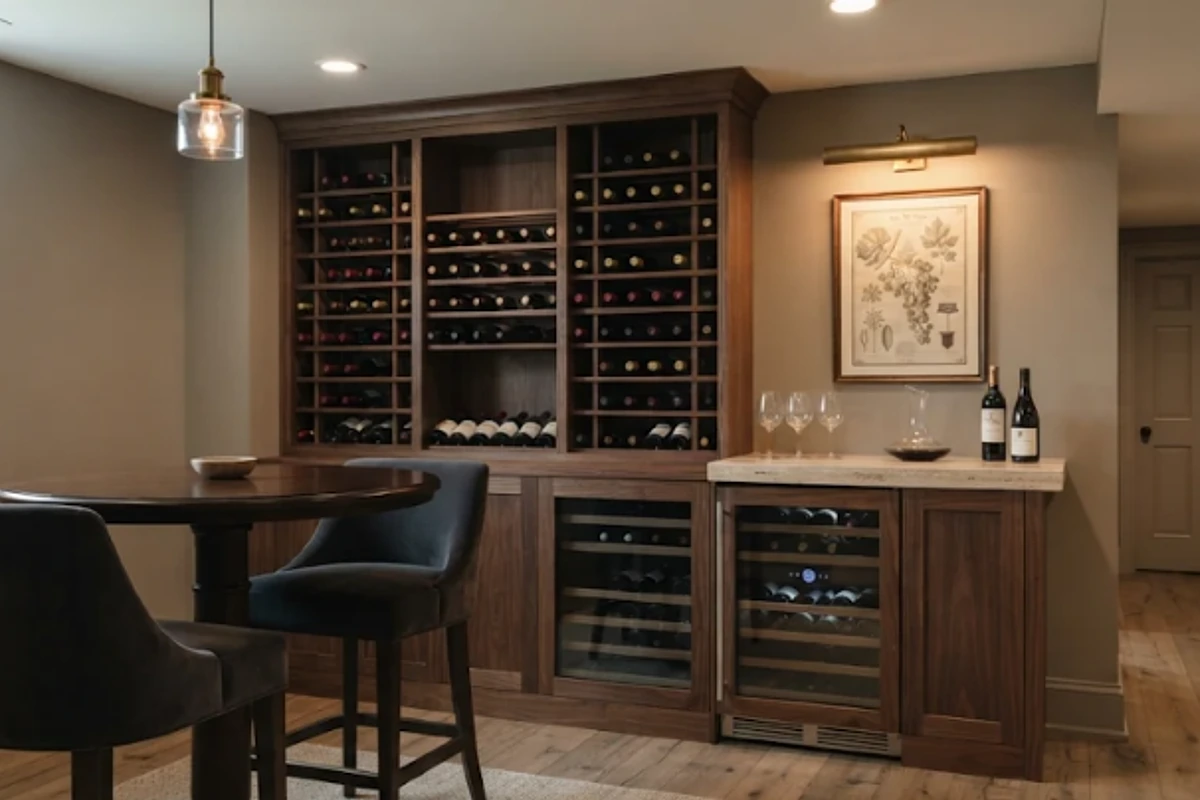
22. Design a Cozy Wine Tasting Bar: Thoughtful design elements paired with functional residential entertaining ergonomics.
Keep bottles away from unnecessary heat, direct light, and persistent temperature fluctuations.
Create a Craft Beer Tap Station
A craft beer station can become a fun feature for homeowners who enjoy hosting casual gatherings.
Build the design around a purpose-made kegerator or appropriately installed draft system rather than modifying an ordinary refrigerator without a safe plan.
Include a durable countertop, easy-to-clean surfaces, a drip tray, and a convenient location for glassware.
A brick or wood accent wall can provide pub-inspired character without making the space feel overly themed.
Make sure the equipment has the ventilation and service access required by its manufacturer. Any compressed-gas components should be installed, secured, and handled according to the equipment instructions and applicable safety requirements.
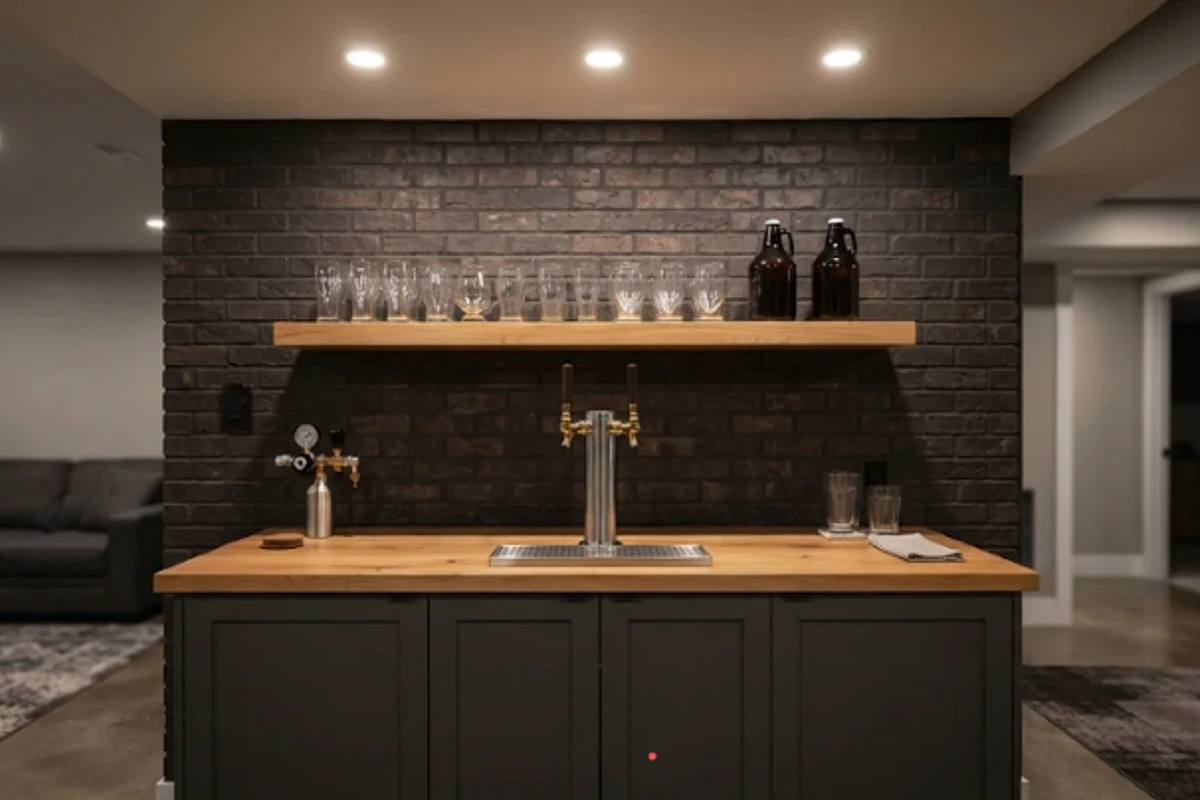
23. Create a Craft Beer Tap Station: Thoughtful design elements paired with functional residential entertaining ergonomics.
Homeowners who want a specific beverage feature rather than a general-purpose bar.
Set Up a Colorful Mocktail and Soda Bar
A basement beverage station doesn't have to revolve around alcohol.
A mocktail and soda bar can be a welcoming feature for family gatherings, birthday parties, and everyday refreshments.
Stock it with attractive glassware, sparkling water, juice, citrus, and reusable drink accessories. A small refrigerator makes chilled ingredients more convenient, while labeled storage containers can keep supplies organized.
Use light cabinetry or playful accent colors to make the station feel fresh and approachable.
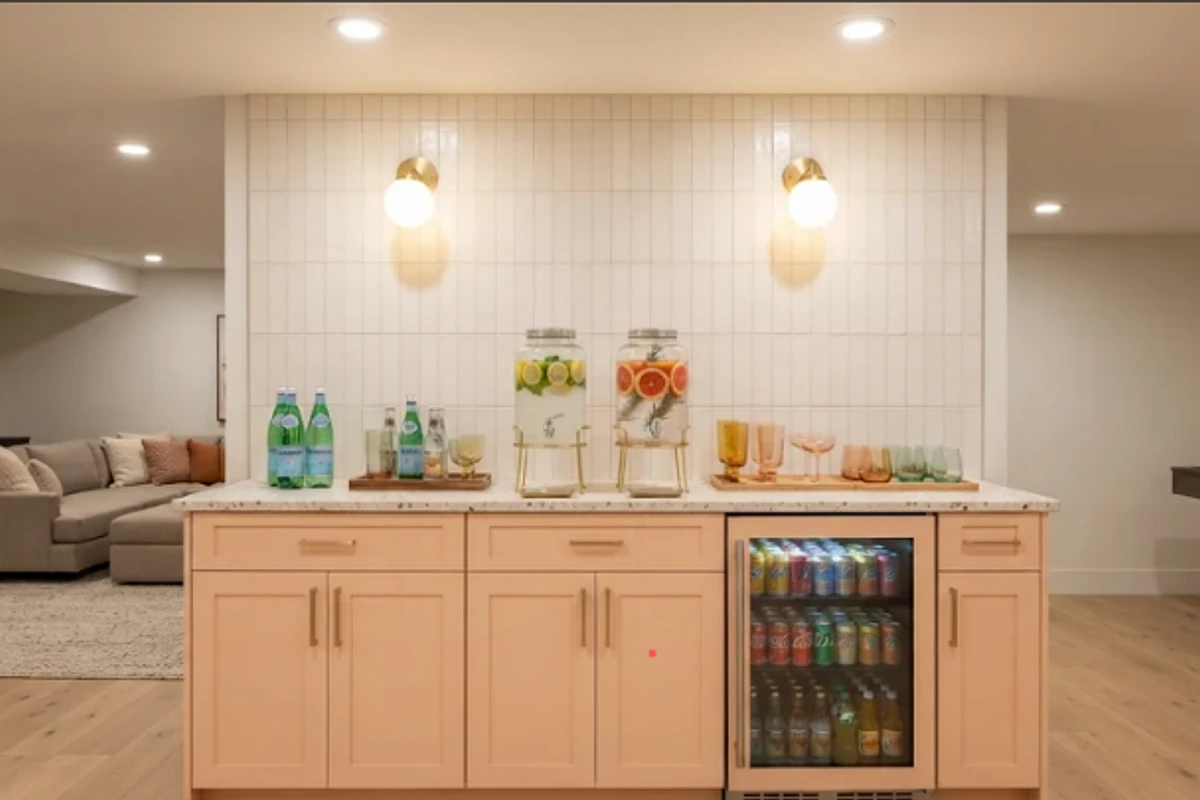
24. Set Up a Colorful Mocktail and Soda Bar: Thoughtful design elements paired with functional residential entertaining ergonomics.
Include a serving tray for garnishes so guests can customize their own drinks without cluttering the entire counter.
Combine a Coffee Bar With an Evening Beverage Station
A dual-purpose coffee and beverage bar gives a basement more opportunities for everyday use.
Dedicate one side of the counter to a coffee machine, mugs, and coffee supplies. Use the other for drinkware, sparkling water, and evening refreshments.
Choose drawers for utensils, coasters, and small accessories, leaving the surface free enough to prepare drinks comfortably.
Wood shelving, ceramic mugs, and warm lighting create a cozy café-like atmosphere.
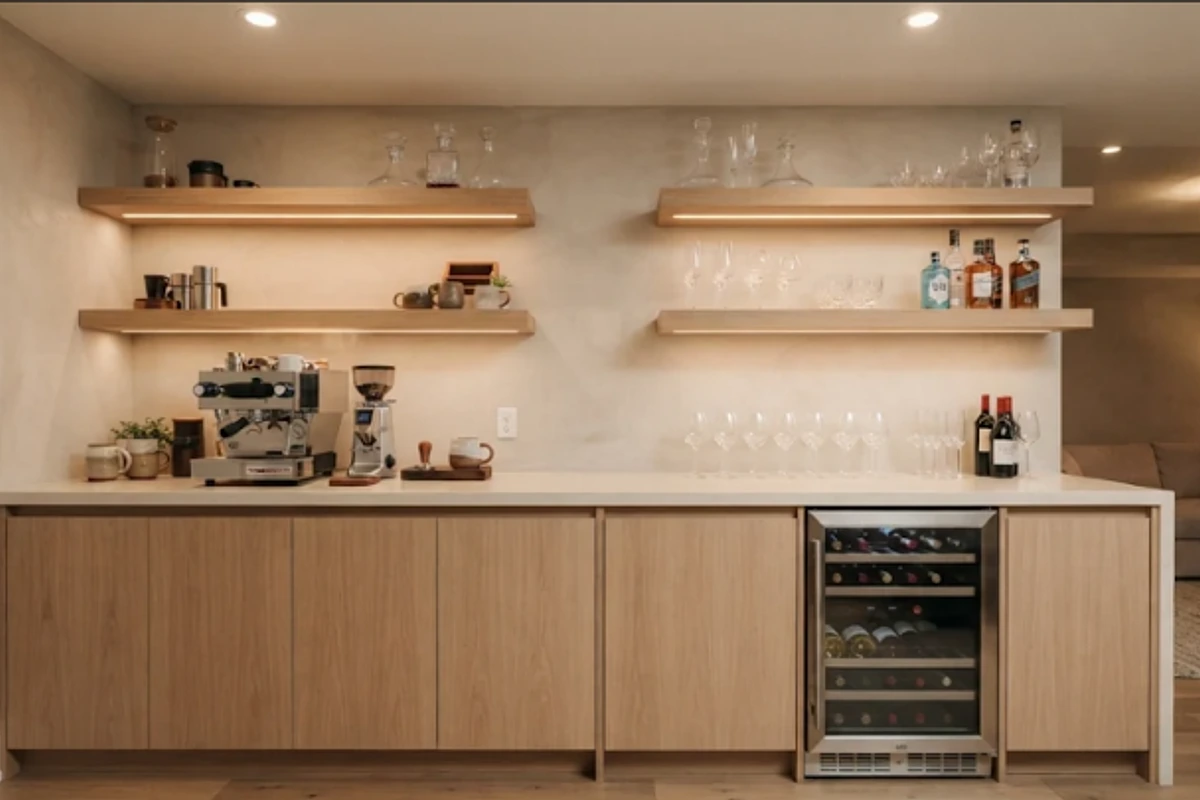
25. Combine a Coffee Bar With an Evening Beverage Station: Thoughtful design elements paired with functional residential entertaining ergonomics.
Store frequently used coffee supplies at a comfortable reach and reserve upper shelving for lighter decorative items.
Build a Sports Viewing Bar
A sports-inspired basement bar can be stylish without covering every wall in team memorabilia.
Position the serving area so it doesn't interfere with television viewing. Use comfortable stools and keep frequently used drinks and snacks close at hand.
A large screen, subtle accent lighting, and a few meaningful sports collectibles can establish the theme.
Choose durable, easy-care materials that stand up to frequent gatherings. Closed storage makes cleanup easier when the game ends.

26. Build a Sports Viewing Bar: Thoughtful design elements paired with functional residential entertaining ergonomics.
Consider screen glare, speaker placement, and comfortable viewing angles before fixing the television or bar seating in place.
Pair Your Bar With a Game Room
A game-room bar works best when it serves the activity rather than competing with it.
Place a compact drink station near a pool table, board-game area, or arcade setup. Provide enough counter space for refreshments while keeping drinks away from game equipment.
A dark green accent wall, warm wood cabinetry, and simple pendant lighting can give the room a relaxed clubhouse atmosphere.
If you have a pool table, measure the full cueing clearance before positioning stools or a bar peninsula nearby.
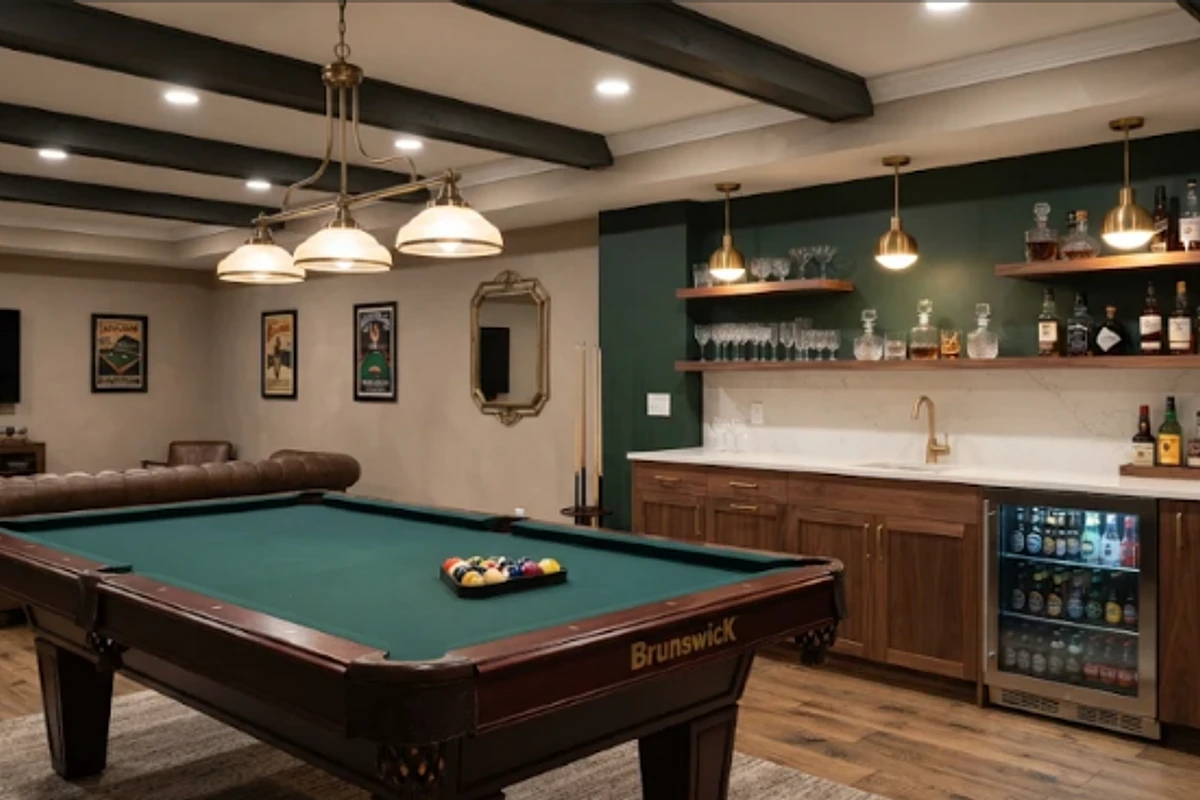
27. Pair Your Bar With a Game Room: Thoughtful design elements paired with functional residential entertaining ergonomics.
Use a dedicated snack drawer or cabinet so the main bar countertop stays available for serving.
Add a Home Theater Concession Bar
If your basement is already a movie-watching space, a concession-style bar can make the experience more enjoyable.
Create a compact counter for popcorn, bottled drinks, candy, and serving trays. Include closed cabinets for supplies and a mini refrigerator if space allows.
For the décor, choose darker finishes that complement the theater atmosphere without creating unwanted reflections near the screen.
A small undercounter light is helpful when guests need refreshments during a movie.
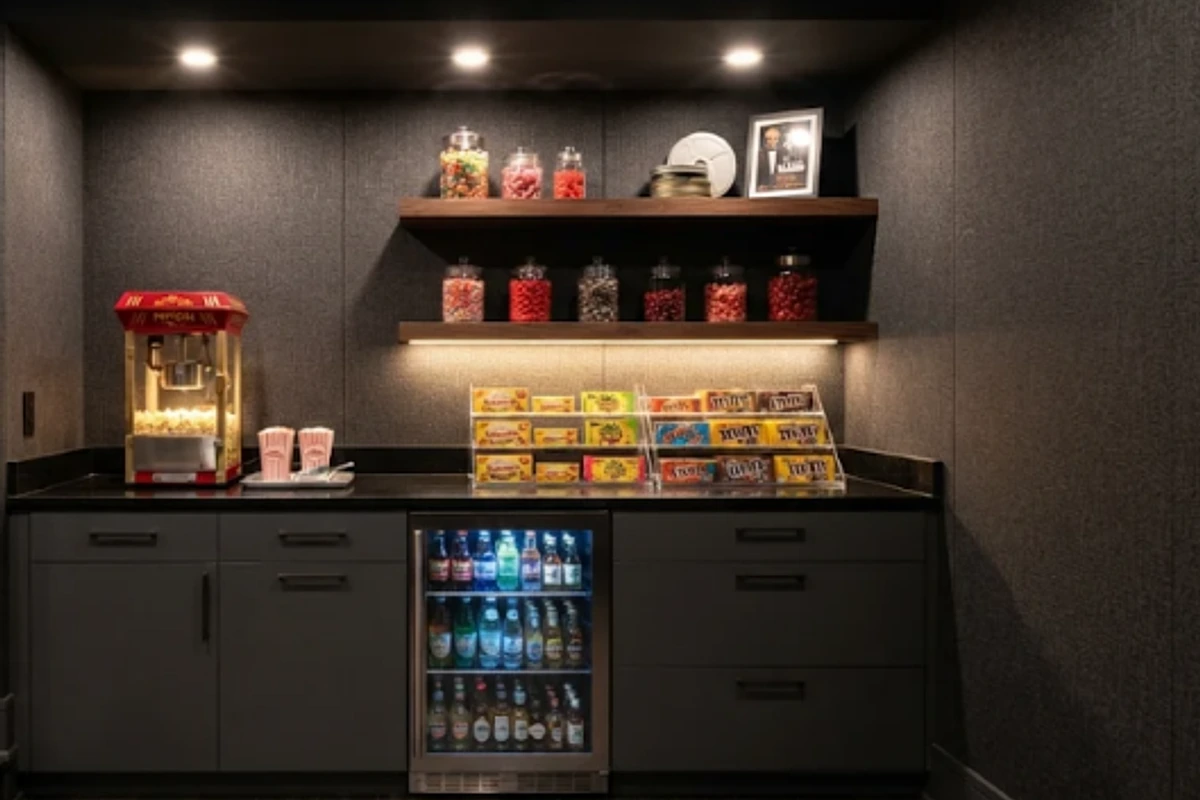
28. Add a Home Theater Concession Bar: Thoughtful design elements paired with functional residential entertaining ergonomics.
Position the station near the room's entrance or along a side wall so people can grab snacks without walking directly in front of the screen.
Choose an Accessible Counter-Height Bar
Traditional raised bar counters aren't always comfortable for everyone.
A counter-height beverage station can be more versatile, especially for households that prefer ordinary dining chairs or want an inclusive gathering area.
Consider a 36-inch-high working counter with comfortable seating nearby. If wheelchair access is part of the project, incorporate a properly planned lower-height section with suitable knee and toe clearance, clear approach space, and accessible circulation based on the intended users and applicable requirements.
You can still make the bar beautiful with soft wood finishes, attractive tile, and layered lighting.
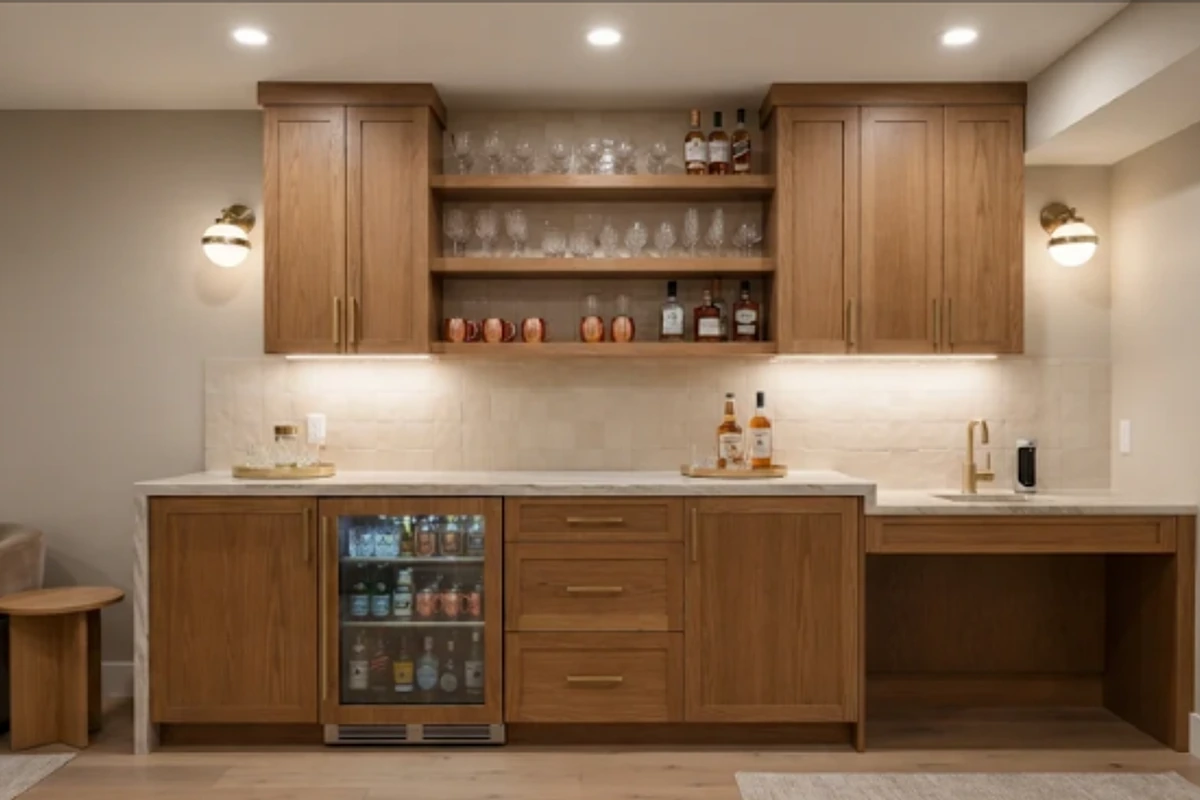
29. Choose an Accessible Counter-Height Bar: Thoughtful design elements paired with functional residential entertaining ergonomics.
Plan around the people who will use the room instead of assuming one counter height works for everyone.
Transform an Existing Cabinet Into a Budget Basement Bar
The final idea is proof that a beautiful basement bar doesn't have to begin with a major renovation.
Start with a sturdy sideboard, dresser-style cabinet, or existing lower cabinet that can safely support a serving surface. Paint it in a sophisticated color, upgrade the hardware, and add a durable countertop or protective tray.
Mount a suitable shelf or hang artwork above the station. A table lamp or thoughtfully placed battery-operated accent light can provide a welcoming finishing touch without complicated construction.
Use matching glassware and a small arrangement of practical accessories to create a finished appearance.
The transformation comes from careful editing, coordinated finishes, and smart organization rather than expensive materials.
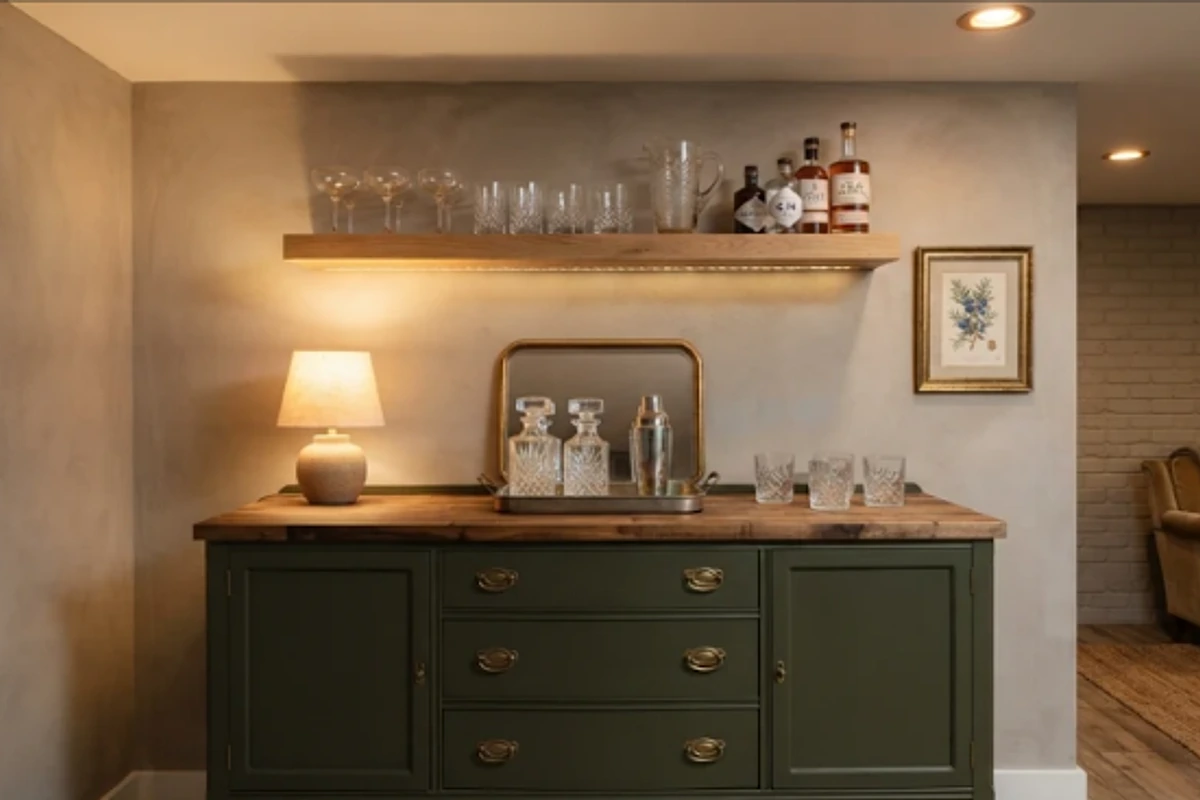
30. Transform an Existing Cabinet Into a Budget Basement Bar: Thoughtful design elements paired with functional residential entertaining ergonomics.
Reuse what you own before purchasing new cabinetry. Spend first on stability, moisture protection, and a safe, easy-to-clean serving surface.
Basement Bar Planning Tips Before You Start
The best-looking basement bar won't be enjoyable if the room is damp, the stools are uncomfortable, or the refrigerator door can't open properly. Here are the practical considerations worth addressing before investing in materials:
- 1Deal With Moisture Before Installing Cabinets: Basements can be vulnerable to condensation, leaks, and elevated humidity. Inspect walls and floors for evidence of moisture before installing permanent cabinetry. The U.S. Environmental Protection Agency recommends keeping indoor relative humidity below 60%, ideally between 30% and 50%.
- 2Choose the Right Counter Height: Two common heights for home beverage stations are 42 inches (traditional raised bar height, paired with taller bar stools) and 36 inches (standard kitchen-style counter height, often better for multifunctional beverage stations). A 42-inch-high bar with seating typically uses approximately 12 inches of knee-space overhang, while a 36-inch counter requires around 15 inches.
- 3Use Layered Lighting: Combine ceiling lighting with fixtures that illuminate the actual work surface. Under-shelf lighting is useful for finding glasses and preparing drinks, while wall sconces and lamps make the surrounding room feel comfortable.
- 4Give Storage a Purpose: Separate storage into useful categories: everyday glasses, serving accessories, drink ingredients, snacks, and occasional entertaining supplies. Keep heavy items in secure lower storage and lighter objects on upper shelves.
- 5Plan Your Appliances Early: A beverage refrigerator, wine cooler, or draft-beverage system needs more than an appropriately sized opening. Check the manufacturer's required ventilation clearances, door swing, power requirements, and maintenance access before purchasing cabinetry.
- 6Keep the Room Comfortable and Safe: Avoid blocking stairs, exits, utility equipment, or essential access routes. Confirm local building requirements for ceiling height, electrical protection, plumbing, ventilation, and any permit needs.
How Much Should You Spend on a Basement Bar?
The right budget depends on the existing basement conditions, your chosen materials, and whether plumbing or electrical work is needed. Instead of choosing a budget from appearance alone, start with the features you actually require:
| Design Parameter | Editorial Specification |
|---|---|
| Budget Refresh | Repainted cabinet, cart, shelving, lighting; low structural complexity |
| Mid-Range Upgrade | New lower cabinets, durable countertop, beverage fridge; verified electricals |
| Custom Bar | Bespoke counters, specialty finishes, integrated display storage |
| Full Wet Bar | Cabinets, sink, plumbing, appliances, lighting, drainage, permits |
Frequently Asked Questions About Basement Bars
What is the best type of bar for a small basement? A single-wall dry bar, corner station, or under-stairs bar is often the most space-efficient choice. These layouts provide useful storage and serving space without requiring a large freestanding counter.
Can I build a basement bar without plumbing? Yes. A dry bar doesn't require a sink and can work well with a cabinet, countertop, shelving, and portable drink accessories. A refrigerator or other powered appliance may still require suitable electrical provision.
What is the difference between a wet bar and a dry bar? A wet bar includes a sink connected to appropriate water supply and drainage. A dry bar does not have a sink. The right option depends on your plumbing access, budget, and how frequently you'll use the station.
How high should a basement bar counter be? A traditional raised bar counter is commonly around 42 inches high, while a standard counter-height station is typically around 36 inches. The choice should account for stool height, legroom, accessibility, and how the surface will be used.
What colors work best for a basement bar? Warm white, natural oak, muted green, navy, charcoal, and rich brown are versatile choices. Lighter finishes can help a small basement feel more open, while darker colors can create a comfortable lounge atmosphere when supported by good lighting.
How do I make a basement bar look expensive on a budget? Focus on a coordinated cabinet finish, attractive hardware, clean shelving, and carefully placed lighting. A durable countertop and organized glassware can make a simple cabinet bar look considerably more polished without a complete remodel.
Can a basement bar be used for coffee and nonalcoholic drinks? Absolutely. A basement bar can function as a coffee station, mocktail counter, soda bar, or family snack area. Designing for multiple uses can make the investment more useful throughout the day.
Final Thoughts: Create a Basement Bar That Fits Your Life
The best basement bar ideas for 2027 aren't necessarily the biggest or most expensive. They're the designs that make thoughtful use of the room, feel connected to the rest of the home, and make gathering with friends and family more enjoyable.
If your basement is small, a corner bar, concealed cabinet, or simple dry bar may be all you need. If you have a spacious entertainment room, an L-shaped counter, elegant speakeasy, or built-in beverage station can become a beautiful focal point.
Start with the layout, take care of practical basement conditions, and then choose the materials and details that reflect your personal style.
Found an idea you love? Save this guide to your Basement Bar Ideas Pinterest board so you can revisit the inspiration when you're ready to plan your project.
Related Editorial Stories
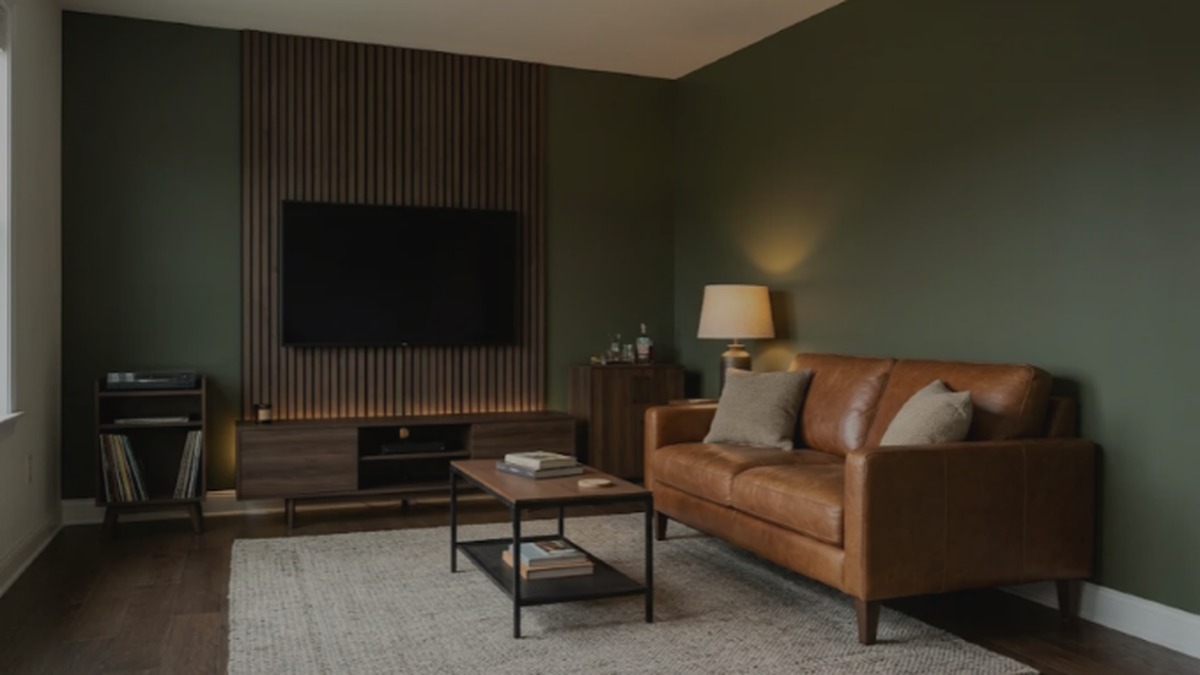
30 Man Cave Decor Ideas in 2027 for Every Style, Space, and Budget
Discover 30 elevated man cave decor ideas for 2027: moody lounges, compact console gaming nooks, sports watch-party layouts, and budget-friendly renter solutions.

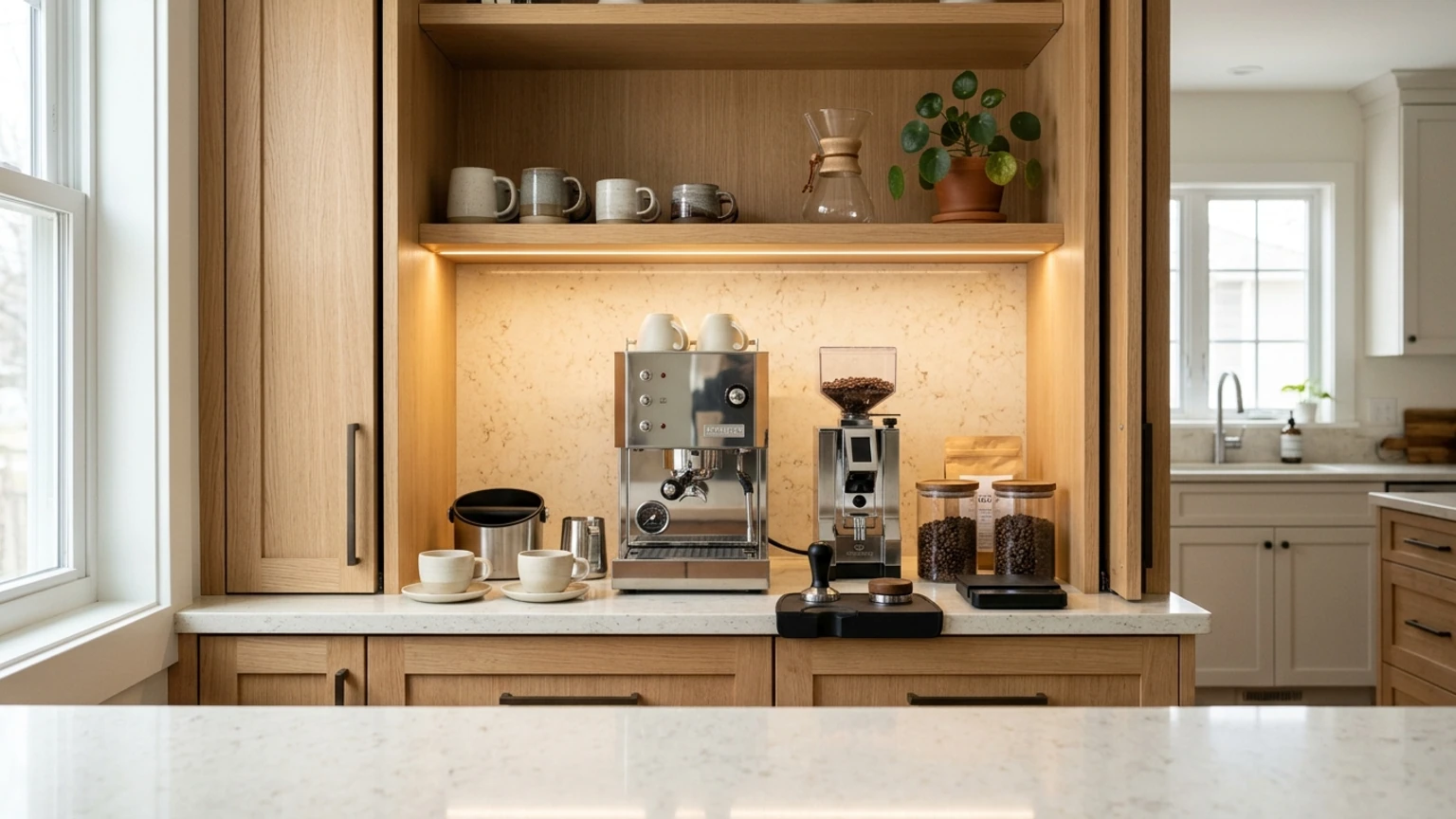
30 Kitchen Coffee Station Ideas in 2027 (Small Spaces, Modern Nooks & Stylish Coffee Bars)
Discover 30 practical, beautiful kitchen coffee station ideas for 2027—from compact countertop trays and slim rolling carts to concealed appliance garages and boutique home cafes.
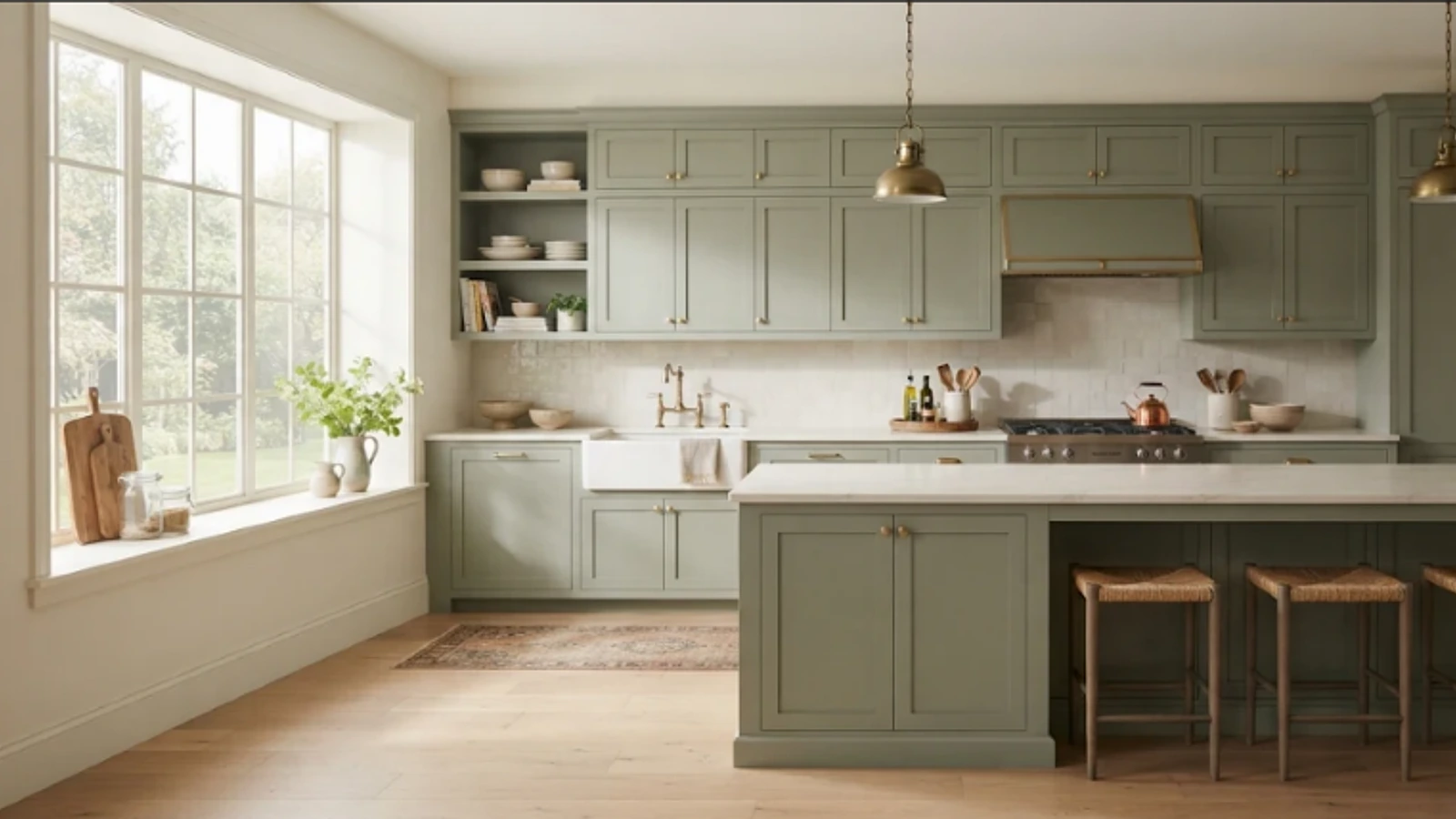
30 Sage Green Kitchen Cabinet Ideas for 2027 That Feel Fresh, Warm, and Timeless
Sage green kitchen cabinets bring calm, organic elegance without feeling plain. Explore 30 inspiring ideas for 2027—from classic Shaker and white oak combinations to dramatic islands, beadboard details, and curated hardware pairings.