30 Gray and White Kitchen Ideas for 2027 That Feel Warm, Modern, and Timeless
Discover 30 elevated gray and white kitchen ideas for 2027: warm two-tone cabinetry, charcoal islands, marble backsplashes, brass hardware, and cozy breakfast nooks.
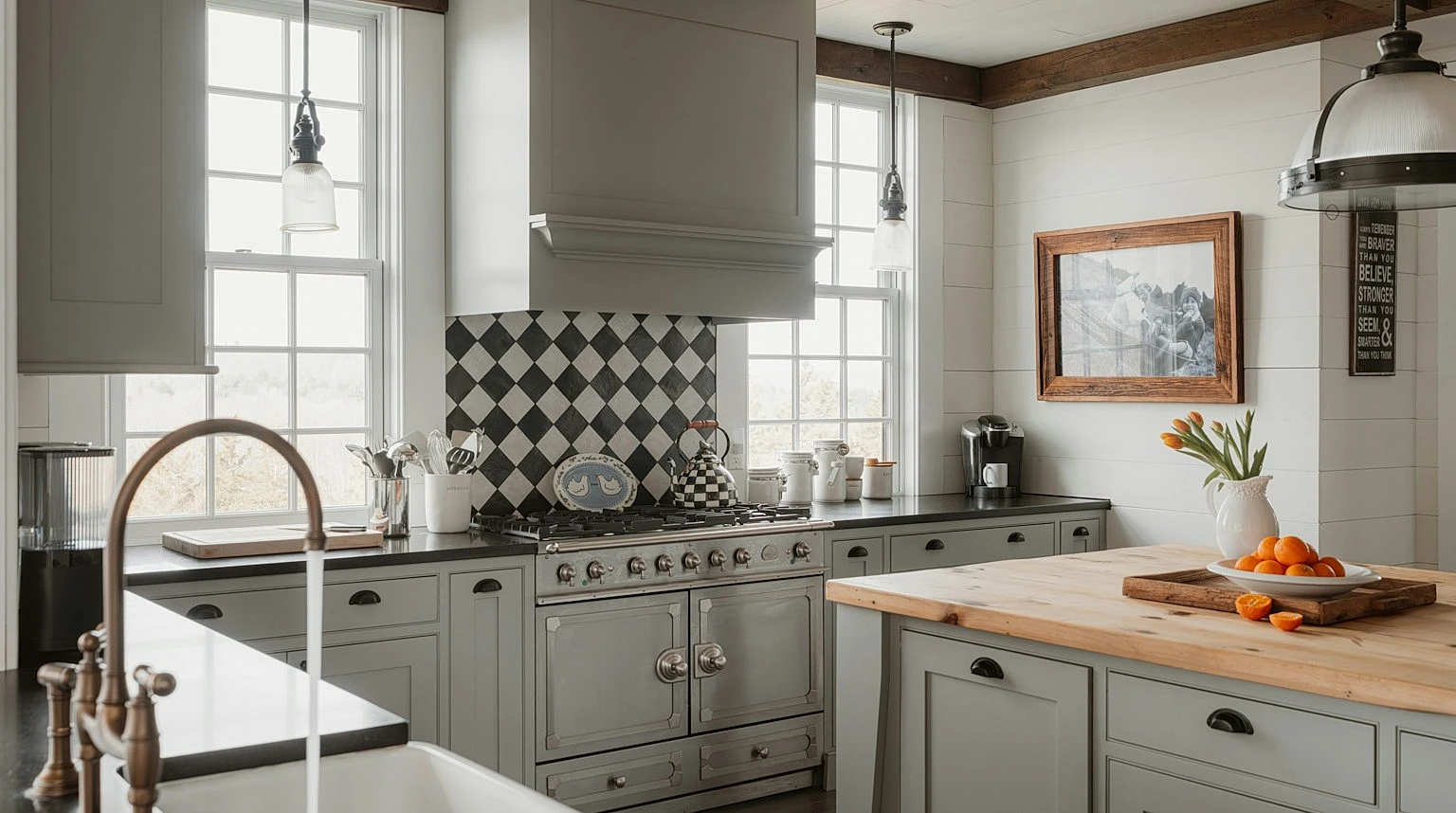
Are Gray and White Kitchens Still in Style for 2027?
A gray and white kitchen can feel crisp and contemporary, soft and inviting, or beautifully traditional. The difference comes down to how you combine the colors, materials, finishes, and lighting.
If you love white kitchens but want something with a little more personality, gray is an easy color to introduce. A pale gray island can add depth to white cabinetry, while charcoal cabinets can make a simple white backsplash look striking. Even a small kitchen can benefit from this pairing without feeling dark or crowded.
For 2027, the most interesting gray and white kitchens are moving beyond plain, cool-toned surfaces. Warm wood, textured tile, natural stone, concealed storage, and thoughtful lighting all help make these neutral spaces feel more personal.
Industry trend reports identify neutrals as an enduring color direction and emphasize natural materials, distinctive islands, concealed storage, and layered lighting. That doesn't mean every surface needs to be white or gray. A wood countertop, warm metal hardware, or softly textured backsplash can make the entire space feel more inviting. The most effective approach is to use white for visual openness, gray for dimension, and natural materials for warmth.
How to Choose the Right Gray and White Kitchen Style
Before picking a design, consider your available light, cabinet layout, and the overall atmosphere you want to create.
| Your Kitchen or Preference | A Combination Worth Considering | Key Advantage |
|---|---|---|
| Small or narrow kitchen | White upper cabinets and pale gray lower cabinets | Grounds the base while keeping eye level bright and open |
| Large open kitchen | White perimeter cabinets with a darker gray island | Anchors the room and creates a natural focal point |
| Low natural light | Warm white with soft greige accents | Prevents cold shadows and reflects soft ambient light |
| Modern minimalist home | Flat-front graphite cabinets and white countertops | Clean horizontal planes and dramatic graphic contrast |
| Cozy farmhouse style | Gray Shaker cabinets, warm oak, and an apron-front sink | Welcoming craftsmanship with timeless tactile materials |
| Classic traditional kitchen | Dove-gray cabinets, white stone, and aged brass | Sophisticated, enduring architectural elegance |
| Budget-friendly refresh | Existing white cabinets with gray paint, hardware, or textiles | High-impact visual transformation without cabinet replacement |
- A Simple Starting Point: If you're nervous about committing to gray cabinetry, introduce gray on the island, backsplash, or one freestanding piece first. It's easier to adjust an accent than repaint an entire kitchen.
Soft Gray Lower Cabinets With White Upper Cabinets
Two-tone cabinets are an easy way to create contrast without overwhelming the room. Use soft gray on the lower cabinets and white on the uppers to keep the kitchen looking open and balanced.
This arrangement works particularly well in kitchens with standard ceiling heights. The darker color visually grounds the bottom half of the space, while the white cabinets keep the upper walls feeling light.
Choose a gray with a gentle beige or taupe undertone if your kitchen receives limited natural light. Repeat the gray in a small accessory, such as a ceramic vase, to make the palette feel coordinated.
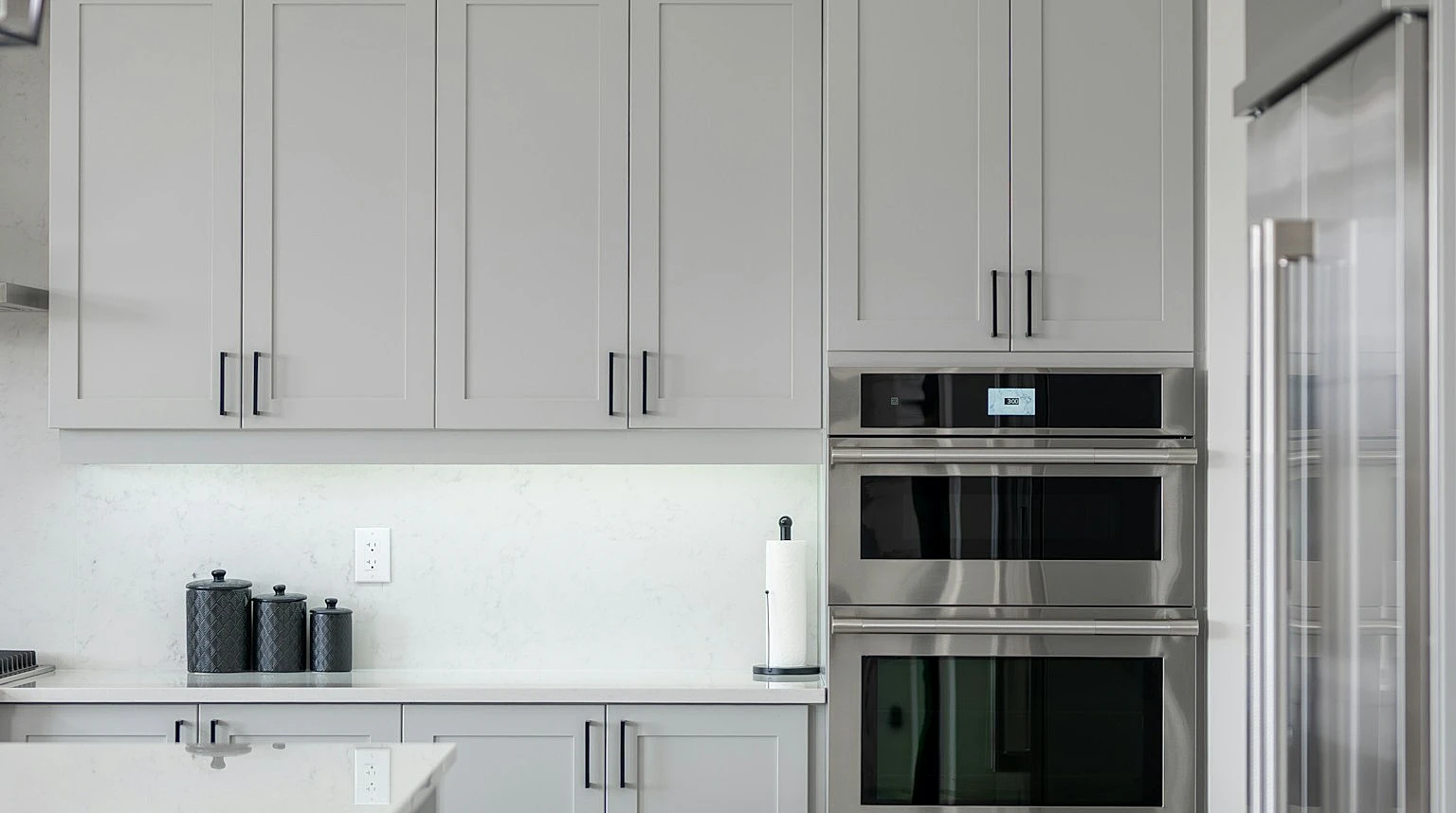
BEST FOR: Small kitchens, contemporary homes, and approachable remodels. PRO STYLING TIP: Match your toe-kick moldings to the lower cabinet shade to create a seamless grounded base.
White Shaker Cabinets With a Charcoal Gray Island
A charcoal island can become the focal point of an otherwise white kitchen. It creates visual depth while allowing you to keep the surrounding cabinets bright and familiar.
For a balanced look, pair the island with a white stone countertop and repeat its darker color in small details such as lighting fixtures or cabinet handles.
This combination is especially appealing in open-plan kitchens because the island creates a visual boundary between the cooking and living areas. Leave enough walking space around the island so its attractive design doesn't interfere with everyday movement.
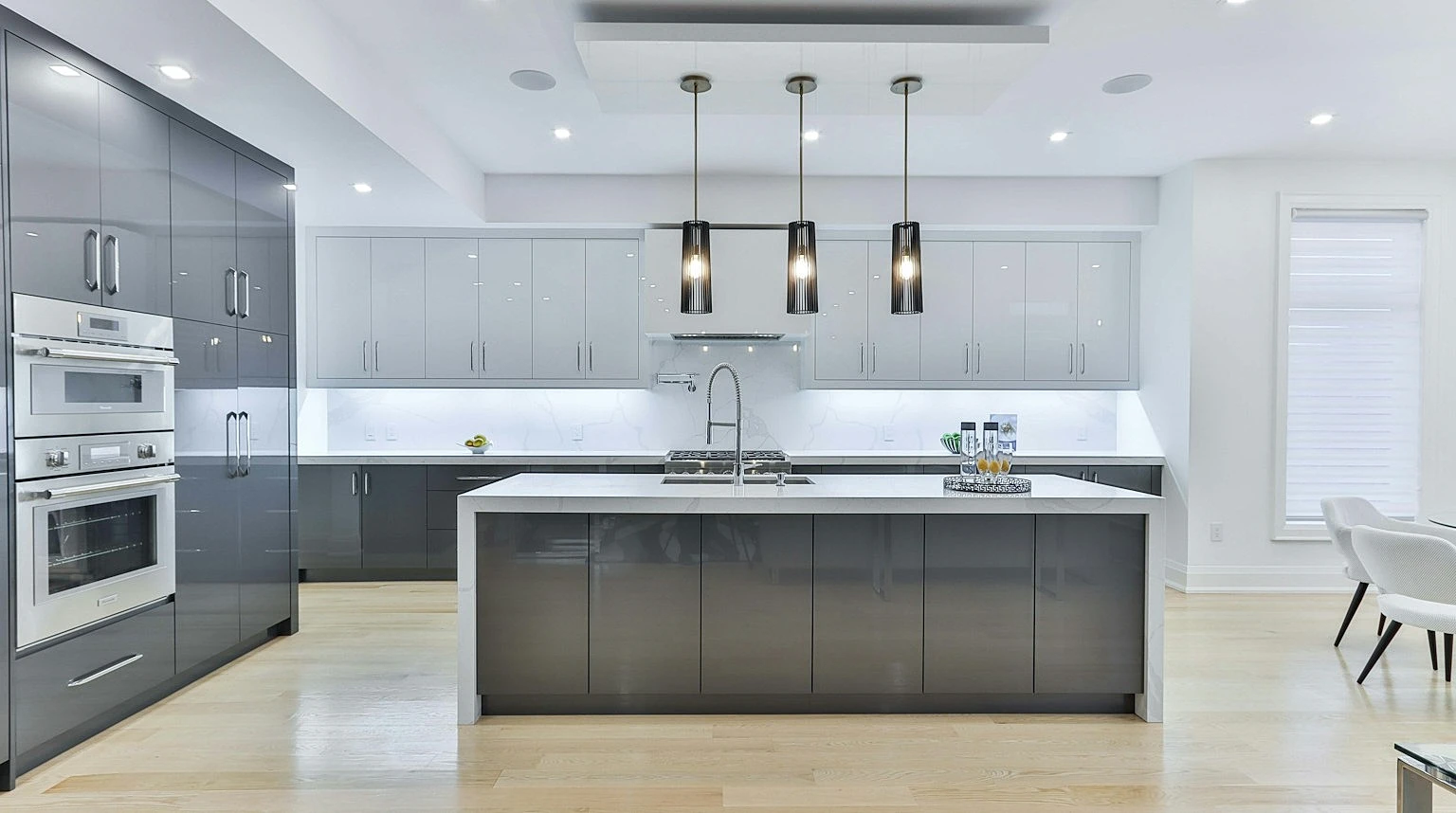
BEST FOR: Medium to large kitchens with enough room for a central island. PRO STYLING TIP: Maintain a minimum 36 to 42-inch clearance walkway around the island perimeter for comfortable circulation.
Deep Graphite Cabinets With Bright White Countertops
Dark gray cabinets can look beautifully dramatic when balanced with clean white surfaces.
Choose graphite or near-charcoal cabinets with a matte or satin finish. A white countertop provides a strong horizontal contrast, preventing the room from becoming visually heavy.
If you want this look in a smaller kitchen, consider placing the dark cabinetry along only one wall rather than around the entire room.
Good task lighting is particularly important here. Under-cabinet lighting makes the work surfaces easier to use and highlights the contrast between dark cabinetry and white stone.
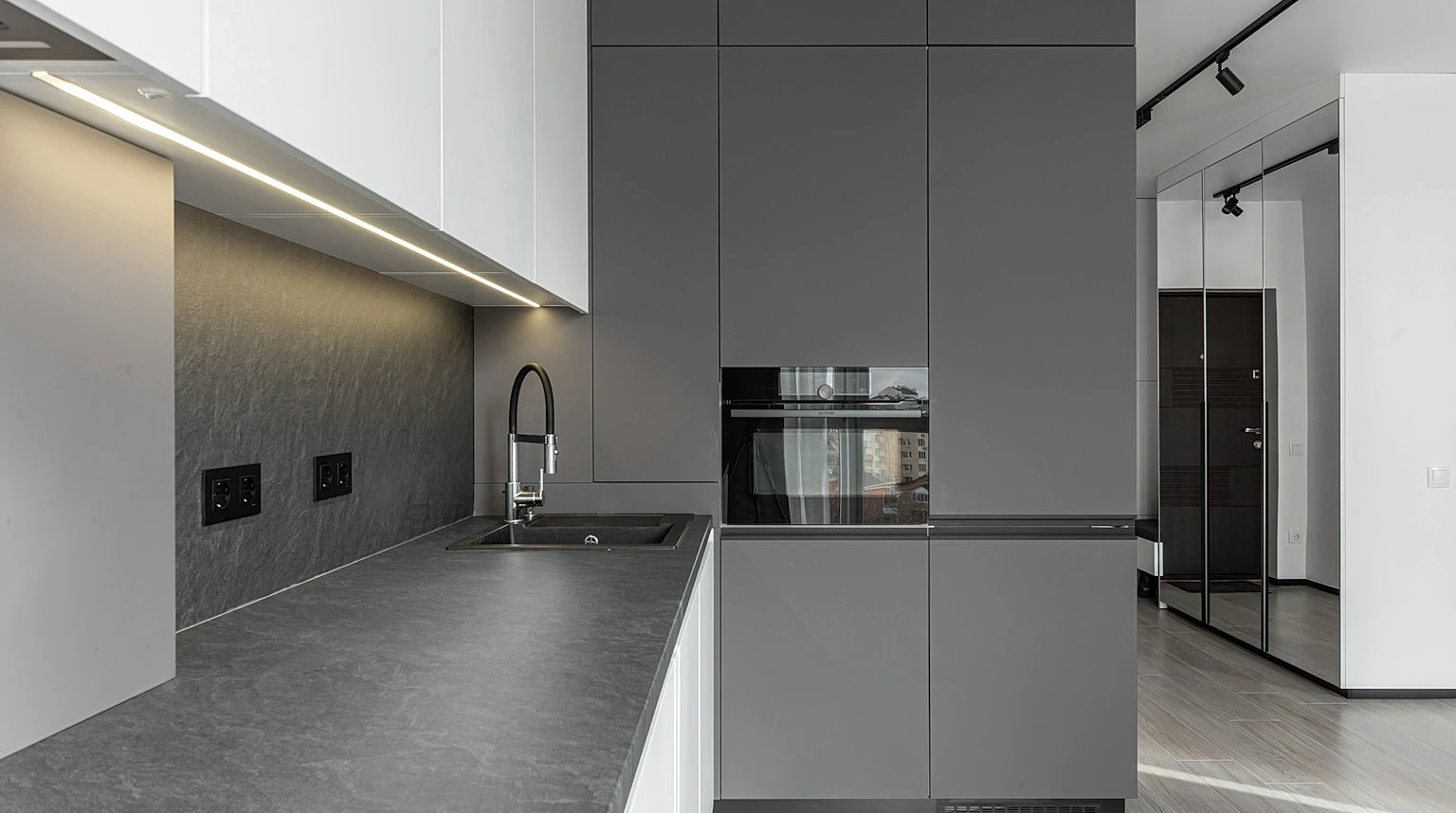
BEST FOR: Contemporary interiors and kitchens with generous natural light. PRO STYLING TIP: Opt for anti-fingerprint matte laminates or polyurethane paint finishes on dark graphite cabinet doors.
Warm Greige Cabinets With Creamy White Walls
Not every gray kitchen needs a cool color palette. Greige, a blend of gray and beige, creates a softer alternative that looks welcoming under warm lighting.
Pair greige cabinets with creamy white walls rather than stark white paint. The subtle tonal difference gives the room depth while maintaining a calm appearance.
Natural oak, woven textures, and warm brass finishes work particularly well with this combination.
Always compare paint samples at different times of day. A cabinet color that appears neutral in a showroom can look distinctly purple, green, or blue in your home's lighting.
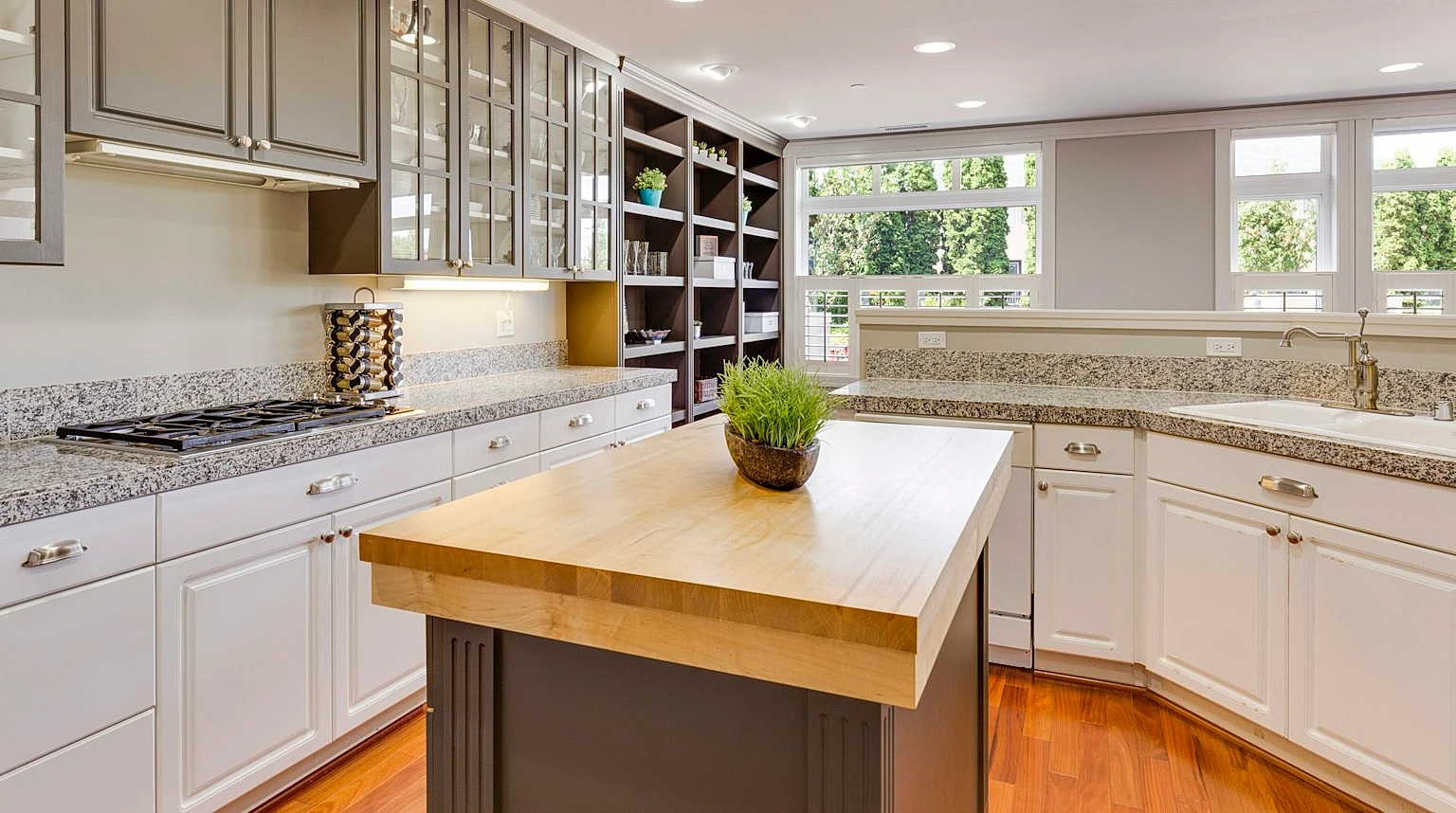
BEST FOR: Cozy kitchens, transitional homes, and spaces with warm-toned floors. PRO STYLING TIP: Paint test swatches on large foam boards and view them under 2700K to 3000K warm LED illumination.
A Gray Floor-to-Ceiling Pantry Wall
A full wall of gray pantry cabinetry can add depth and create valuable closed storage without making every cabinet in the kitchen dark.
Keep the main cooking area white, then introduce medium gray on one tall storage wall. Matching the cabinet fronts and using discreet handles creates a cleaner appearance.
Inside the pantry, prioritize adjustable shelves, pull-out drawers, and practical storage for small appliances.
This idea works best when the gray wall doesn't block an important natural-light source.
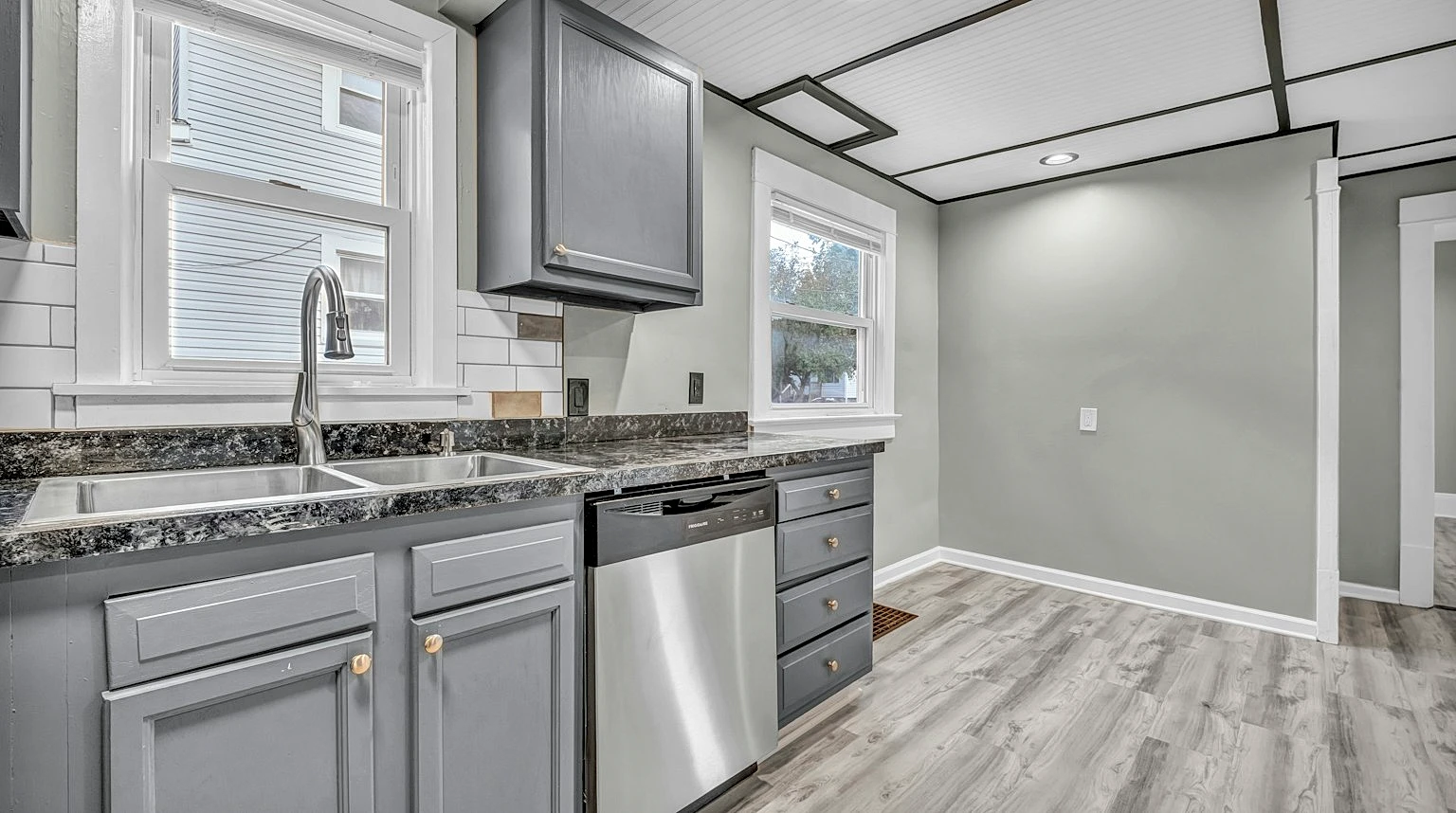
BEST FOR: Storage-focused renovations and kitchens with an unused full-height wall. PRO STYLING TIP: Integrate paneled appliance fronts on refrigerators inside the gray wall to maintain unbroken visual rhythm.
Pale Dove Gray Cabinets for an Airy Galley Kitchen
A narrow galley kitchen doesn't have to be entirely white to feel spacious.
Pale dove gray cabinets provide gentle definition while maintaining a bright appearance. Combine them with white counters, a simple backsplash, and consistent flooring to avoid making the room feel visually segmented.
Use integrated or low-profile pulls so hardware doesn't interrupt the clean cabinet fronts. A continuous countertop also makes the narrow layout feel more orderly.
Consider where cabinet doors, drawers, and appliances open before planning storage on opposing walls.
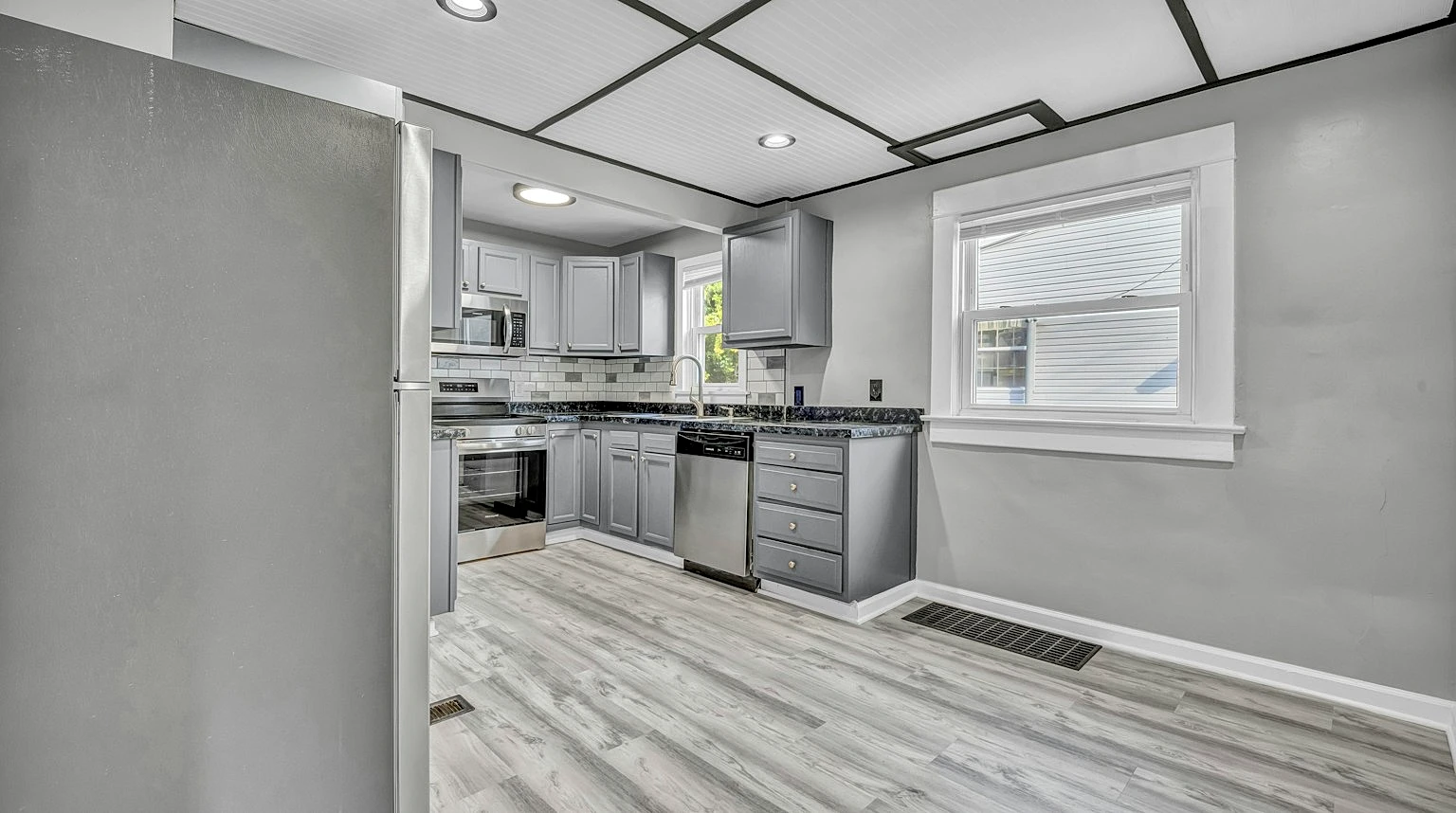
BEST FOR: Apartments, townhouses, and compact galley kitchens. PRO STYLING TIP: Run flooring planks parallel to the galley length to visually stretch the walkway corridor.
A White Kitchen With One Smoky Gray Accent Wall
Painting one wall gray is an affordable way to experiment with the color palette without changing your cabinetry.
A muted smoky gray can frame white shelves or a small dining corner. Keep the other walls white so the contrast feels intentional rather than overwhelming.
Choose a washable finish appropriate for kitchen walls, especially in areas exposed to splashes. Avoid treating ordinary wall paint as a substitute for a protective backsplash directly behind a cooktop.
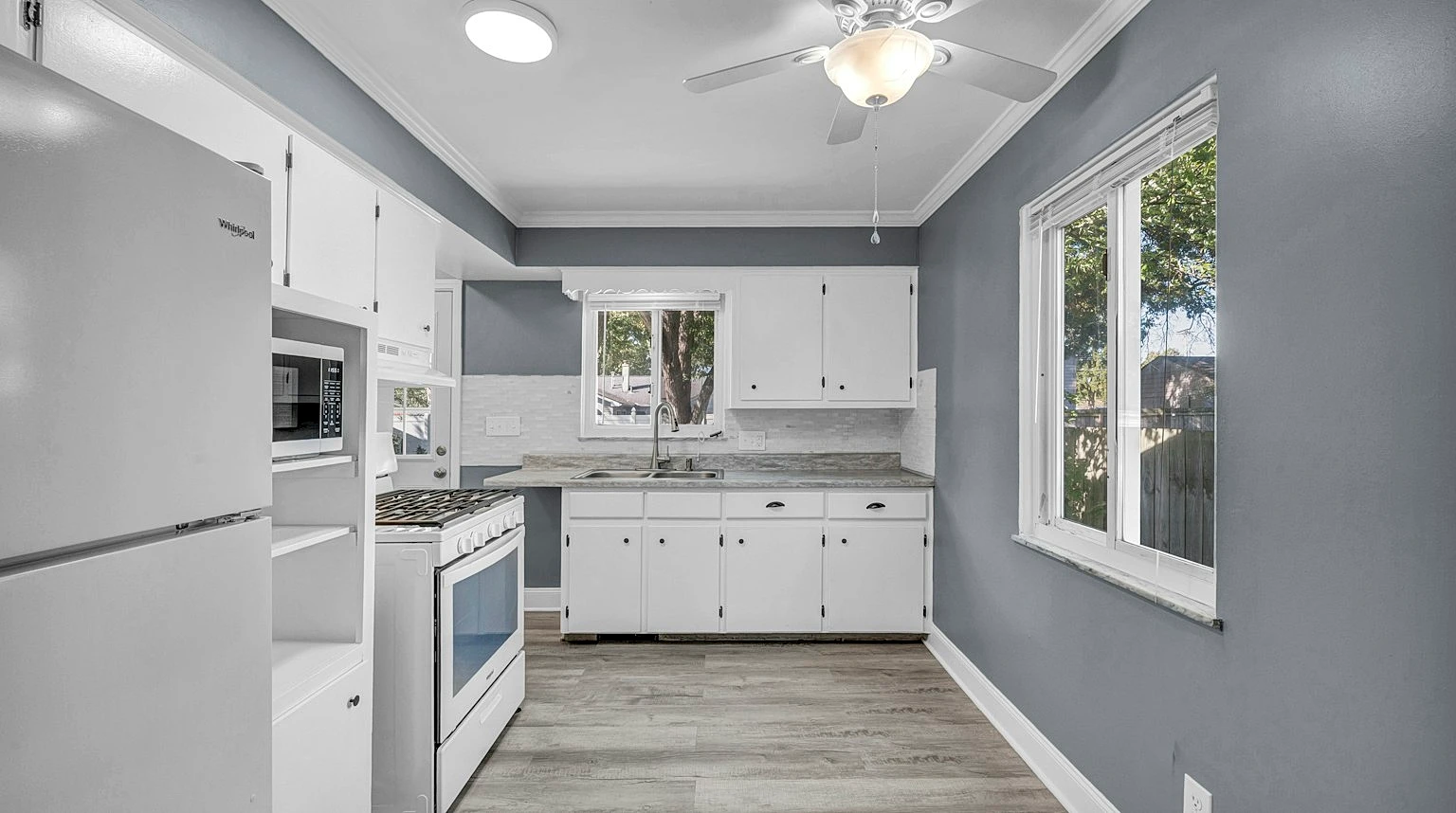
BEST FOR: Renters with painting permission and homeowners looking for a low-cost refresh. PRO STYLING TIP: Use satin or eggshell kitchen-grade enamel paint with mildew resistance on accent walls.
Scandinavian Gray Cabinets With White Surfaces and Oak
Scandinavian-inspired kitchens rely on simplicity, natural materials, and restrained visual details.
Choose flat-front gray cabinets with a matte finish, white counters, and pale oak flooring. Add a small amount of warmth through wooden stools, natural-fiber textiles, or simple ceramic accessories.
Keep countertops mostly clear and favor useful objects over purely decorative displays.
This is an especially effective style when you want a gray and white kitchen that feels peaceful rather than formal.
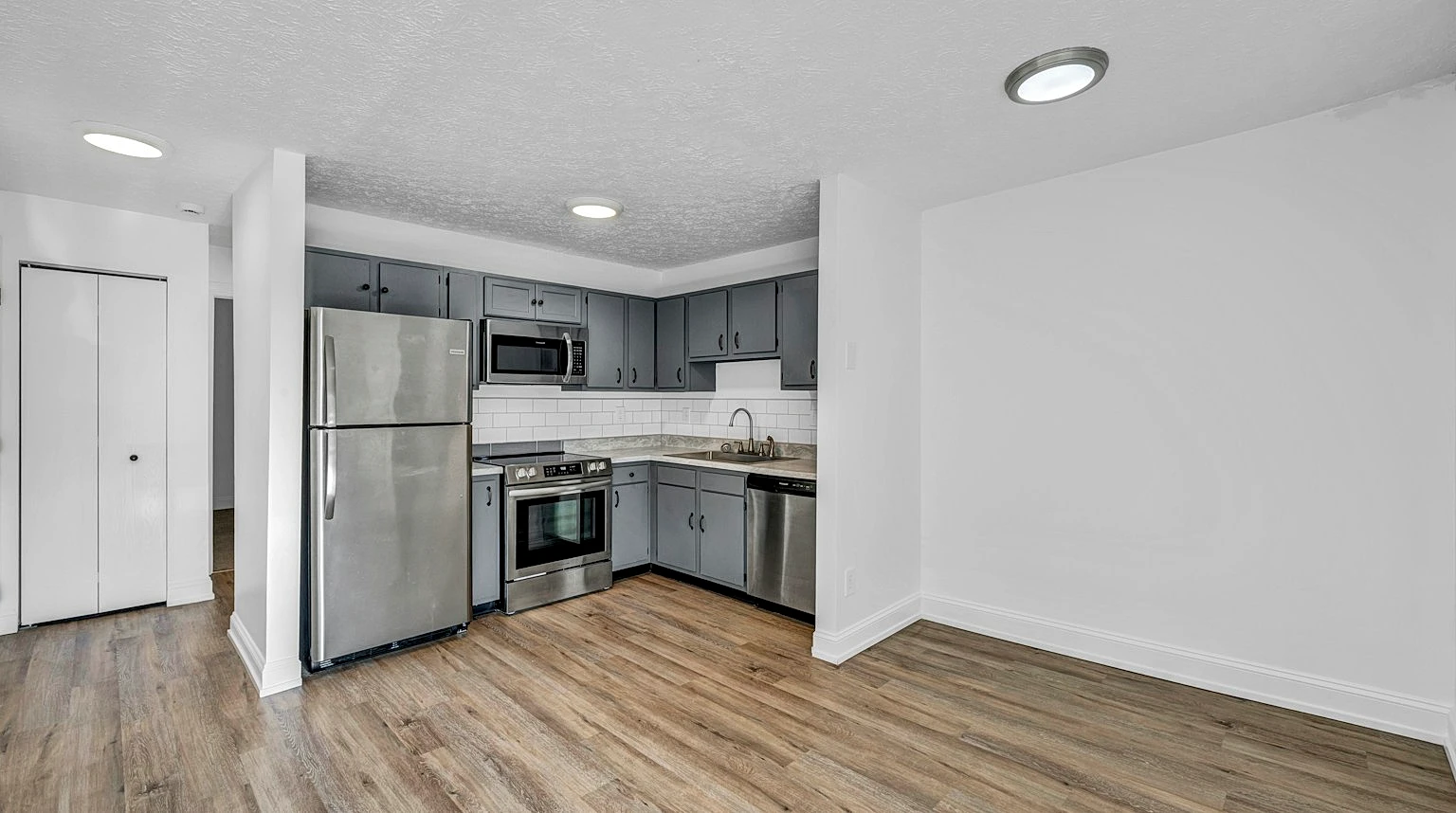
BEST FOR: Minimalist homes and homeowners who prefer clean lines. PRO STYLING TIP: Pair handleless push-to-open flat panels with light white oak bar stools for authentic Nordic warmth.
Farmhouse Gray Shaker Cabinets With a White Apron-Front Sink
For a kitchen with traditional charm, combine medium-gray Shaker cabinets with a white apron-front sink.
The sink becomes a practical focal point, while the cabinet detailing adds a sense of craftsmanship. A white subway tile backsplash and natural wood accents complete the look.
Instead of adding rustic decorations everywhere, choose a few functional pieces such as wooden cutting boards, a ceramic pitcher, or woven baskets.
If you're replacing an existing sink, check cabinet dimensions and installation requirements before purchasing an apron-front model.

BEST FOR: Farmhouse, cottage, and traditional interiors. PRO STYLING TIP: Verify base cabinet reinforcement and plumbing rough-in heights prior to installing heavy fireclay sinks.
Sleek Slate Gray Cabinets With a Waterfall Island
A modern kitchen can use gray and white in a completely different way.
Combine slate-gray slab cabinets with a white waterfall island, where the countertop material continues vertically down one or both ends.
The uninterrupted lines give the room a clean architectural feel. If you choose a dramatic waterfall countertop, keep surrounding backsplash and cabinet details relatively simple.
A waterfall edge can require extra fabrication and material, so it makes sense to compare it with a standard countertop before committing.
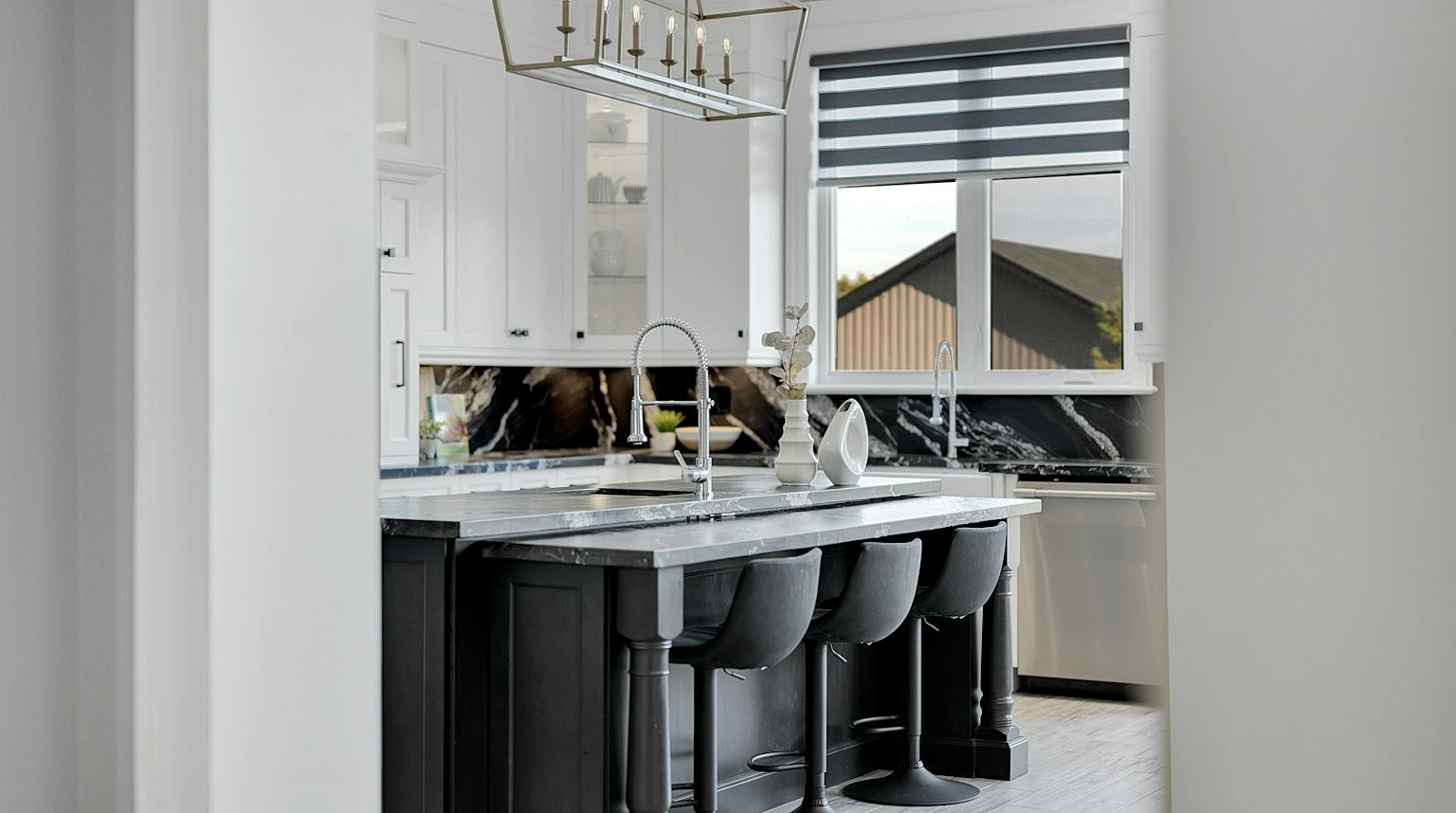
BEST FOR: Contemporary open kitchens and streamlined remodels. PRO STYLING TIP: Ensure 45-degree mitered stone joints along waterfall edges for a solid monolithic block appearance.
White Quartzite With Beautiful Gray Veining
A pale stone surface with distinctive gray veins can connect white and gray cabinets without adding another bold color.
Quartzite is a natural stone, while engineered quartz is manufactured. Both can be attractive countertop choices, but their maintenance needs and material characteristics differ.
Look at a full slab or large sample whenever possible, since veining can vary considerably.
Use a restrained cabinet finish so the stone remains the central design feature.
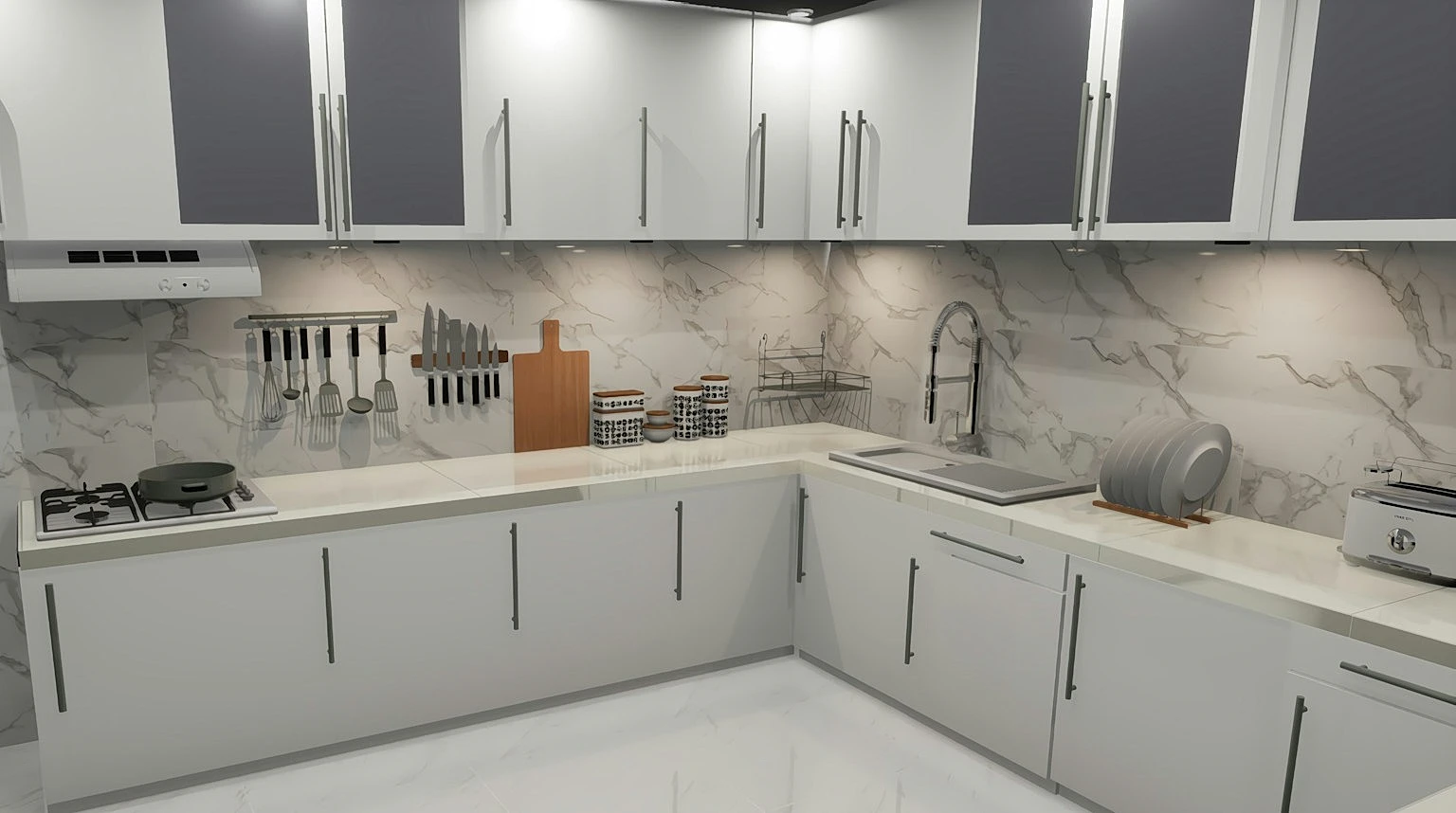
BEST FOR: Elegant transitional and luxury kitchen schemes. PRO STYLING TIP: Have your fabricator book-match adjacent slabs across corner seams to align natural veining flows.
Handmade-Look Gray Zellige Backsplash Tiles
A gray tiled backsplash doesn't need to be perfectly uniform.
Handmade-look zellige tiles have gentle variations in surface and color that create character, particularly when light reflects across the wall.
Use soft gray tiles behind white cabinets and choose a grout color that complements the tile without creating distracting outlines.
Because textured tiles may have irregular edges and installation needs, review cleaning and maintenance recommendations before choosing them for a busy cooking area.
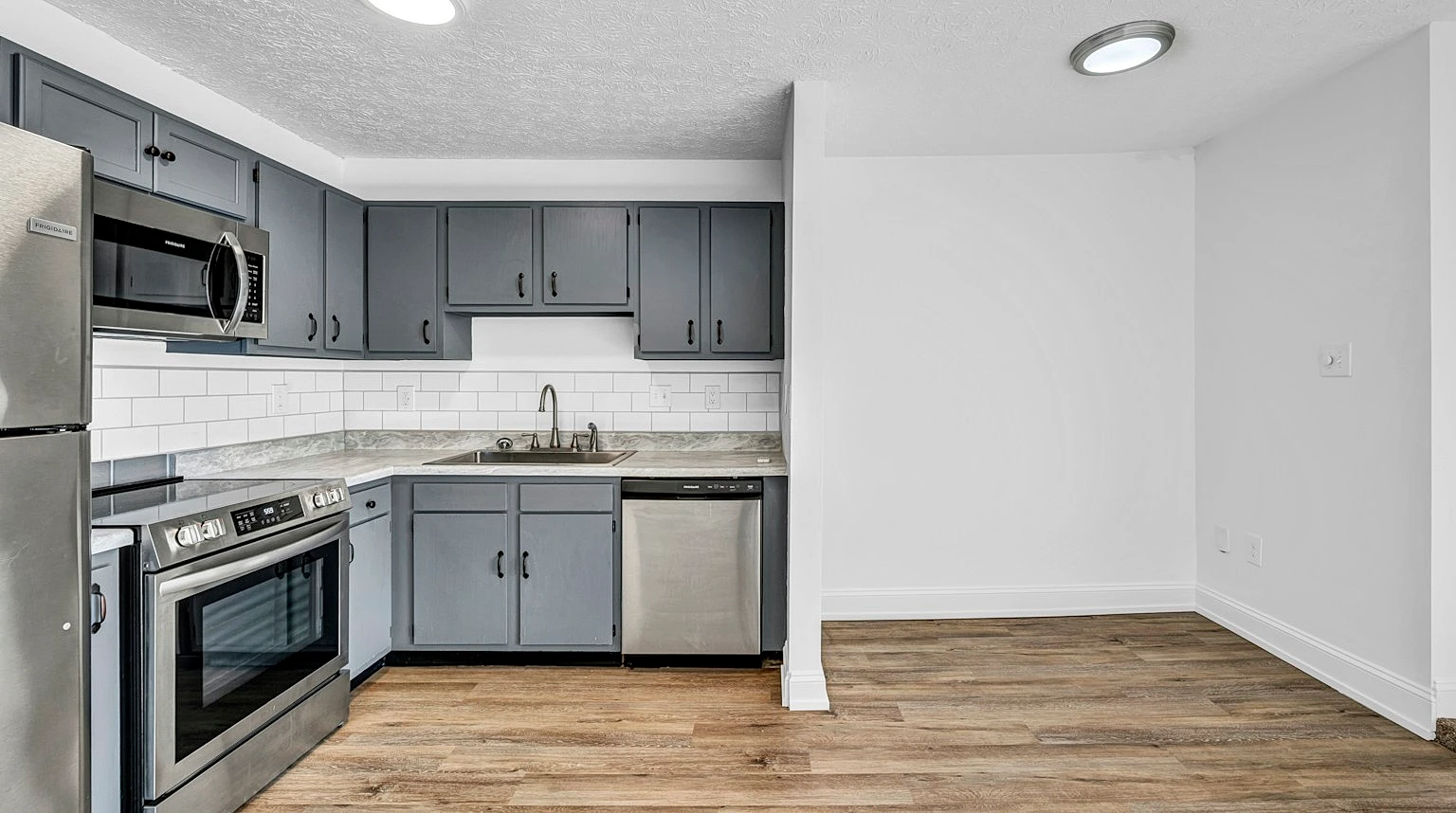
BEST FOR: Organic modern, Mediterranean-inspired, and artisanal kitchens. PRO STYLING TIP: Use tight 1/16-inch grout joints with non-sanded grout to emphasize handcrafted tile glaze variations.
White Herringbone Tile With Soft Gray Grout
Herringbone tile adds movement to a neutral kitchen without introducing an entirely new color.
Choose narrow white rectangular tiles arranged in a herringbone pattern and use soft gray grout to highlight the layout.
This design works especially well behind a range, where the pattern can become a subtle focal point.
Before installation, check the tile dimensions, layout, and edge cuts. Herringbone installations often require more detailed planning than a straightforward stacked tile pattern.
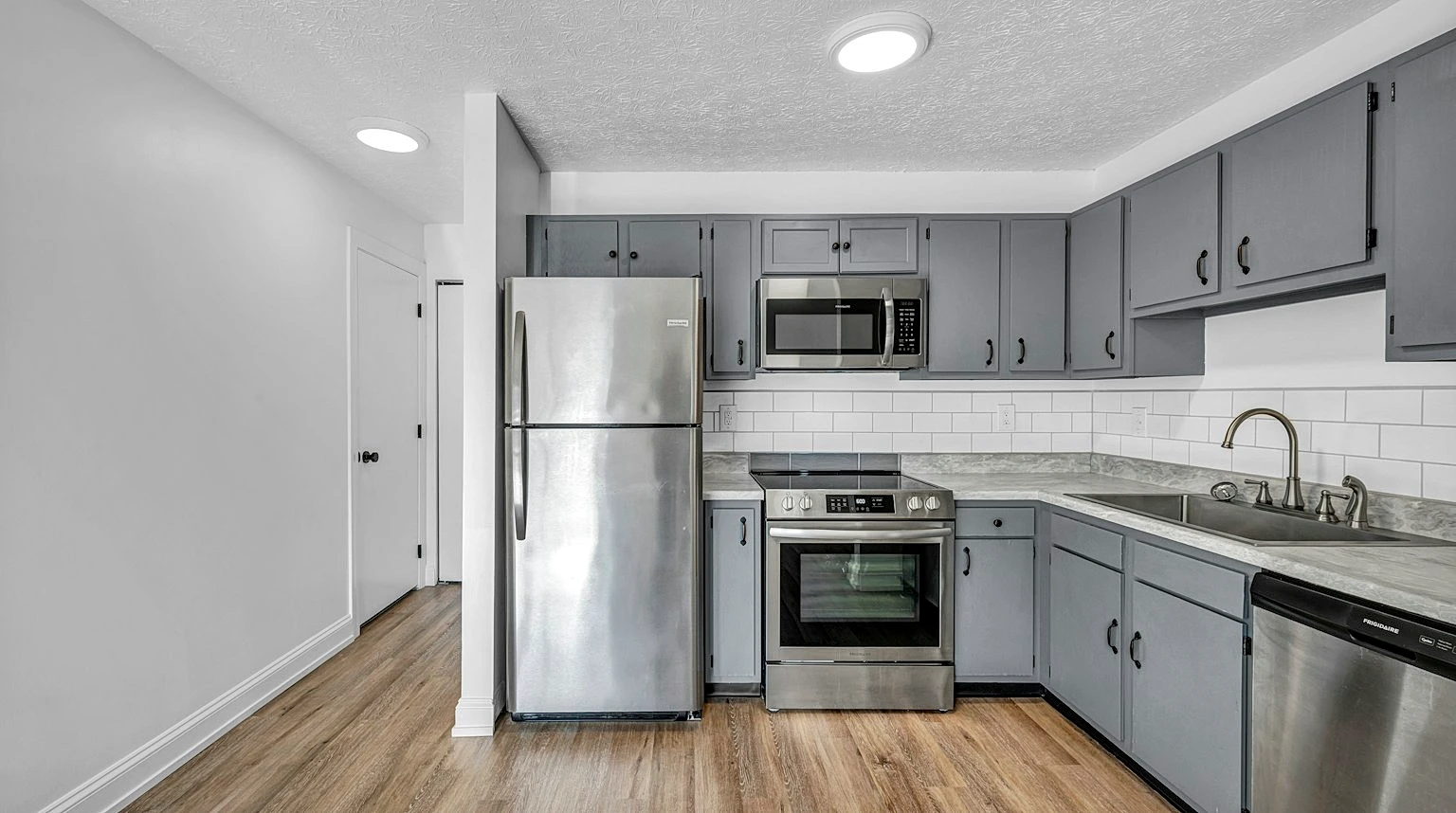
BEST FOR: Classic kitchens that need subtle visual interest. PRO STYLING TIP: Order 15% extra tile overage to accommodate diagonal 45-degree angle edge cuts.
Gray and White Checkerboard Kitchen Floors
A checkerboard floor adds a playful vintage influence to an otherwise understated kitchen.
For a softer version, choose medium gray and warm white tiles rather than stark black and white.
Keep the cabinets, countertops, and backsplash relatively simple so the floor can stand out.
Pay attention to slip resistance, the floor material's suitability for kitchens, and cleaning requirements. A matte or low-sheen surface may be a better fit than a highly polished one in a frequently used cooking space.
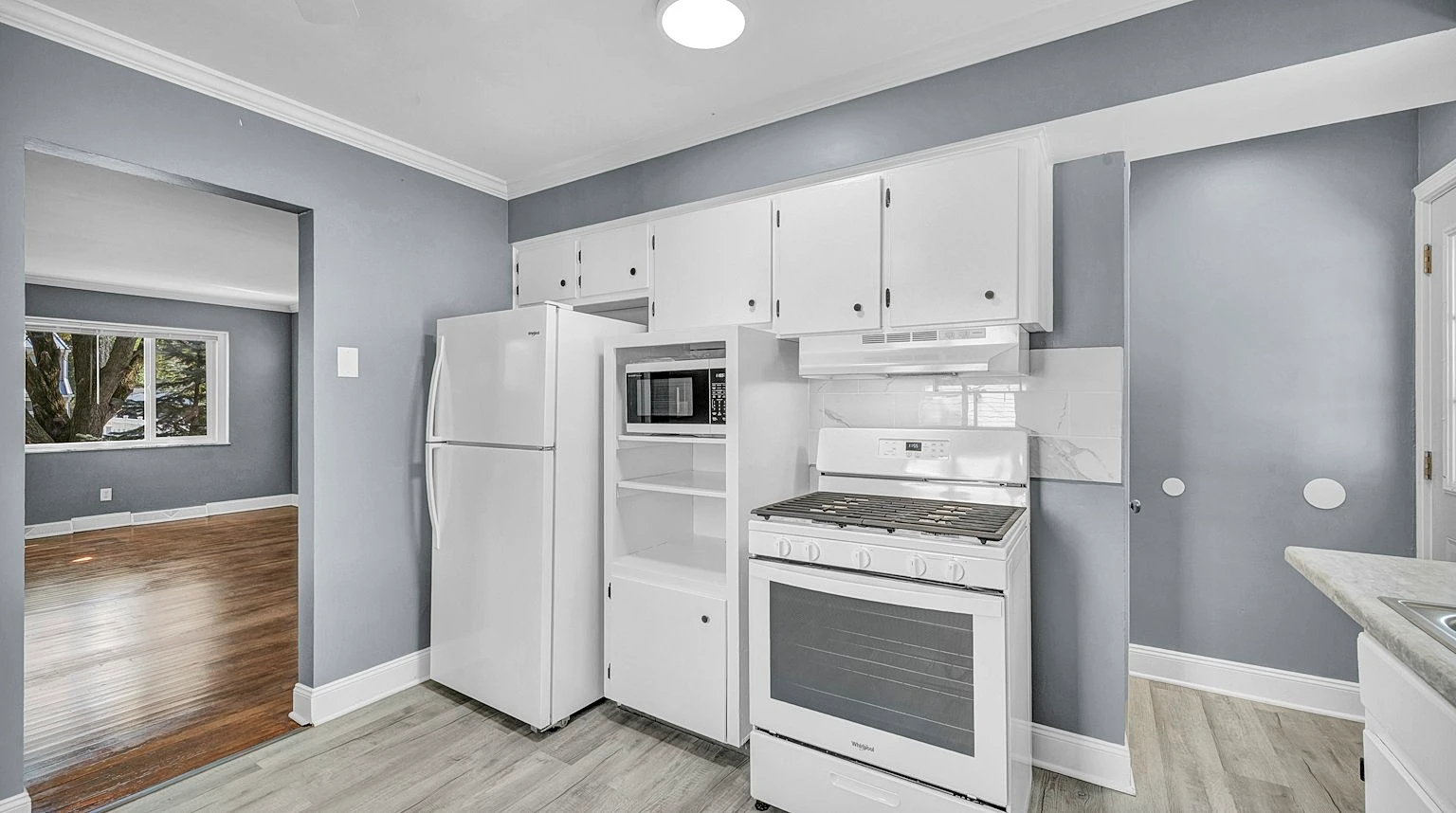
BEST FOR: Cottage kitchens, vintage-inspired interiors, and playful traditional homes. PRO STYLING TIP: Lay square tiles at a 45-degree diagonal angle from the doorway to expand room perception.
White Terrazzo Countertops With Gray Flecks
Terrazzo-inspired surfaces can introduce a softer, more playful version of the gray and white palette.
A white base with small gray aggregate-like flecks works nicely with plain gray cabinets. Because the surface already contains visible pattern, keep the backsplash understated.
You can achieve this appearance through different countertop materials, each with different durability and care requirements.
Request a large sample before purchasing. Tiny samples may not show how busy the pattern appears across a full kitchen counter.
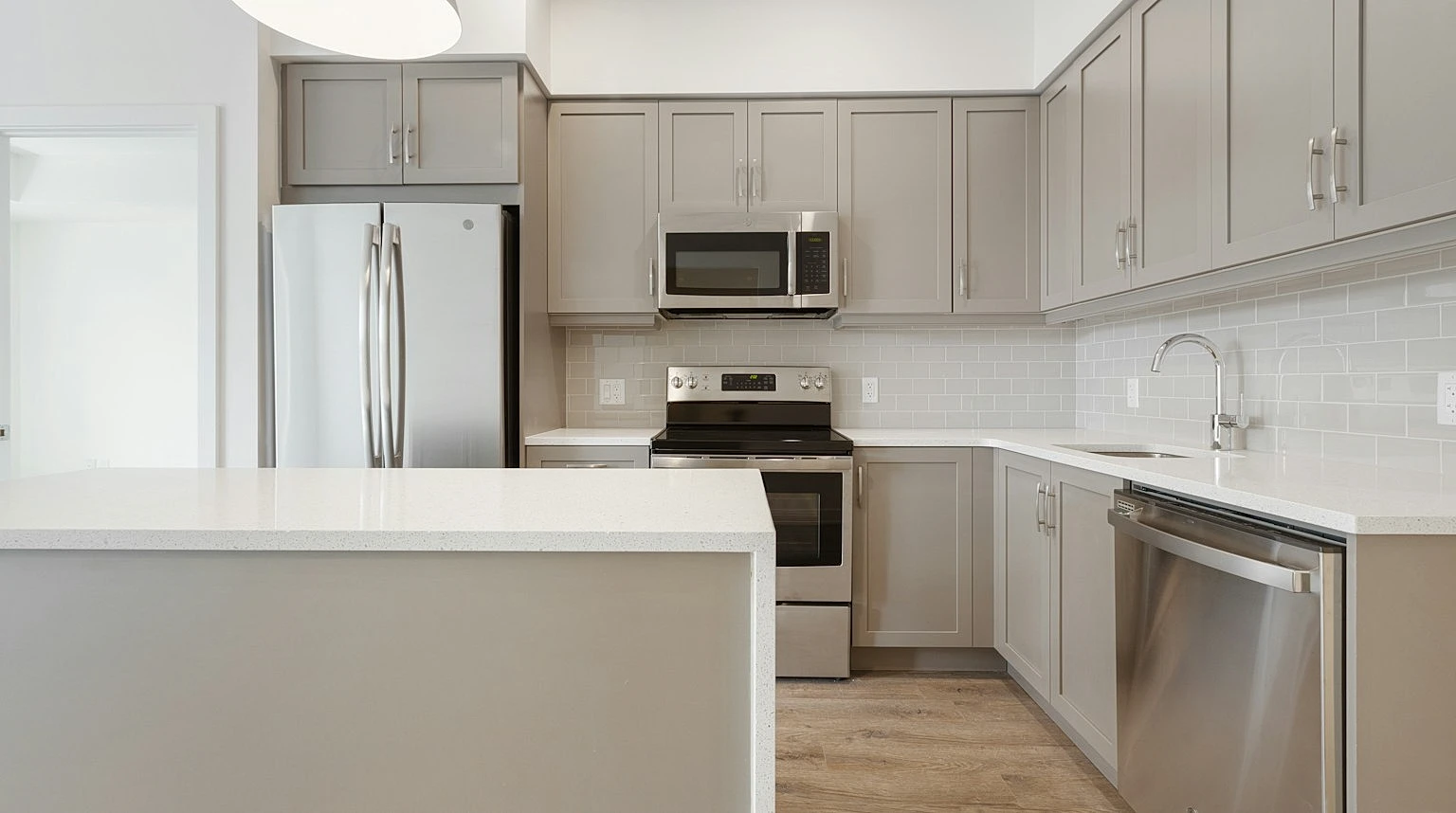
BEST FOR: Midcentury-inspired kitchens and modern family homes. PRO STYLING TIP: Choose micro-terrazzo aggregate chips under 5mm for a subtle, enduring countertop texture.
Concrete-Look Gray Countertops With White Cabinets
For an industrial-inspired interior, try concrete-look gray countertops alongside classic white cabinetry.
The gray surface adds an architectural quality, while the white cabinets keep the room from feeling too stark.
There are several ways to create a concrete appearance, including concrete, porcelain, and engineered surfaces. They vary in weight, upkeep, sealing needs, and installation requirements.
Warm wood flooring and a simple brass or black light fixture can soften the overall look.
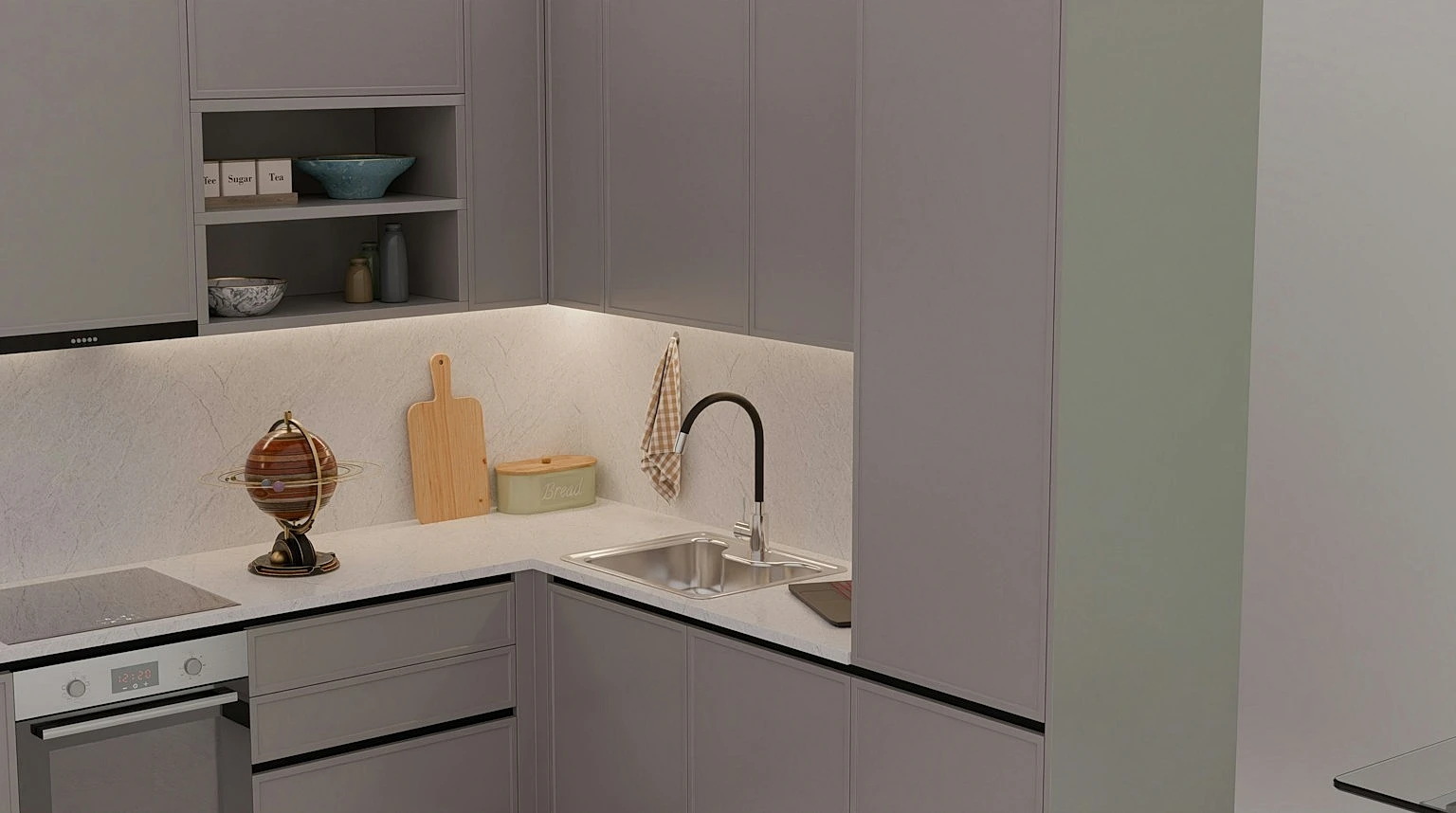
BEST FOR: Industrial, loft-style, and modern kitchens. PRO STYLING TIP: Engineered quartz with a suede/matte concrete texture provides industrial beauty without annual concrete waxing.
Full-Height White and Gray Marble-Look Backsplash
Running a veined stone-look backsplash from countertop to ceiling creates a dramatic but cohesive finish.
This technique is especially effective behind a range or a feature wall where uninterrupted surface detail can become the centerpiece.
Pair it with plain cabinetry and minimal hardware so the stone pattern has room to stand out.
Slab material choice matters: review cleaning, heat exposure, installation requirements, and manufacturer recommendations before using any surface near cooking appliances.
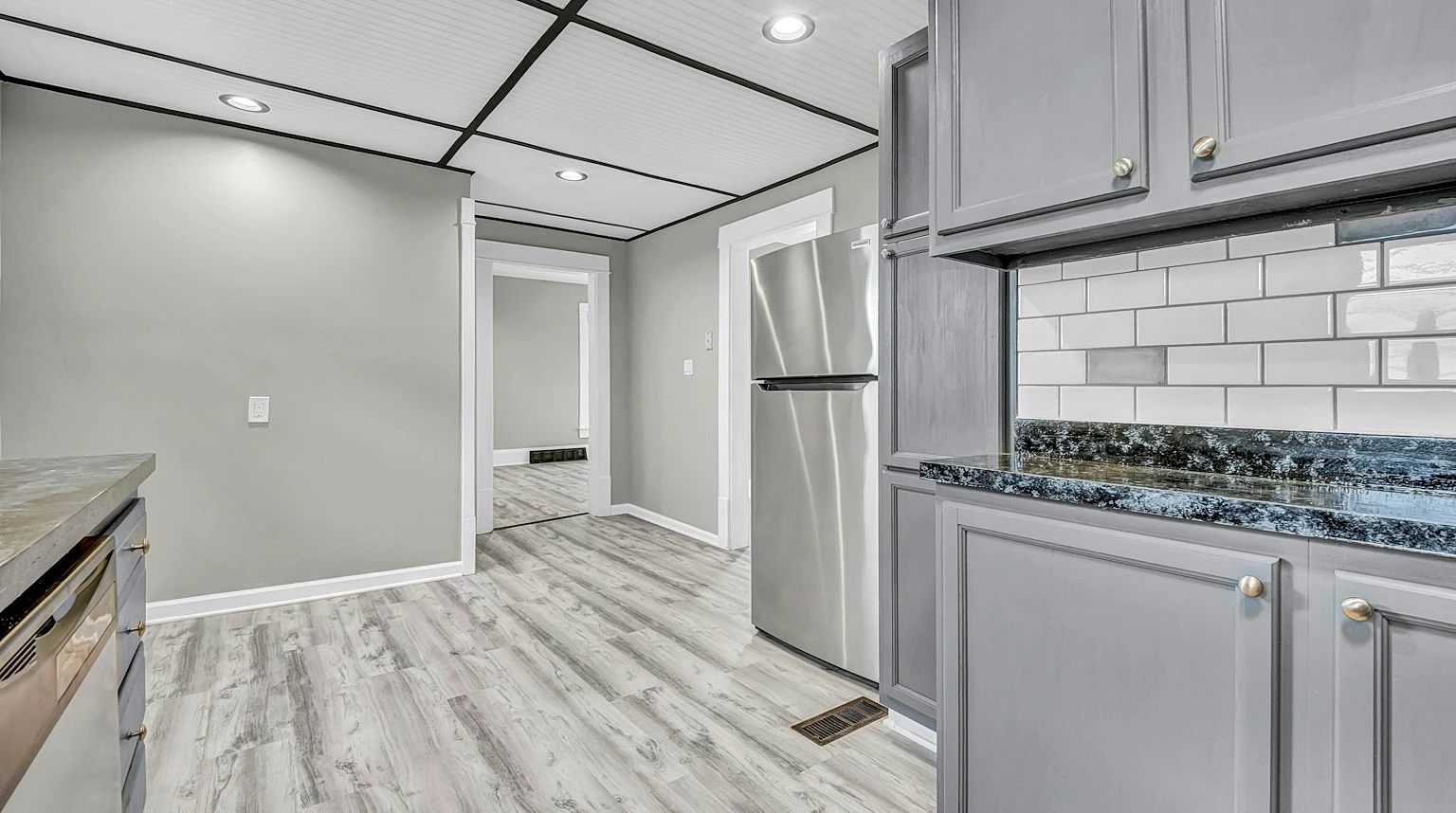
BEST FOR: Luxury contemporary and transitional kitchens. PRO STYLING TIP: Carry the stone continuously up behind a floating chimney range hood for an unbroken architectural plane.
Pale Gray Beadboard With Crisp White Cabinetry
Beadboard brings vertical texture to a neutral kitchen without making it feel overly decorated.
Use pale gray beadboard on an island back panel or a suitable dry wall area, then pair it with white cabinets and light countertops.
The fine vertical lines make the design feel more detailed while preserving the soft color scheme.
Beadboard isn't the ideal material for every wet or greasy location, so choose an appropriate finish and placement.
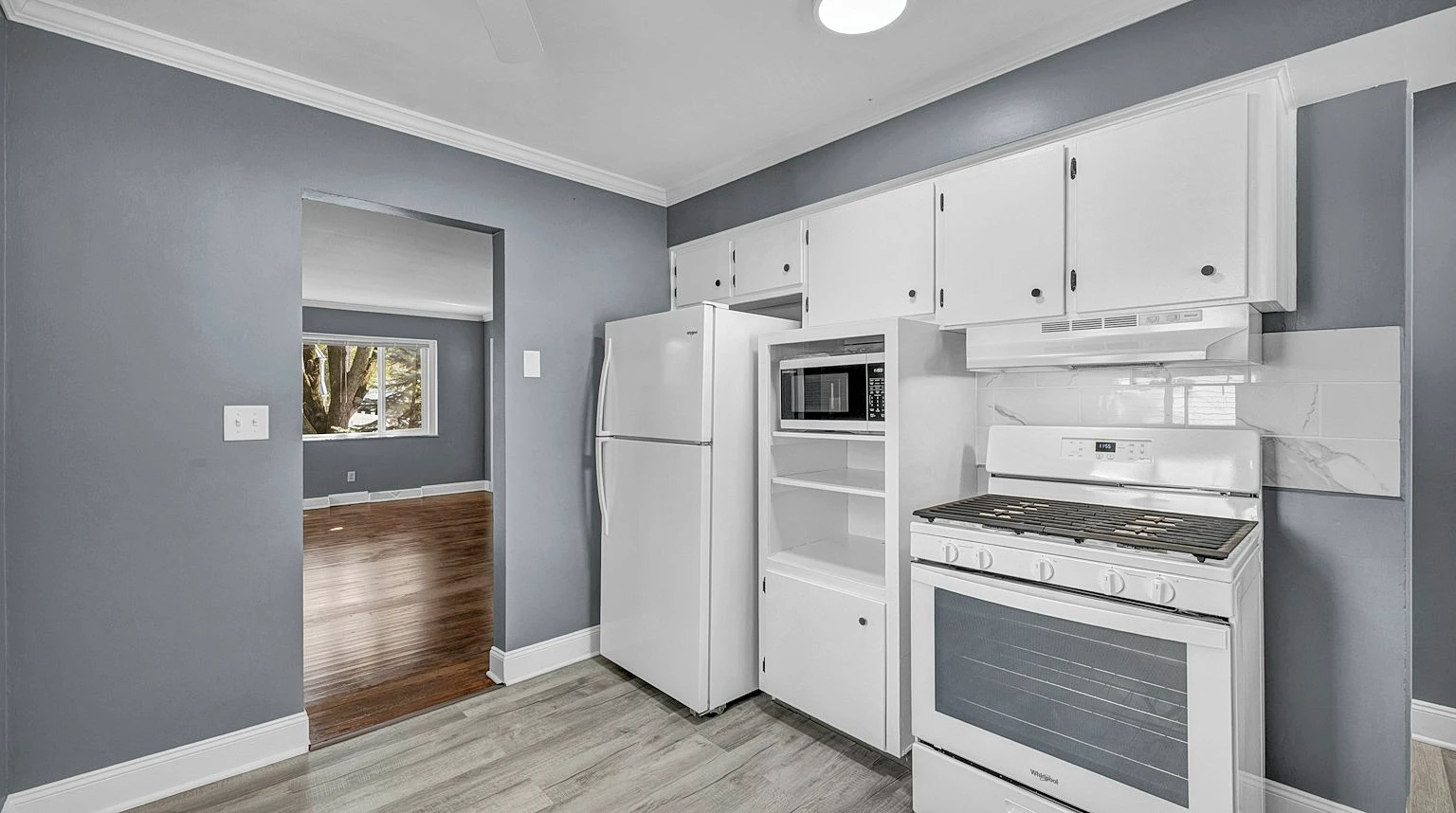
BEST FOR: Cottage, coastal, and traditional kitchens. PRO STYLING TIP: Coat beadboard in semi-gloss moisture-resistant enamel to protect against stool scuffs on island knee-walls.
A Statement Gray Plaster Range Hood
The range hood can be more than a functional appliance cover; it can also serve as an architectural feature.
A sculptural hood finished in a warm-gray plaster look creates a softer focal point than stainless steel or glossy cabinetry.
Surround it with white walls, subtle stone, and simple cabinets to keep the shape prominent.
Because range hoods must still provide appropriate ventilation and meet appliance installation requirements, the decorative enclosure should be planned around a compatible hood insert.
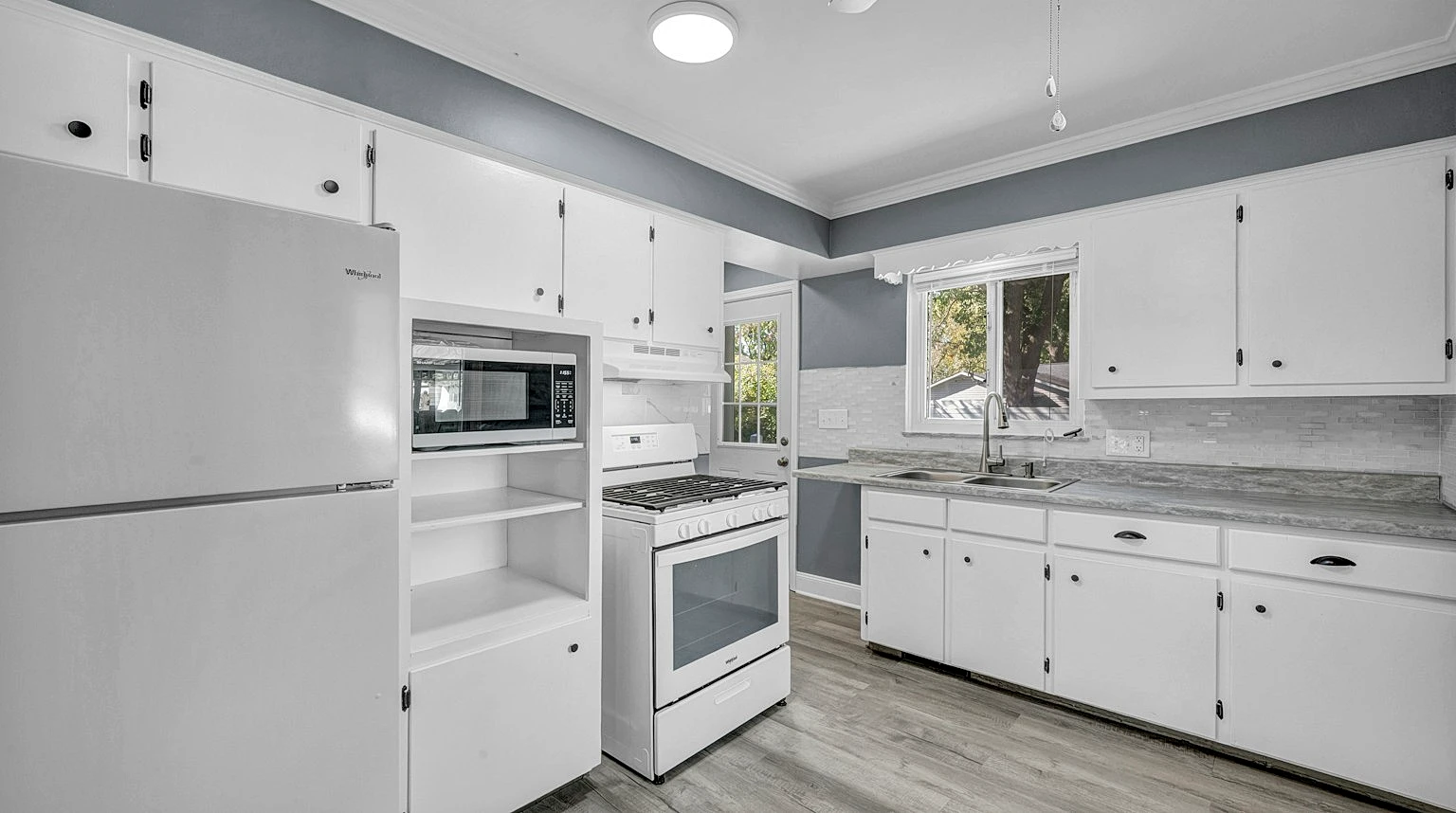
BEST FOR: Organic modern, Mediterranean, and high-end transitional kitchens. PRO STYLING TIP: Finish plaster in a breathable lime wash sealed with matte wax to prevent grease staining around ventilation vents.
A Fluted Light Gray Kitchen Island
Fluted panels add a sense of craftsmanship to a kitchen island without changing the overall color scheme.
Use vertical fluting on the seating side of a light gray island, paired with white countertops and simple surrounding cabinets.
The repeated lines create texture and make the island look more like a piece of furniture.
Fluting can be more difficult to wipe clean than flat panels, particularly in a heavily used seating area. Consider a wipeable finish and avoid unnecessarily deep grooves.
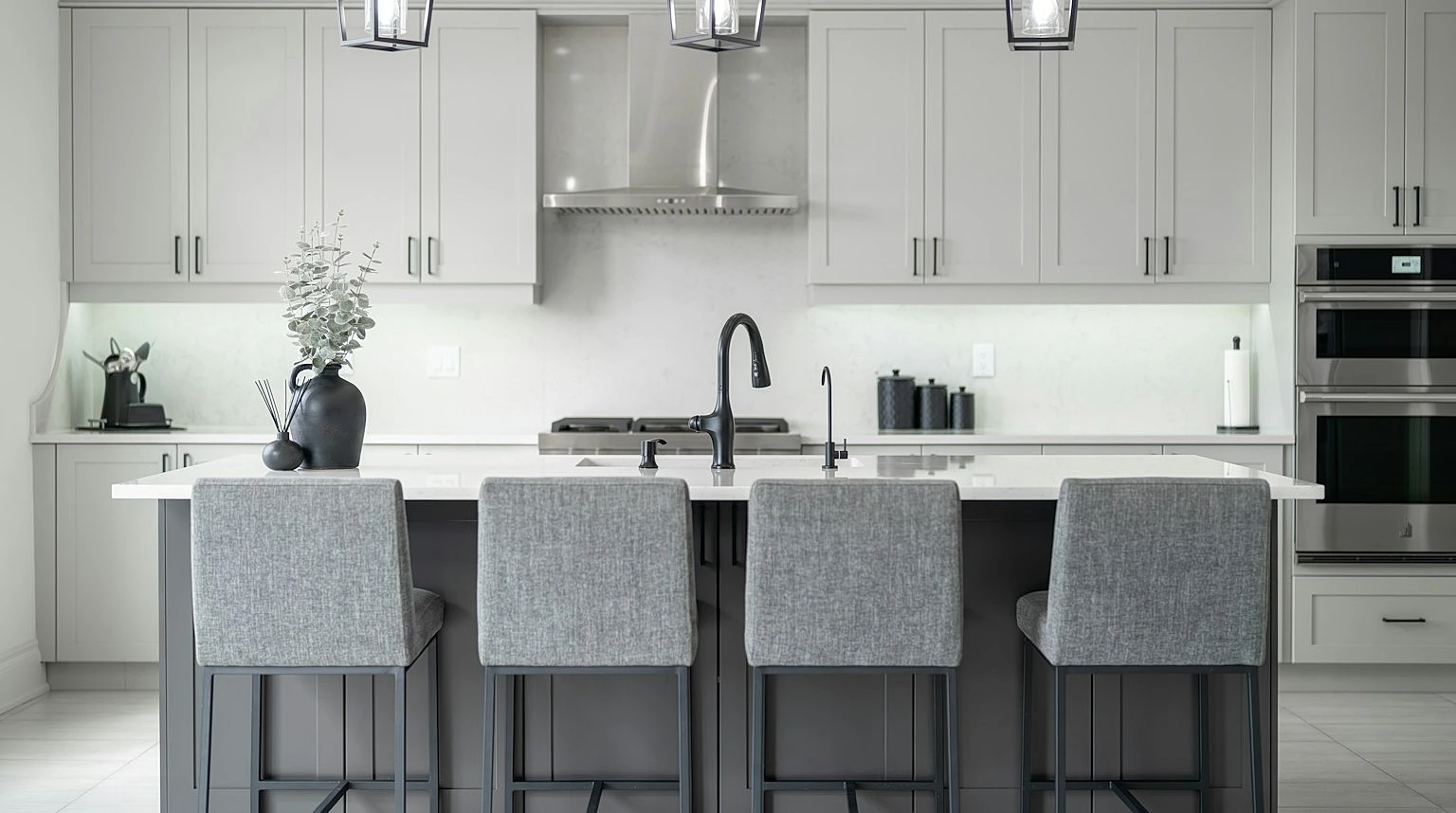
BEST FOR: Contemporary kitchens with a refined, architectural style. PRO STYLING TIP: Softly radius the island corners to soften traffic flow into adjacent dining or living rooms.
Gray and White Cabinets With Brushed Brass Hardware
Brushed brass can bring warmth to gray and white cabinetry without adding another dominant color.
Try brass drawer pulls on warm-gray lower cabinets and matching knobs on white upper cabinets. A coordinated brass faucet or pendant detail can help the room feel intentional.
You don't need to match every metal perfectly. For example, stainless appliances and brushed brass hardware can work together if the finishes are repeated thoughtfully.
Use restrained shapes rather than overly ornate hardware if you want a modern finish.
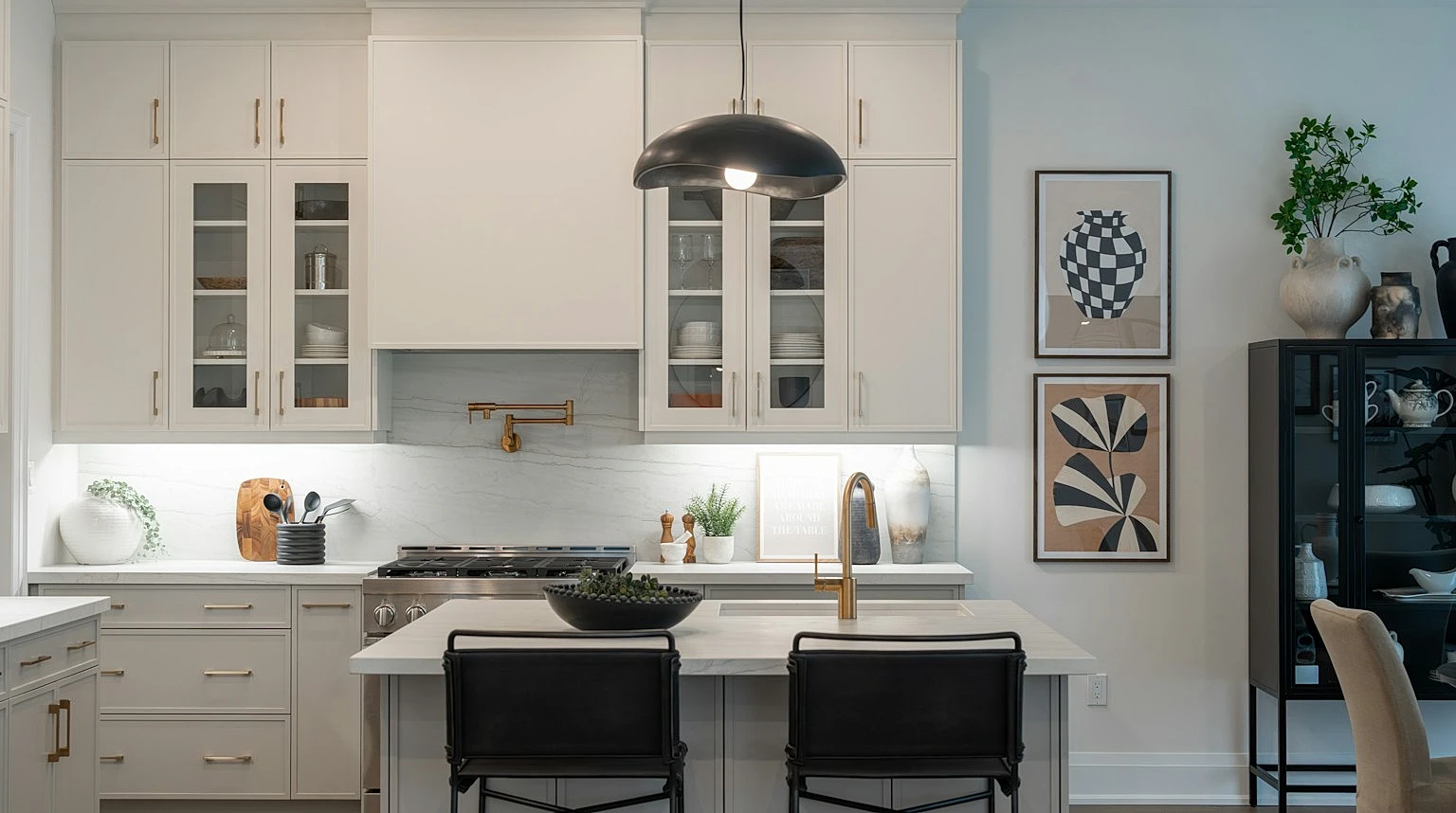
BEST FOR: Transitional kitchens and subtle luxury styling. PRO STYLING TIP: Use satin or unlacquered brass finishes rather than high-polish mirror gold for timeless tactile elegance.
Matte Black Accents for a High-Contrast Kitchen
If you prefer a slightly sharper appearance, use matte black fixtures and accessories with white and pale gray surfaces.
Black cabinet pulls, a simple faucet, and understated pendant lights create definition without requiring dark cabinets throughout the room.
Keep the amount of black deliberate. Too many dark elements can compete with the gentle gray and white palette.
Repeat the black finish in two or three locations so it looks connected rather than accidental.
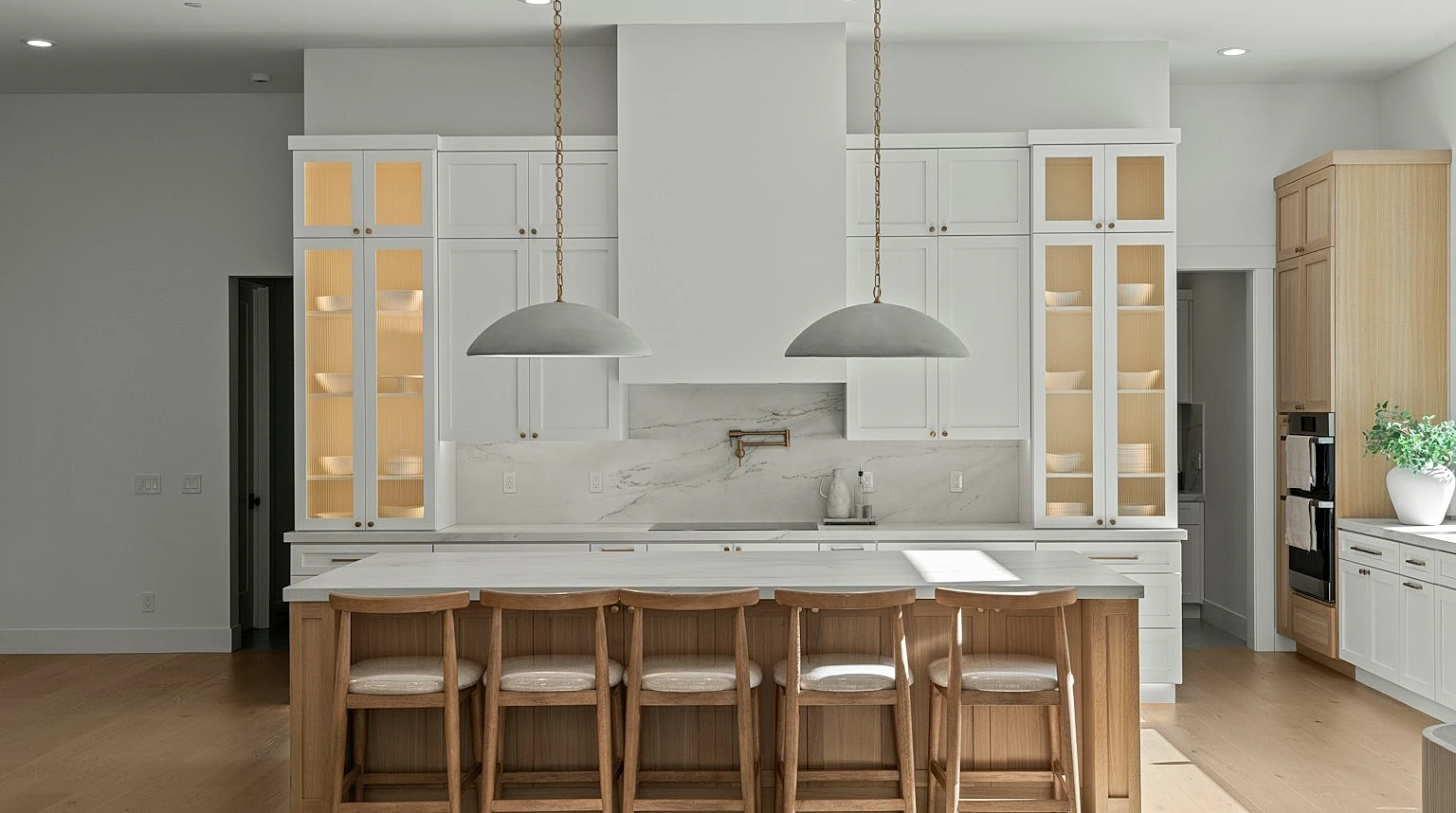
BEST FOR: Modern farmhouse and contemporary interiors. PRO STYLING TIP: Select electroplated or PVD matte black plumbing fixtures to ensure durability against kitchen moisture.
Stainless Steel Details With Minimalist Gray Cabinets
Stainless steel appliances and fixtures can look particularly cohesive with medium-gray cabinetry.
To avoid a cold industrial feeling, use white countertops, warm wood flooring, and softly textured walls.
A brushed finish often gives the appliances a more subdued appearance than highly reflective metal.
Make the design feel intentional by aligning cabinetry, appliance panels, and storage units wherever practical.
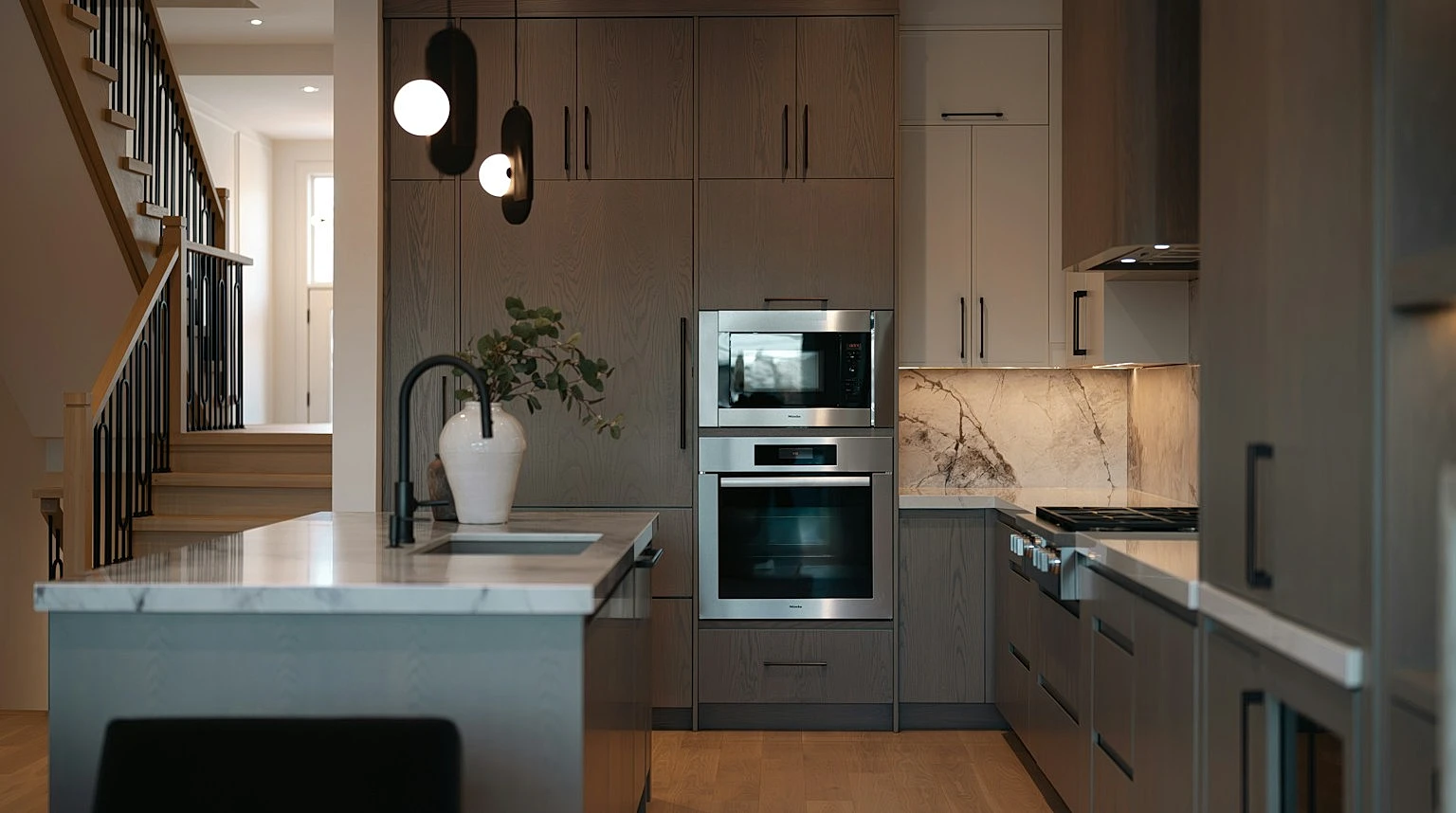
BEST FOR: Modern minimalist kitchens and appliance-focused renovations. PRO STYLING TIP: Choose appliances with matching horizontal bar handles to create calm, aligned sightlines across wall runs.
Vintage Nickel Fixtures With Soft Gray Cabinets
For a more traditional kitchen, consider polished or aged nickel fixtures rather than brass or matte black.
Nickel offers a cooler, understated shine that works well with soft gray cabinets and white stone countertops.
A bridge-style faucet, simple knobs, and vintage-inspired pendant lights can give the room character.
Balance these details with clean cabinet fronts so the design doesn't feel overly decorative.
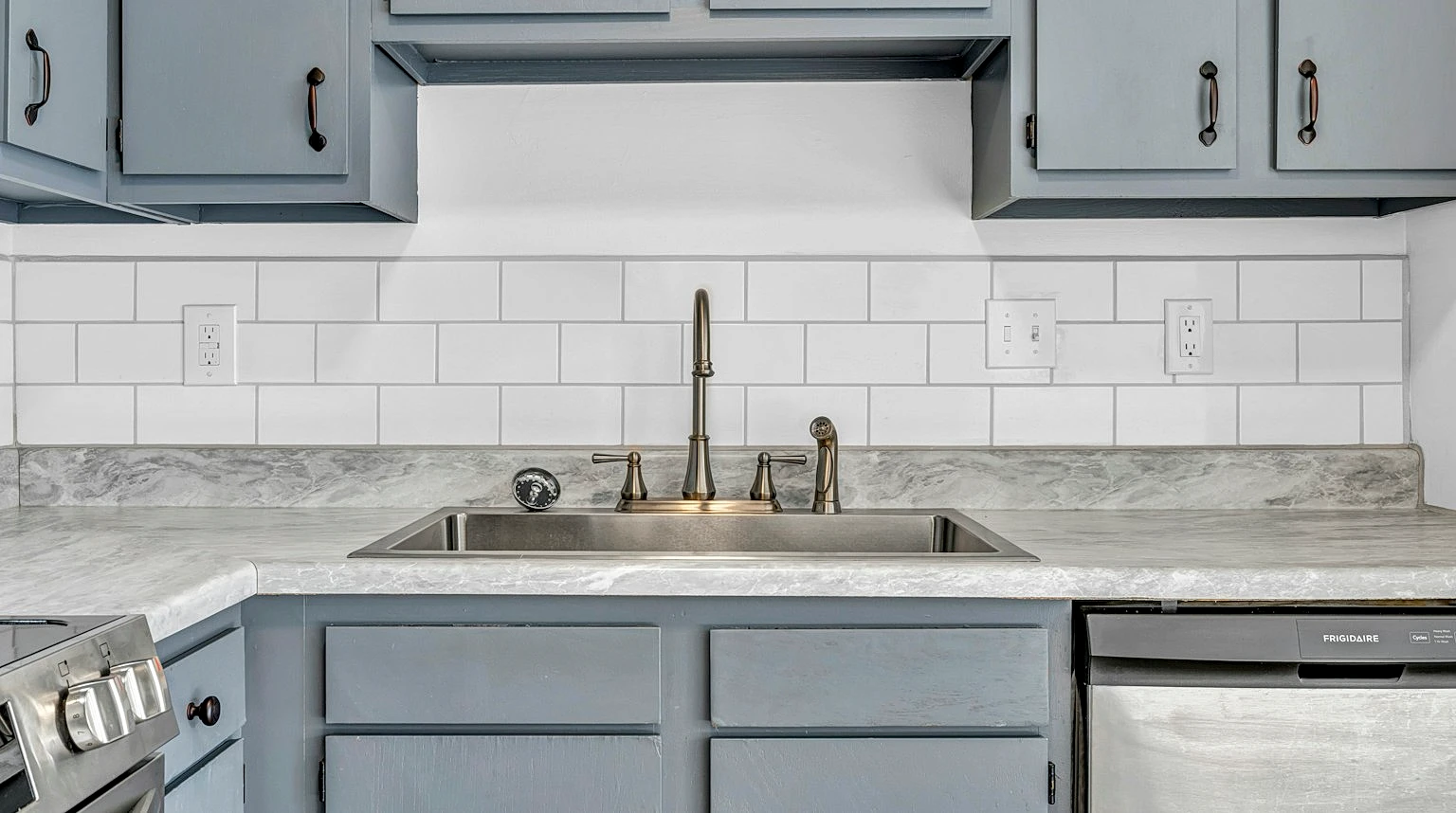
BEST FOR: Traditional, English-inspired, and classic transitional kitchens. PRO STYLING TIP: Unlike cold blue chrome, polished nickel has a subtle golden undertone that pairs beautifully with warm stone.
White Cabinets, Gray Linen Shades, and Natural Textures
Sometimes the most appealing gray and white kitchen doesn't have gray cabinets at all.
Keep the cabinetry white, then introduce gray through linen-look window shades, upholstered seating, or a washable runner.
This is a flexible approach because textiles can be changed more easily than countertops or cabinetry.
Natural woven materials, wooden accessories, and ceramic pieces help keep the room from looking too stark.
Choose easy-to-maintain fabrics and avoid positioning curtains where they could interfere with cooking or open flames.
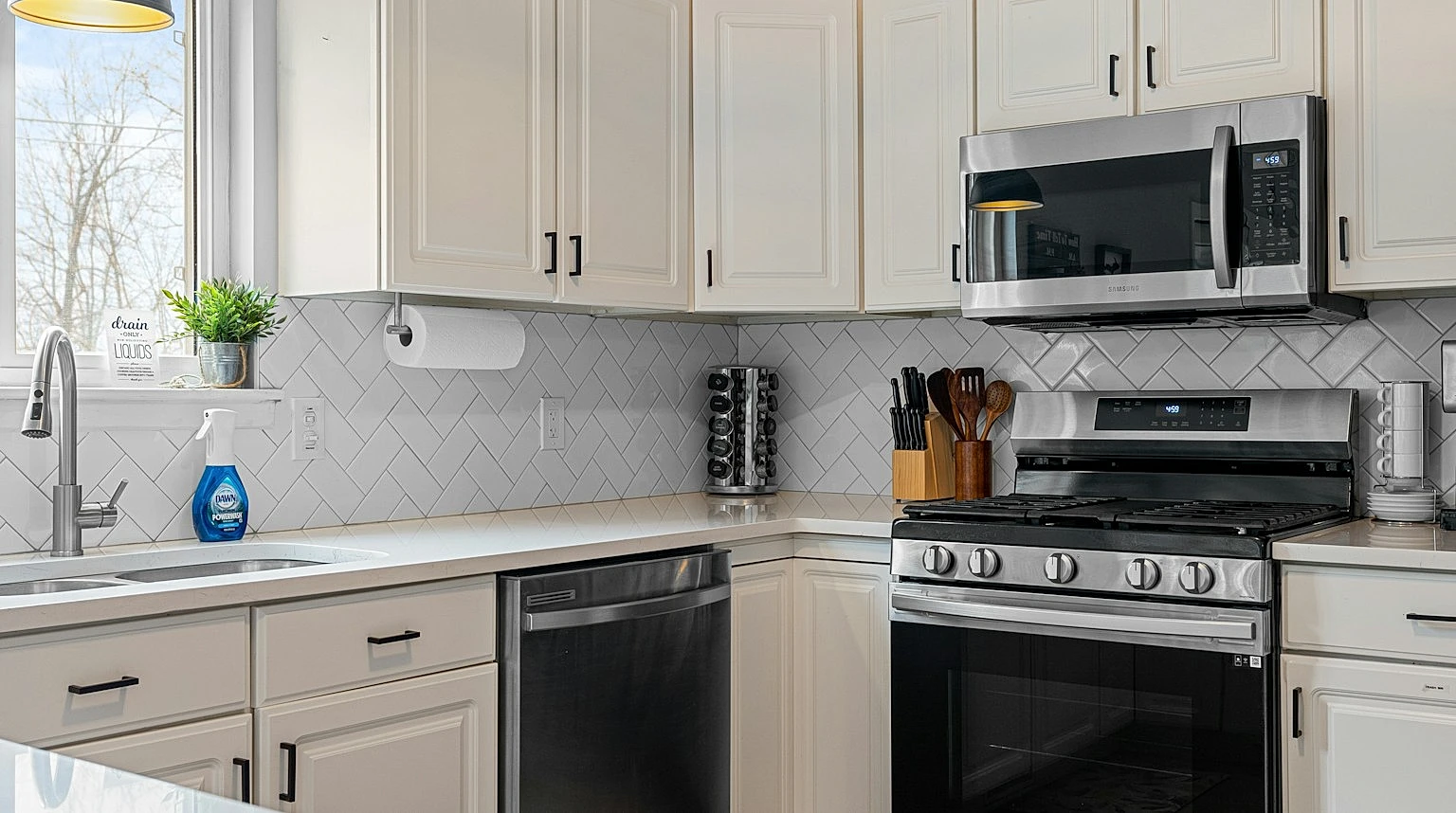
BEST FOR: Budget-conscious updates and kitchens with existing white cabinets. PRO STYLING TIP: Choose Roman blinds in 100% Belgian washed linen treated with stain-resistant fabric protectant.
A Cozy Gray and White Breakfast Nook
A compact breakfast nook can make an ordinary kitchen feel inviting.
Use a small white table with a gray upholstered banquette, or pair a pale-gray painted bench with natural wood chairs.
Soft cushions and a practical wall light make the space comfortable without taking up much room.
Choose stain-resistant, easy-clean upholstery if the seating will be used frequently for family meals. Built-in bench storage can also be valuable in kitchens where every drawer and cabinet matters.
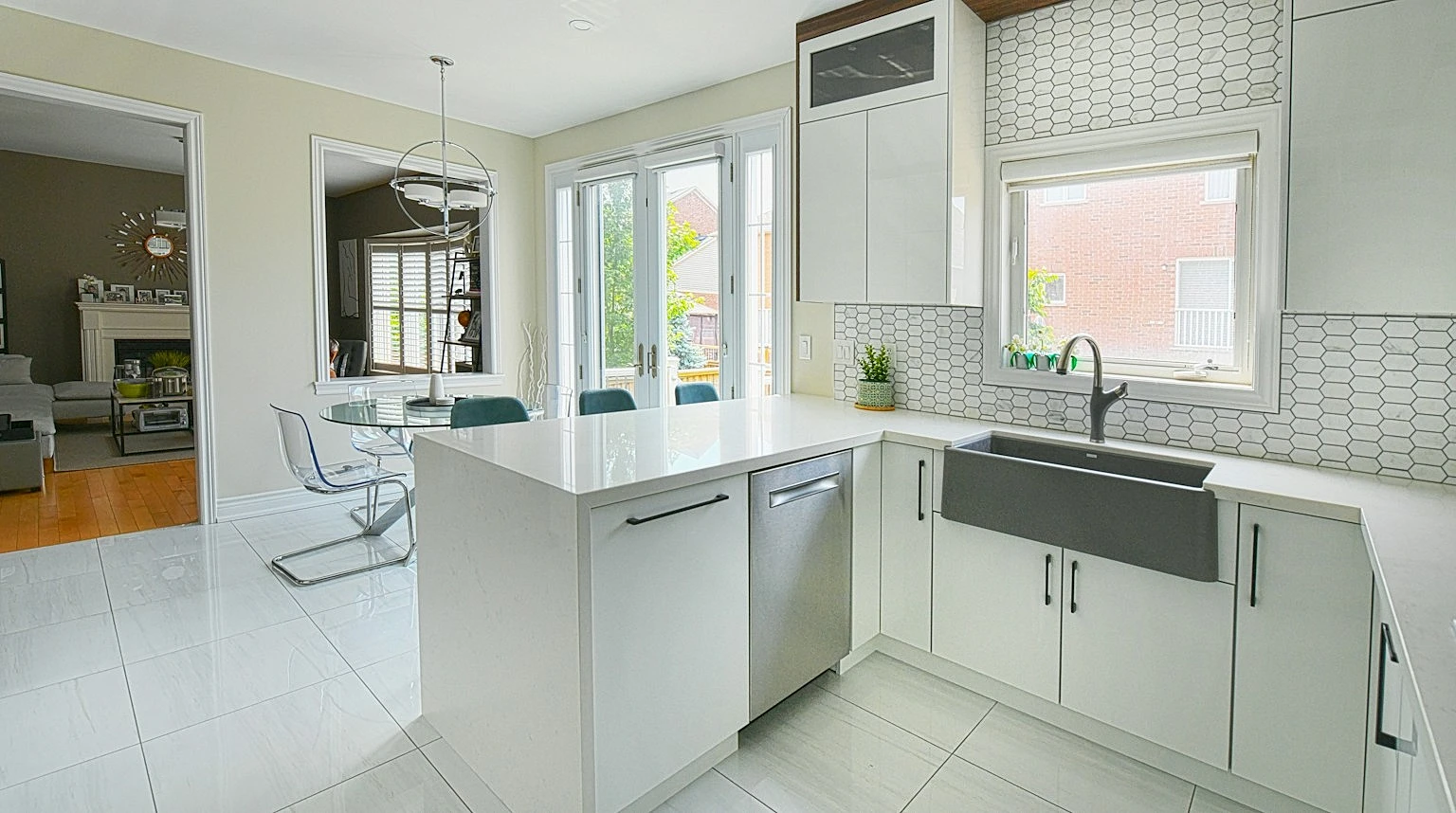
BEST FOR: Eat-in kitchens, family homes, and compact dining corners. PRO STYLING TIP: Design banquette seat tops on hydraulic lift hinges to store seasonal kitchen linens and roasting pans.
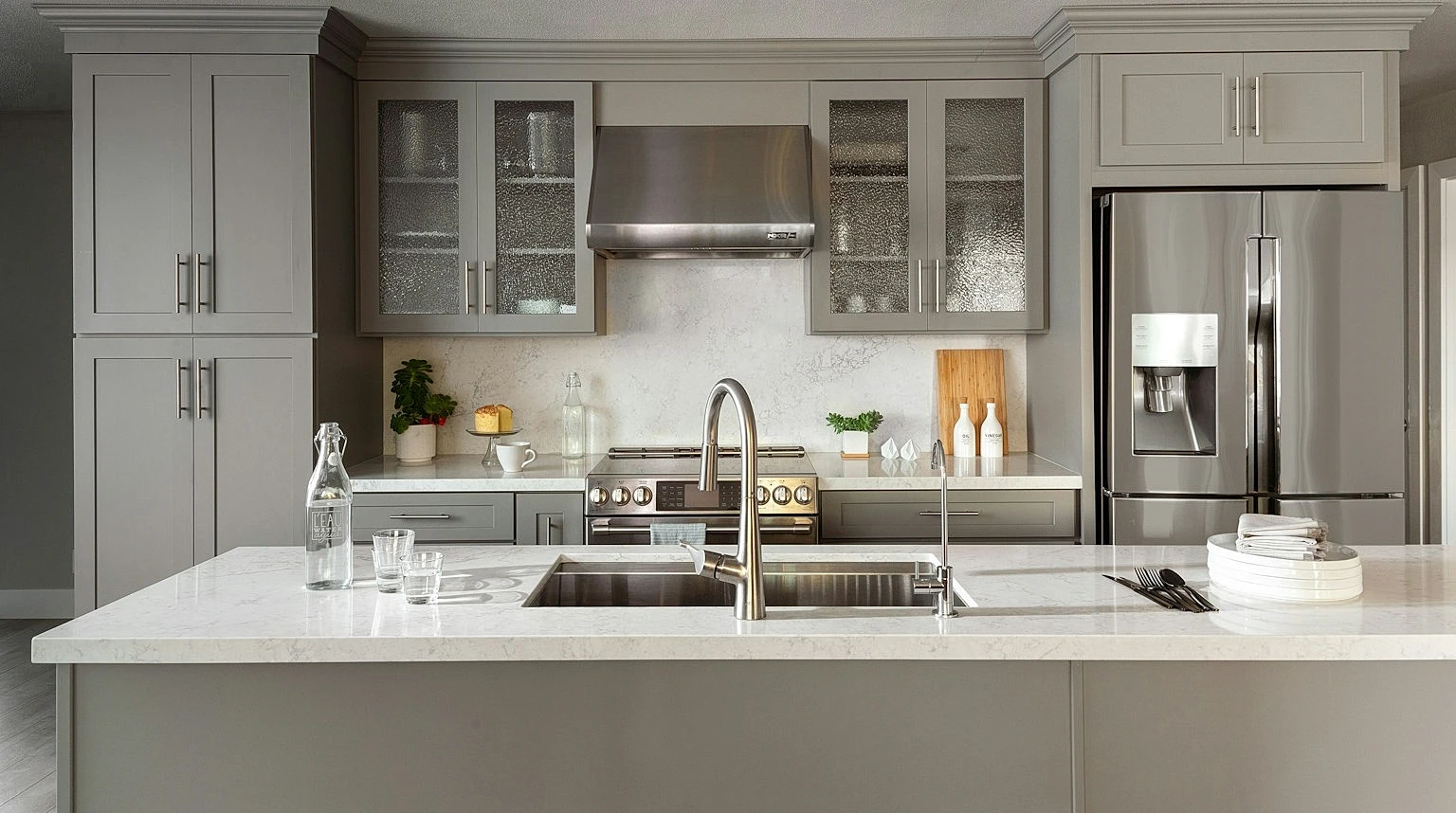
A White Cooking Wall With a Contrasting Gray Storage Zone
Separating the kitchen into visual zones can make it feel organized and purposeful.
Use white cabinetry, a pale backsplash, and a simple range hood around the primary cooking area. On a nearby wall, install deeper gray cabinets for food storage and household essentials.
The contrasting colors help identify different functions without adding physical barriers.
This approach is especially useful if you want your main kitchen surfaces to stay bright while making a larger storage area less visually prominent.
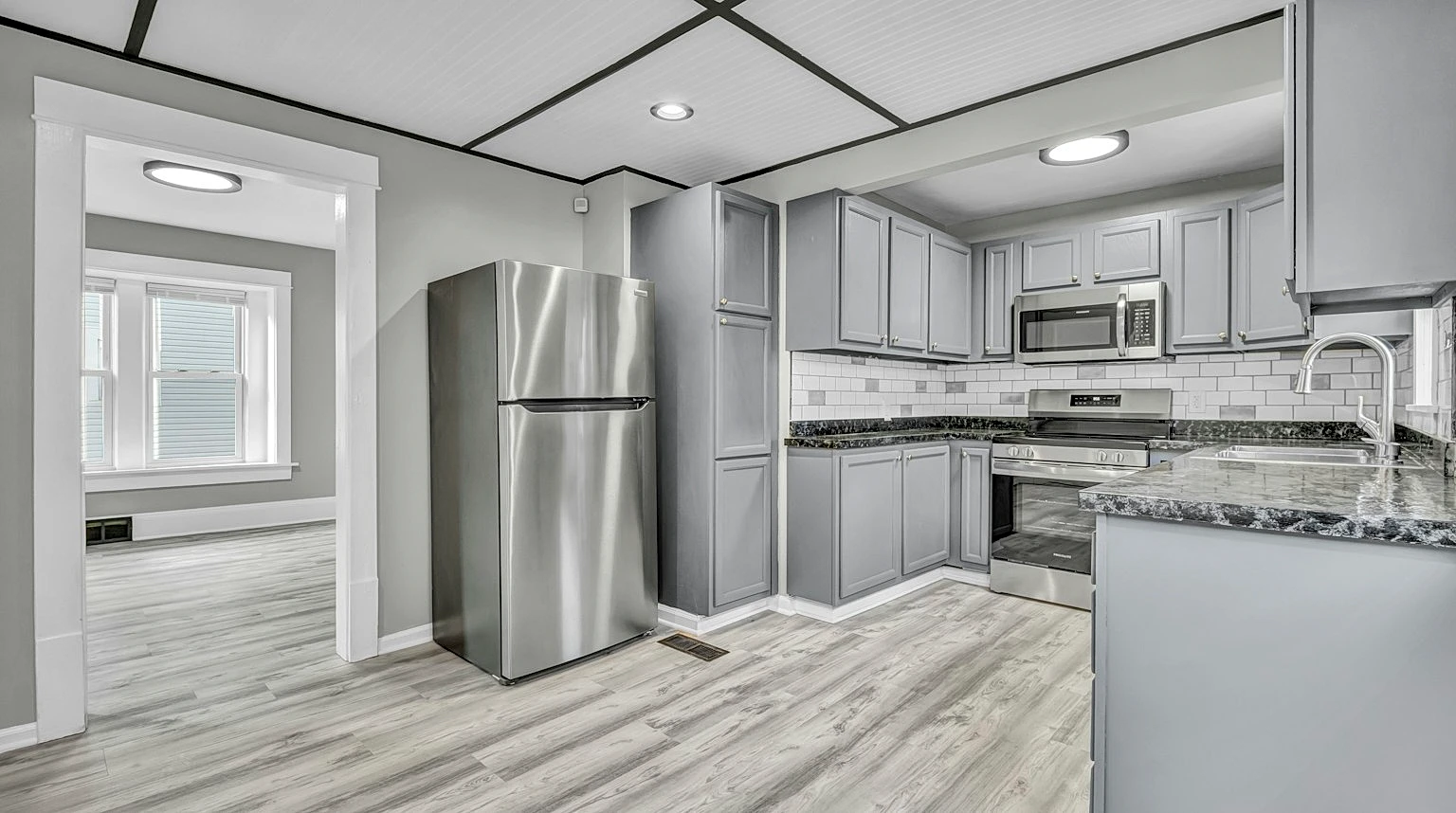
BEST FOR: Renovations that combine cooking, storage, and family activity zones. PRO STYLING TIP: Align upper horizontal cabinet lines between contrasting zones to preserve architectural cohesion.
A Compact U-Shaped Kitchen With Pale Gray Cabinetry
A U-shaped kitchen makes use of three adjoining walls and can offer generous storage and work surfaces in a relatively small footprint.
Choose pale gray lower cabinets, white uppers, and white countertops to prevent the enclosed layout from feeling too heavy.
A clear, continuous backsplash helps visually connect the different walls.
Focus on accessible corner storage and comfortable movement between the sink, refrigerator, and cooking zone rather than trying to fit in an island.
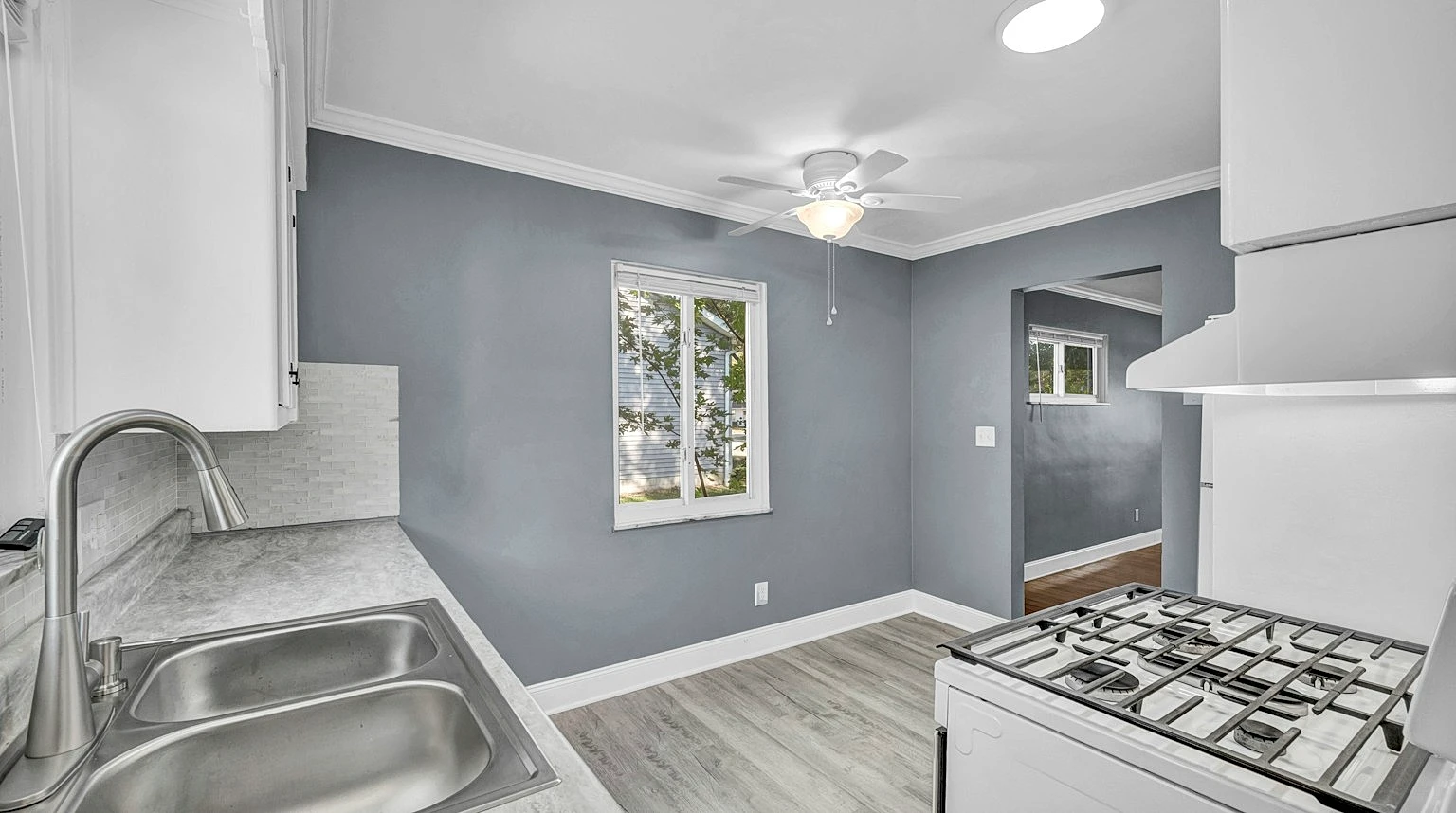
BEST FOR: Small U-shaped kitchens and efficient apartment layouts. PRO STYLING TIP: Utilize blind-corner swing-out kidney shelves (LeMans pull-outs) to eliminate dead corner space.
A Dedicated Coffee Station With Gray Cabinets and White Stone
A small coffee or beverage station can make the kitchen feel more tailored to your daily routine.
Use a dedicated section of gray cabinetry, a white stone countertop, and a few closed shelves for mugs, tea, and accessories.
If possible, position the station away from the main food-preparation area so someone making coffee doesn't interrupt cooking.
A subtle backsplash and under-shelf lighting can make this smaller zone feel special without adding clutter.
Whether you prefer a simple drip coffee maker or a more elaborate espresso setup, design storage around the equipment you actually use.
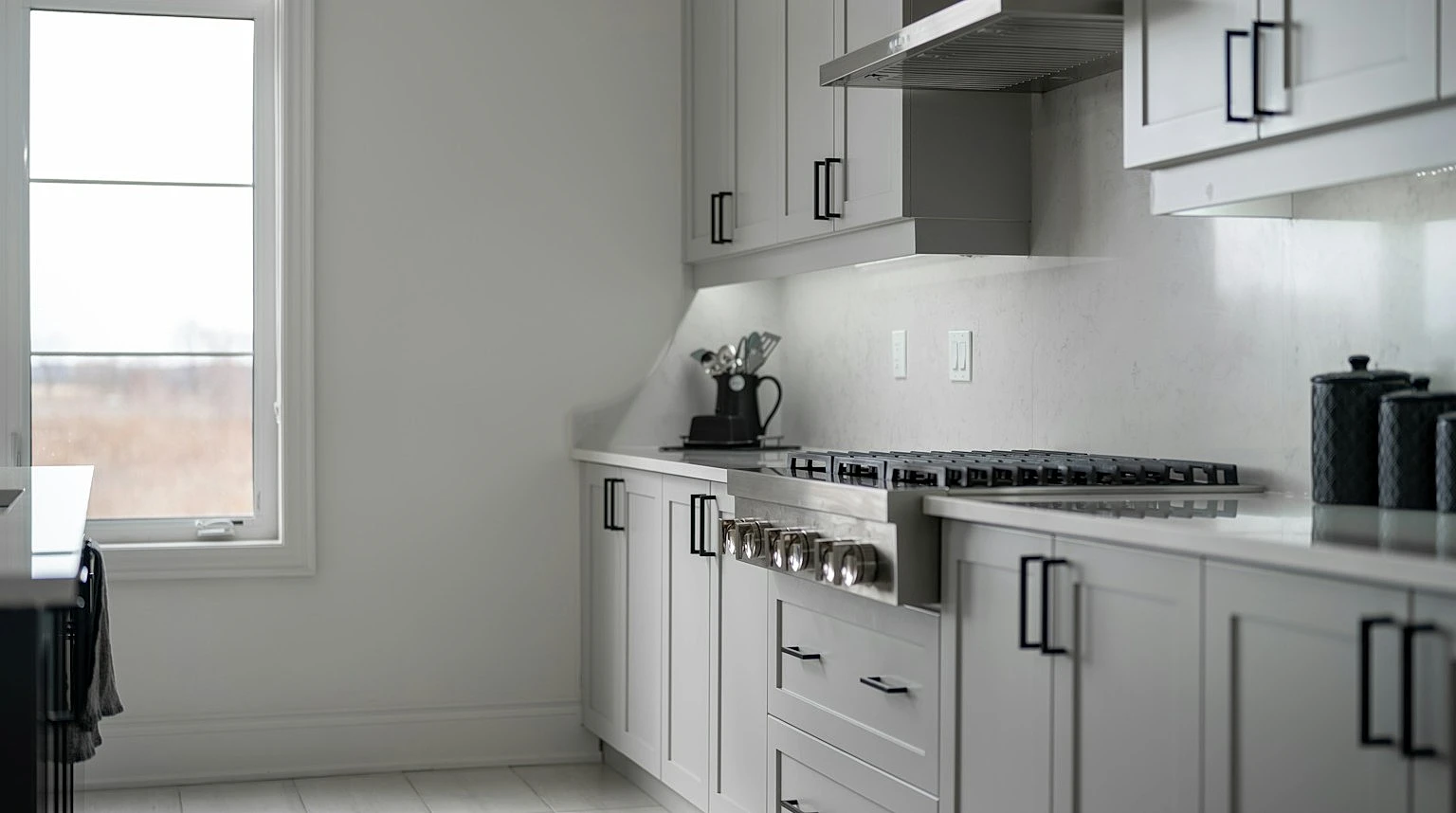
BEST FOR: Coffee lovers, entertaining, and kitchens with a spare wall or pantry niche. PRO STYLING TIP: Plan a dedicated 20-amp electrical circuit and nearby filtered water tap for espresso machine boilers.
How to Make a Gray and White Kitchen Feel Warm Instead of Cold
The key to a welcoming gray and white kitchen is balance. Gray can lean blue, green, purple, beige, or brown depending on its undertones. White also varies from crisp and cool to warm and creamy. Choosing the wrong combination can make the colors appear disconnected.
Five Strategic Ways to Add Warmth:
- Choose Compatible Undertones: Pair warm gray with creamy white for a softer atmosphere, or use cooler shades deliberately in a crisp contemporary scheme.
- Introduce Natural Wood: Oak stools, wooden floors, cutting boards, or a small butcher-block countertop area add organic warmth and tactile grain.
- Use Layered Lighting: Combine general ambient ceiling illumination with focused under-cabinet task lighting and warm decorative pendants (2700K to 3000K).
- Vary the Surface Texture: A handmade-look zellige backsplash, brushed brass hardware, or matte cabinetry prevents large surfaces from feeling flat or sterile.
- Add Natural Styling Accessories: Washed linen shades, handcrafted ceramics, woven fruit baskets, and live potted culinary herbs create a lived-in, inviting home.
Choosing the Right Shade of Gray
A paint sample can look dramatically different depending on your windows, flooring, and artificial lighting.
| Gray Family | General Appearance | Best Paired With | Light Conditions |
|---|---|---|---|
| Dove Gray | Light and soft | Warm white, pale oak, polished nickel | South-facing or bright daylight |
| Greige | Warm gray-beige | Creamy white, natural oak, brushed brass | North-facing or low natural light |
| Slate Gray | Medium to dark, often cool | Pure white quartz, stainless steel | Generous open spaces with high ceilings |
| Charcoal | Deep, dramatic, architectural | Crisp white stone, warm walnut, brass | Strong layered task & ambient light |
| Blue-Gray | Noticeably cool, coastal | Clean white, brushed nickel, linens | High sun exposure kitchens |
When comparing cabinet paint samples, check how they appear in morning daylight, afternoon light, and under your actual kitchen bulbs. It is always worth painting a large sample board rather than relying on a small paper color swatch.
How to Update a Gray and White Kitchen on Different Budgets
You don't always need a full renovation to improve the look of your kitchen.
| Budget Level | Potential Scope of Updates | Primary Design Consideration |
|---|---|---|
| $ — Small Refresh | Hardware swaps, fresh wall paint, textiles, lighting shades, decor accessories | Preserve existing cabinets and layout completely |
| $$ — Moderate Update | Professional cabinet painting, new tile backsplash, targeted under-cabinet lighting, selected quartz counters | Plan logical sequence of demolition and trade work |
| $$$ — Major Renovation | Custom architectural cabinetry, quartzite slabs, island redesign, hardwood flooring, spatial layout reconfiguring | Account for structural permits and electrical rough-ins |
If your cabinets are structurally sound, professional spray-painting or refinishing makes immense economic sense. If your layout has chronic workflow bottlenecks, investing in spatial restructuring yields far greater long-term value.
Common Gray and White Kitchen Design Mistakes
Even a beautiful color combination can disappoint when practical details are overlooked:
- Choosing Colors Without Checking Undertones: Two colors labeled gray and white aren't automatically compatible. A blue-toned gray may make a creamy white look yellow, while a very cool white can make a warm-gray cabinet appear muddy. Compare physical samples side by side on-site.
- Forgetting About Task Lighting: A dark gray kitchen with poor countertop lighting can feel gloomy even when paint colors look beautiful in daylight. Plan lighting around prep zones, sinks, and range cooking surfaces.
- Using Too Many Competing Statement Surfaces: Dramatic marble, geometric tile, checkerboard floors, and intricate fluting can look attractive individually. Together, they create visual chaos. Choose one hero focal feature.
- Ignoring Cleaning and Maintenance: A surface that looks beautiful in a showroom may require frequent wiping, sealing, or special care products. Consider lifestyle demands before specifying porous limestone or high-gloss acrylic.
- Sacrificing Ergonomic Function for Appearance: An enormous island is not useful if it blocks appliance doors or constricts circulation walkways below 36 inches. Prioritize the working triangle first.
Frequently Asked Questions
Final Thoughts
A gray and white kitchen doesn't need to be cold, plain, or predictable.
The most inviting designs use gray and white as a foundation, then build interest through wood, stone, texture, lighting, and thoughtful storage.
If your kitchen is small, start with pale gray lower cabinets and white uppers. If you're working with a spacious layout, a contrasting island or dramatic backsplash can create a beautiful focal point. For a simpler refresh, textiles, hardware, or a new wall color may be enough to make the room feel completely renewed.
Most importantly, choose a design that fits the way you cook, gather, and move through your kitchen.
Related Editorial Stories
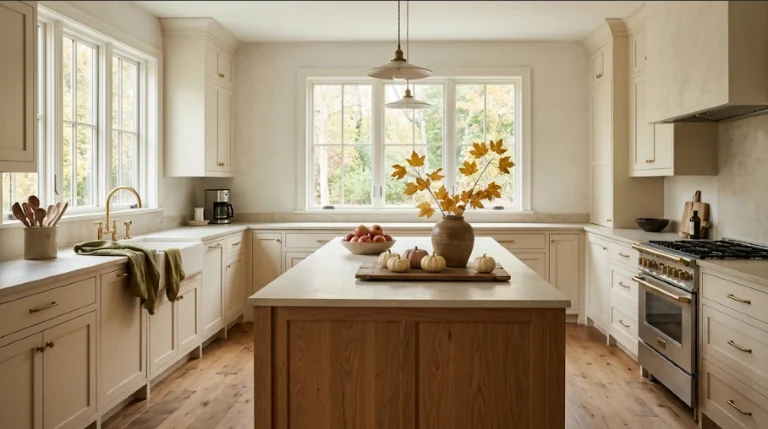
20 Fall Kitchen Decor Ideas for 2027: Cozy, Practical Ways to Welcome Autumn
Make your kitchen feel warmer for autumn without losing prep space. Explore 20 practical, clutter-free fall kitchen decor ideas—from harvest fruit bowls and olive linens to warm lamps and peg rails.

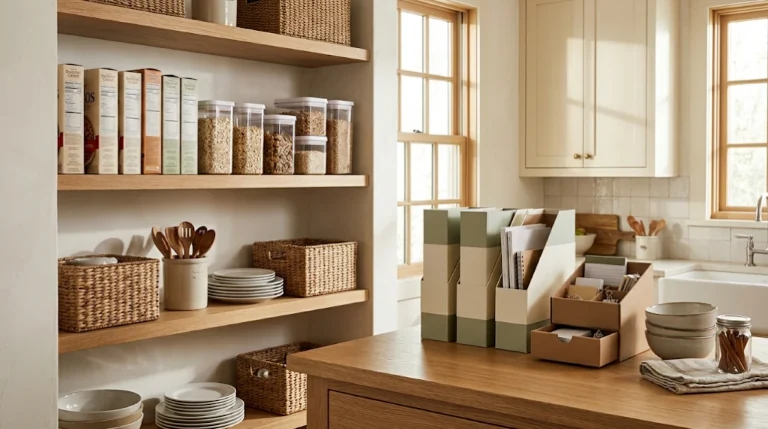
30 Cereal Box Storage Ideas in 2027: Clever DIY Organizers and Pantry Hacks
Discover 30 clever cereal box storage ideas for 2027: creative cardboard upcycling crafts, custom drawer trays, and space-saving pantry organization hacks.
15 DIY Wall Decor Ideas in 2027 That Make Any Room Feel Personal
Transform blank walls without big renovations using 15 approachable DIY wall decor ideas for 2027—from textured modeling-paste canvases and framed fabric scraps to renter-friendly washi tape murals.